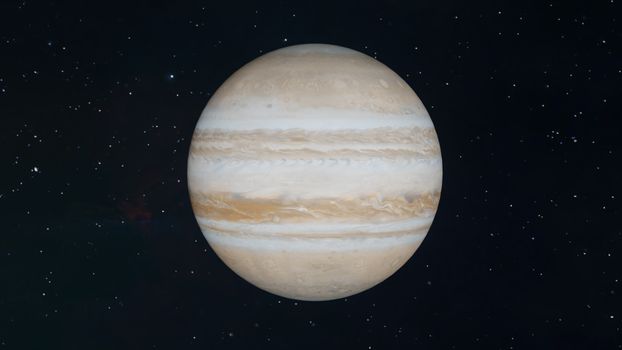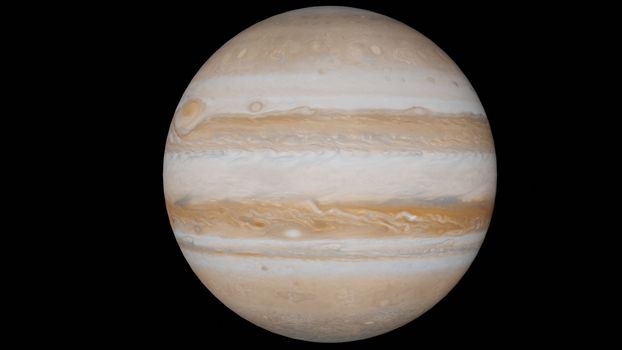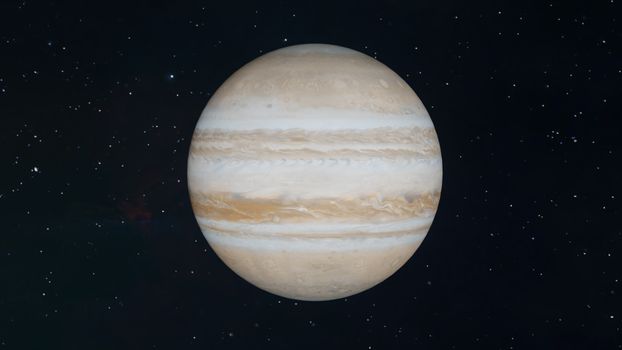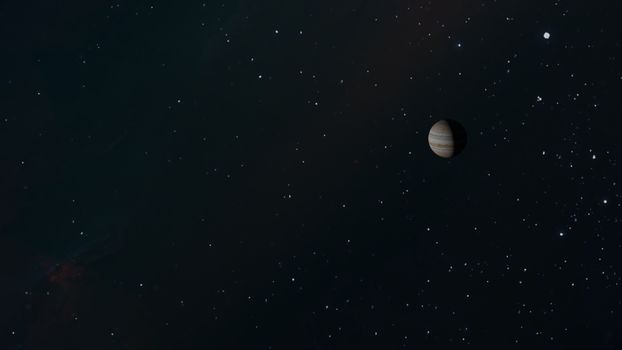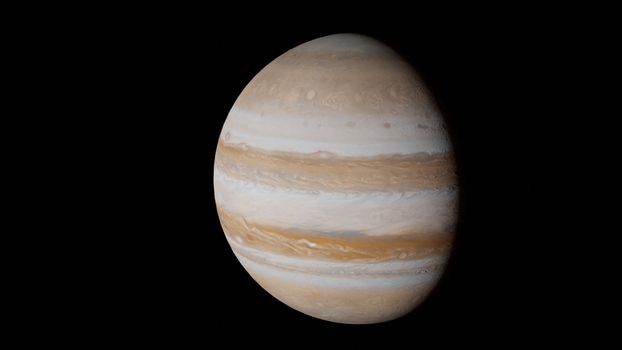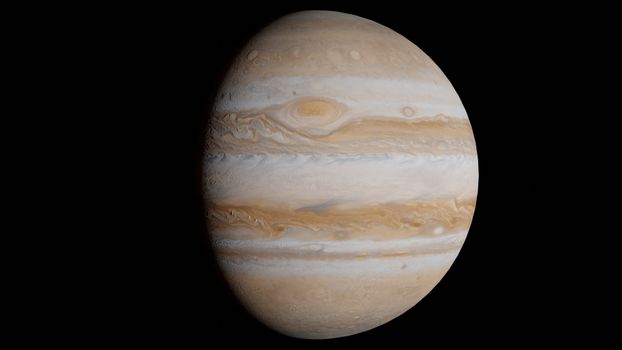
Jupiter, the largest planet in our solar system, has long captured human imagination with its swirling bands, dramatic storms, and mysterious atmospheric features. Among its most fascinating characteristics is the ever-changing cloudiness that cloaks the planet. These clouds, visible even through amateur telescopes, play a crucial role in shaping Jupiter’s appearance and atmospheric behavior. But what exactly causes Jupiter’s atmosphere to be so cloudy, and what are the deeper consequences of this cloudiness for the planet’s weather, chemistry, and even its study by scientists?
In this article, we’ll explore the main causes and consequences of cloudiness in Jupiter’s atmosphere. We’ll dive into the unique chemistry behind those colorful clouds, the dynamic processes that create them, and how these clouds influence everything from Jupiter’s famous storms to our ability to observe the planet from afar.
The Building Blocks: What Makes Jupiter’s Clouds?
Jupiter’s clouds are vastly different from those on Earth. Instead of water vapor, the main ingredients in Jupiter’s clouds are ammonia, ammonium hydrosulfide, and water. These compounds form clouds at different altitudes due to the extreme pressure and temperature variations in the planet’s thick atmosphere.
.png)
The cloud layers can be summarized as follows:
- The uppermost clouds are composed primarily of ammonia ice, forming at temperatures around -145°C (about -230°F). - Beneath these lie clouds of ammonium hydrosulfide. This layer forms when ammonia reacts with hydrogen sulfide at slightly warmer temperatures. - The deepest visible clouds are made of water ice and water droplets, thought to exist at even higher pressures and temperatures.The presence and thickness of each cloud layer depend heavily on local temperature, pressure, and the availability of key chemicals. This stratification explains much of the distinct banding and coloration seen across Jupiter’s surface.
Dynamic Forces: Convection and Atmospheric Circulation
Jupiter’s cloudiness is not just a result of chemistry—it’s also driven by powerful physical forces. The planet radiates more heat than it receives from the Sun, leading to robust convection currents in its atmosphere. These currents transport heat and materials upward from the planet’s interior, fueling cloud formation.
Convection on Jupiter is much more intense than on Earth. Hot gases rise, cool as they expand, and condense into clouds. This process is responsible for the rapid and large-scale development of features like the planet’s belts, zones, and storms. Notably, the famous Great Red Spot—a storm wider than Earth itself—arises from these convective dynamics.
The alternating light and dark bands (zones and belts) seen on Jupiter are created by strong east-west winds (jet streams) that can reach speeds of up to 400 km/h (about 250 mph). These winds shear the clouds into parallel strips, further emphasizing the cloudiness in some regions while thinning it in others.
The Role of Chemical Reactions and Solar Radiation
While convection lays the groundwork for cloud formation, chemical reactions and solar radiation determine the colors and complexity of Jupiter’s clouds. The upper cloud layers, dominated by ammonia ice, are white. However, various compounds and trace gases, including phosphine and hydrocarbons, interact with ultraviolet sunlight to form darker and more colorful materials known as chromophores.
These chromophores are responsible for the browns, reds, and yellows that give Jupiter its iconic look. The exact chemical composition of these colorants is still debated, but laboratory experiments and spacecraft observations suggest a mix of sulfur compounds and complex organic molecules.
Solar radiation not only alters cloud chemistry but also triggers photochemical reactions, breaking apart molecules and creating new ones. This process is especially pronounced above the cloud tops, where high-energy particles from Jupiter’s powerful magnetosphere can further modify atmospheric compounds.
Consequences of Cloudiness: Weather, Heat, and Observation
The cloudiness in Jupiter’s atmosphere has far-reaching consequences for the planet itself and for those who study it from afar.
1. $1 The thick, multi-layered clouds are central to Jupiter’s intense weather. They serve as the breeding ground for massive storms, including the Great Red Spot, and for the rapid formation and dissipation of smaller vortices and turbulent features. The clouds also trap and redistribute heat, influencing temperature gradients and driving atmospheric circulation. 2. $1 Jupiter’s clouds play a crucial role in regulating the planet’s thermal balance. By reflecting sunlight and trapping infrared radiation, they help maintain the planet’s overall temperature structure. This balance is vital for sustaining the deep convection that powers atmospheric dynamics. 3. $1 The thick cloud cover both aids and hinders scientific study. While the clouds provide a wealth of data about atmospheric chemistry and dynamics, they also obscure deeper layers of the atmosphere. For example, the Juno spacecraft uses microwave and infrared instruments to peer beneath the clouds, revealing hidden structure and composition. However, certain wavelengths are absorbed or scattered by the clouds, complicating direct measurement. 4. $1 Understanding Jupiter’s clouds has broader implications for planetary science. The processes that create and maintain cloudiness on Jupiter are thought to operate on other gas giants, both in our solar system and beyond. Insights from Jupiter help scientists model exoplanet atmospheres and the evolution of planetary systems.Comparing Jupiter’s Clouds to Earth’s Clouds
While both Jupiter and Earth are shrouded in clouds, the causes, composition, and consequences of these clouds differ dramatically. The table below highlights key distinctions:
| Feature | Jupiter | Earth |
|---|---|---|
| Main Cloud Components | Ammonia, ammonium hydrosulfide, water | Water vapor |
| Cloud Layer Altitudes | Ammonia clouds at ~50 km above visible surface; water clouds much deeper | Typically 2-12 km above surface |
| Typical Cloud Color | White, brown, red, yellow (due to chromophores) | White, gray |
| Primary Cloud-Forming Process | Convection from interior heat | Evaporation and condensation from solar heating |
| Storm Scale | Great Red Spot: ~16,350 km wide | Largest hurricane: ~1,500 km wide |
This comparison underscores how Jupiter’s immense scale, composition, and internal heat create cloud systems unlike anything on Earth.
Cloudiness and the Evolution of Jupiter’s Atmosphere
Jupiter’s cloudiness is not a static phenomenon. Observations over decades have revealed changes in cloud color, thickness, and distribution. For instance, the Great Red Spot has shrunk by about 30% since the late 1800s, and periodic outbreaks of bright “plumes” in the planet’s belts can dramatically alter its appearance.
These changes offer clues about deeper processes in Jupiter’s atmosphere. Variations in cloudiness may signal shifts in chemical composition, the upwelling of different gases from the interior, or changes in the planet’s overall energy balance. Long-term monitoring by spacecraft such as Voyager, Galileo, Cassini, and Juno has provided invaluable data, allowing scientists to track these trends and develop more sophisticated models of gas giant atmospheres.
Cloud variability also ties into the broader question of planetary evolution. The way Jupiter’s clouds form, evolve, and dissipate over time informs theories about how giant planets cool and change throughout their lifespans. Studying these processes on Jupiter helps astronomers understand the lifecycles of similar worlds orbiting other stars.
Why Understanding Jupiter’s Cloudiness Matters
Delving into the causes and consequences of Jupiter’s cloudiness is more than an academic exercise. These clouds are the visible markers of the planet’s dynamic and powerful atmospheric engine. They shape Jupiter’s weather, influence its climate, and reveal much about the underlying processes that govern all gas giants.
For planetary scientists, decoding Jupiter’s clouds is essential for interpreting data from remote sensing instruments and planning future missions. For astronomers, the lessons learned from Jupiter’s cloudiness inform our search for exoplanets and our understanding of planetary atmospheres across the galaxy. For the general public, Jupiter’s clouds offer a window into a world of extremes—one that continues to challenge our knowledge and spark our curiosity.