Jupiter's Influence on Earth's Climate: A Deep Dive
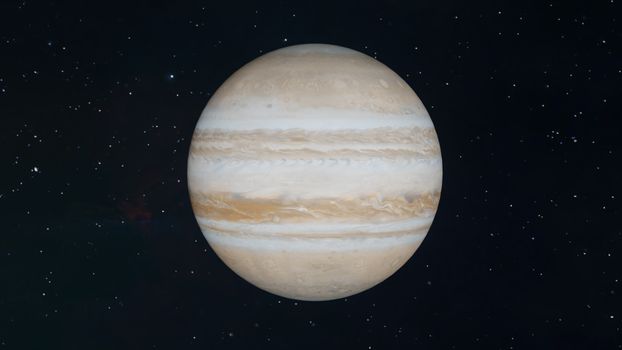
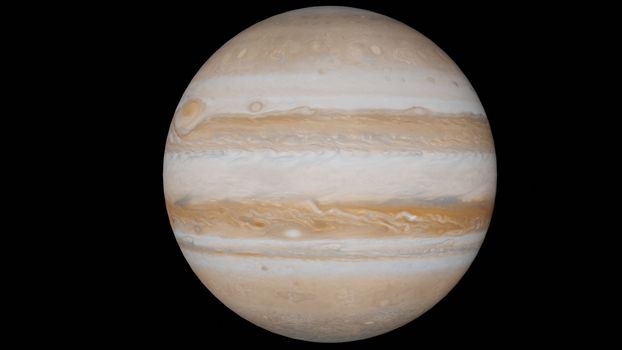
Jupiter, the solar system’s largest planet, is often celebrated for its sheer size and dynamic storms. Yet, beyond its swirling clouds and magnetic might, Jupiter subtly shapes the environment of its more distant planetary sibling—Earth. While Earth’s climate is primarily determined by factors like solar radiation, atmospheric composition, and terrestrial geography, the influence of distant Jupiter is both profound and surprising. This article explores the intricate ways Jupiter affects Earth’s climate, from deflecting cosmic debris to influencing orbital mechanics, and even possibly impacting long-term climate cycles.
Jupiter’s Gravitational Power: The Solar System’s Architect
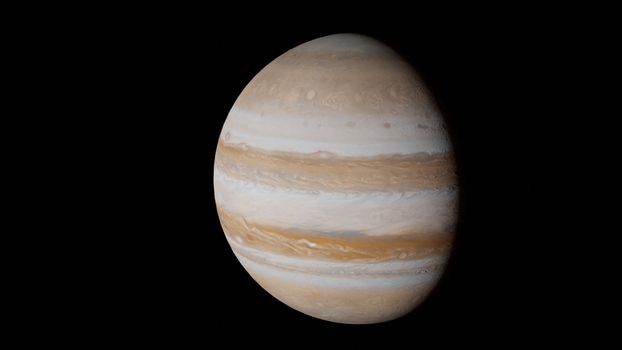
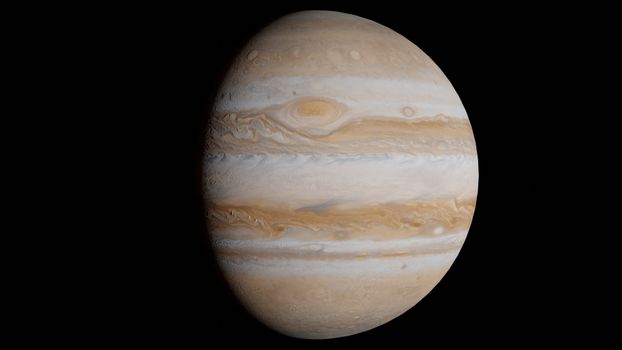
Jupiter is a true gravitational giant, containing more than 318 times the mass of Earth and over twice the mass of all other planets in the solar system combined. Its tremendous gravity acts as a cosmic architect, orchestrating the dance of planets, asteroids, and comets.
One of Jupiter’s key roles is its ability to stabilize or disrupt the orbits of other solar system bodies. Research indicates that Jupiter’s gravitational pull helps maintain the relatively stable orbits of the inner planets, including Earth. If Jupiter were not present or were significantly smaller, the gravitational perturbations from other planets could cause Earth’s orbit to become more eccentric, leading to more extreme climatic variations and possibly destabilizing the planet’s ability to support life.
.png)
In simulations run by planetary scientists, removing Jupiter from the solar system increased the likelihood of Earth experiencing significant changes in its orbital eccentricity—potentially swinging from near-circular to more elongated paths. Such changes could amplify seasonal extremes, leading to hotter summers, colder winters, and increased risk of ice ages.
Shielding Earth: Jupiter as a Cosmic Gatekeeper
Perhaps the most well-known aspect of Jupiter’s influence is its role as a cosmic shield. Jupiter’s immense gravity attracts, captures, or deflects many comets and asteroids that might otherwise threaten Earth. This protective effect is not just theoretical—historic impacts on Jupiter, such as the collision with Comet Shoemaker-Levy 9 in 1994, have been directly observed.
The consequences for Earth’s climate are significant. Large asteroid or comet impacts can have catastrophic effects, releasing energy equivalent to millions of nuclear bombs and injecting dust and aerosols into the atmosphere. This debris can block sunlight, triggering global cooling events known as “impact winters.” For example, the Chicxulub impact 66 million years ago, which contributed to the extinction of the dinosaurs, caused a dramatic drop in global temperatures.
By reducing the frequency of such collisions, Jupiter lessens the risk of these climate-altering impacts. Some studies estimate that Jupiter reduces the impact rate of long-period comets on Earth by a factor of 1,000. However, this shielding effect is nuanced; in certain orbital configurations, Jupiter’s gravity can also perturb the orbits of nearby asteroids, occasionally sending them toward the inner solar system.
| Scenario | Estimated Impact Rate on Earth (per million years) | Potential Climate Consequence |
|---|---|---|
| With Jupiter Present | 1–2 | Rare, but possible global cooling events from large impacts |
| Without Jupiter | 10–20 | Frequent global cooling, mass extinctions, severe climate instability |
Orbital Resonances: Jupiter’s Hidden Hand in Earth’s Milankovitch Cycles
Earth’s long-term climate changes are driven in part by Milankovitch cycles—variations in the planet’s orbit and axial tilt over tens of thousands to hundreds of thousands of years. These cycles govern the timing of ice ages and interglacial periods. But what many don’t realize is that Jupiter plays a key role in shaping these cycles through orbital resonances.
Jupiter’s gravitational influence helps modulate the eccentricity (shape), obliquity (tilt), and precession (wobble) of Earth’s orbit. For instance, the eccentricity of Earth’s orbit varies mainly due to gravitational tugs from Jupiter and Saturn. When Jupiter and Saturn are aligned in certain configurations, their combined gravity can amplify or dampen the changes in Earth’s orbit.
These subtle shifts can alter the amount of solar energy Earth receives, particularly at high latitudes, influencing the advance and retreat of ice sheets. Scientific studies using computer models have demonstrated that without Jupiter, the amplitude and timing of Milankovitch cycles would be dramatically different, potentially making Earth’s climate far less stable and predictable.
Jupiter’s Influence on Cosmic Ray Flux and Cloud Formation
Beyond gravitational effects, Jupiter’s presence indirectly affects the amount of cosmic radiation reaching Earth’s atmosphere. Cosmic rays—high-energy particles originating from outside the solar system—can influence cloud cover by ionizing atmospheric molecules, which may serve as nuclei for cloud droplet formation.
Jupiter’s massive magnetosphere, extending millions of kilometers into space, acts as a barrier that helps shield the inner solar system from some cosmic radiation. While the Sun’s magnetic field is the primary defense, Jupiter’s magnetic field adds another layer of protection, particularly during periods of low solar activity.
A 2017 study found that during certain alignments, Jupiter’s magnetic field can reduce the galactic cosmic ray flux reaching Earth by up to 10%. Although the precise effect on global climate is still debated, some researchers suggest that higher cosmic ray flux could increase cloudiness and thus cool the planet, while lower flux could have a warming effect.
Jupiter and the Long-Term Habitability of Earth
The combination of Jupiter’s shielding, orbital stabilization, and influence on cosmic ray flux contributes to the long-term habitability of Earth. A stable, relatively circular orbit limits extreme climate swings, while reduced impact rates and moderate cosmic ray exposure further promote a climate conducive to complex life.
Astrobiologists often consider Jupiter-like planets in exoplanetary systems as markers for potential habitability. According to a 2016 NASA study, solar systems with massive gas giants in similar positions to Jupiter are more likely to host stable, life-supporting terrestrial planets. This insight has shaped the search for exoplanets, with astronomers prioritizing systems where a “giant guardian” might enhance the odds of a stable climate.
How Jupiter’s Influence Compares to Other Planets
While Jupiter’s impact is unique due to its size and location, other planets also play roles in shaping Earth’s climate. Saturn, for example, contributes to orbital resonances, while Venus and Mars have minor gravitational effects. However, no planet comes close to matching Jupiter’s stabilizing and shielding influence.
| Planet | Main Influence on Earth | Relative Impact on Climate Stability |
|---|---|---|
| Jupiter | Orbital stability, impact shielding, cosmic ray modulation | Very High |
| Saturn | Orbital resonances, minor impact shielding | Moderate |
| Venus | Minor gravitational effects | Low |
| Mars | Minor gravitational effects | Low |
The Future: Could Changes in Jupiter Alter Earth’s Climate?
While Jupiter’s current position and mass are ideal for Earth’s climate stability, it’s worth considering whether future changes could impact our planet. Over millions of years, the orbits of planets slowly shift due to gravitational interactions—a process known as planetary migration. If Jupiter’s orbit were to change significantly, it could increase Earth’s orbital eccentricity or alter the frequency of comet and asteroid impacts.
Additionally, as the Sun evolves and loses mass, the gravitational balance of the solar system will adjust, potentially causing the outer planets to migrate outward. This could subtly alter Jupiter’s influence on Earth, although these changes will occur gradually over timescales far longer than human civilization.
Final Thoughts on Jupiter’s Climate Connection
Jupiter’s influence on Earth extends far beyond its role as a distant gas giant. Its gravitational might, protective shielding, and subtle modulation of orbital and cosmic factors have helped make Earth a stable, habitable world. Without Jupiter, our planet’s climate might be far more volatile, with frequent catastrophic impacts and wild swings in temperature threatening the development and persistence of life.
While the mechanisms are complex and the effects often indirect, the evidence is clear: Jupiter has been, and continues to be, a silent guardian of Earth’s climate, helping to create the conditions necessary for life to thrive.