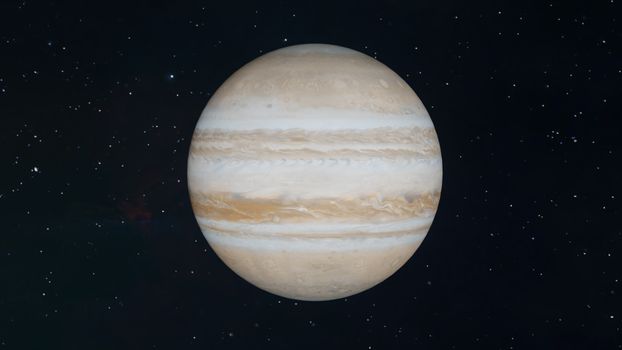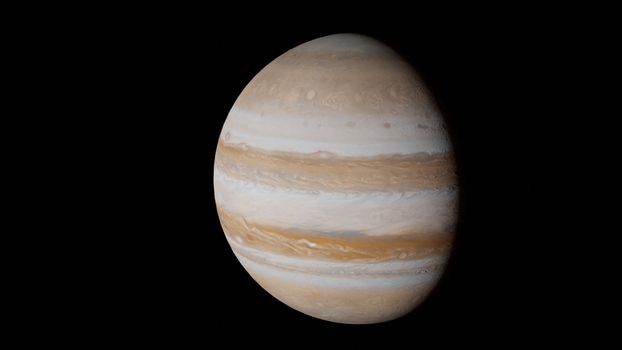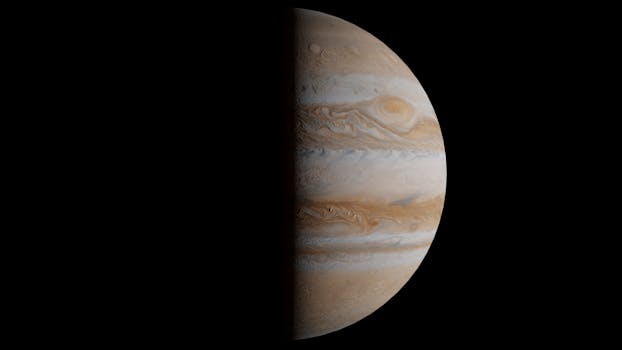
The gas giants Jupiter and Saturn dominate our solar system not only in size, but in atmospheric dynamics, chemistry, and weather phenomena. Both planets may appear as swirling jewels in the night sky, yet beneath their colorful clouds lie fascinating differences—and a few surprising similarities. By comparing the atmospheres of Jupiter and Saturn, scientists gain crucial insights into planetary evolution, climate mechanics, and even the potential for exotic forms of weather across the cosmos. As space missions such as Juno and Cassini have revealed, the “gaseous twins” are far more complex than once believed. Let’s explore what makes each planet’s atmosphere unique, how they stack up side by side, and what we might expect from future discoveries.
The Basics: Composition and Structure of Jupiter and Saturn’s Atmospheres
Both Jupiter and Saturn are primarily composed of hydrogen and helium, echoing the primordial makeup of the early solar system. However, the devil is in the details when it comes to atmospheric layers, trace gases, and cloud decks.
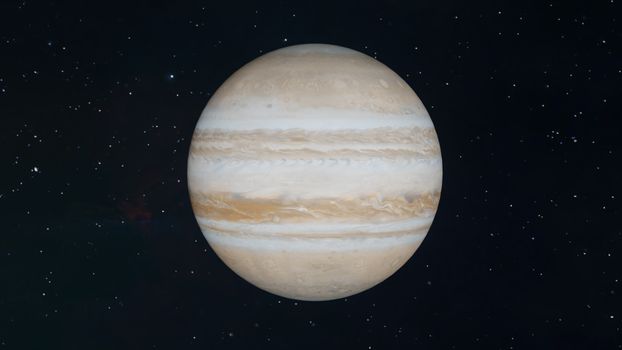
Jupiter’s atmosphere is about 90% hydrogen and 10% helium by volume, with traces of methane, ammonia, water vapor, and other compounds. Saturn’s atmosphere is similar but contains slightly more helium by proportion—about 96% hydrogen and 3% helium, with the remainder made up of similar trace elements. This subtle difference is significant: Saturn is less dense, and its lower helium content in the upper atmosphere is thought to result from helium “raining out” into the planet’s interior, a process not as prominent on Jupiter.
.png)
The structure of each atmosphere is also layered. Both planets have three main cloud layers, but their composition and thickness vary:
- The uppermost clouds are made of ammonia ice. - The middle layer consists of ammonium hydrosulfide. - The deepest visible clouds are water ice or water droplets.On Jupiter, these layers are thicker, and the planet’s stronger gravity compresses them more than on Saturn. Saturn’s lower gravity and cooler temperatures lead to higher, thinner cloud decks. Notably, Saturn’s haze gives it a more uniform, pastel-yellow appearance, while Jupiter’s clouds are more vividly banded.
Dynamic Weather: Storms, Winds, and Phenomena
Both planets are famous for their powerful atmospheric dynamics, but the scale and intensity of their storms and winds differ dramatically.
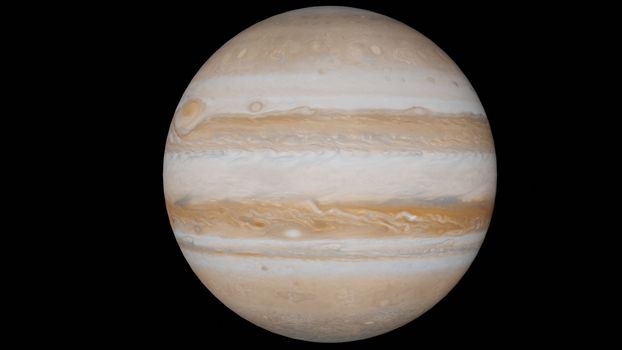
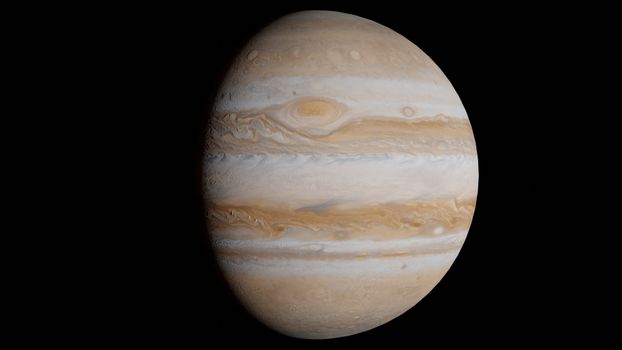
Jupiter's most iconic feature is the Great Red Spot, a colossal storm wider than Earth that has raged for at least 350 years. Winds in this anticyclone reach up to 432 km/h (268 mph). Jupiter's equatorial jet streams blaze at nearly 540 km/h (335 mph), and the planet’s rapid 10-hour rotation period fuels extreme weather patterns and deep convective activity.
Saturn, while also home to fierce storms, is known for its hexagonal storm at the north pole—a bizarre, six-sided jet stream that encircles the pole with winds exceeding 320 km/h (200 mph). Saturn’s storms are less long-lived but can be enormous: the 2010-2011 “Great White Spot” storm wrapped around the planet and persisted for months. Saturn’s winds are among the fastest in the solar system, with equatorial jets reaching 1,800 km/h (1,100 mph), more than three times faster than Jupiter’s.
Lightning occurs on both planets, but Saturn’s strikes are up to 10,000 times more powerful than those on Earth, according to Cassini’s observations. Jupiter’s lightning is also fierce, but usually takes place deeper within the cloud layers.
Color and Clouds: What Shapes Their Appearance?
Jupiter’s famously vibrant stripes and spots result from its mixture of chemical compounds, atmospheric circulation, and the depth of its clouds. The alternating light and dark bands, called zones and belts, are created by jet streams that circulate in opposite directions. The colors—ranging from white, brown, yellow, to red—are caused by chemical reactions, likely involving sulfur and phosphorus, in the presence of sunlight.
Saturn, in contrast, appears more muted and pale. Its yellowish hue is due to ammonia clouds and a thick upper atmosphere haze, which scatters sunlight and masks deeper cloud layers. Saturn’s bands are present but less pronounced, in part because of weaker color-contrasting chemicals and a thicker atmospheric haze. Occasionally, massive storms can temporarily alter Saturn’s appearance, such as the aforementioned Great White Spot.
Temperature and Pressure: Extremes on Both Worlds
Temperature and pressure profiles are crucial for understanding atmospheric processes. Both planets are cold, but Saturn is colder due to its greater distance from the Sun.
At the cloud tops, Jupiter’s temperatures average around -145°C (-234°F), while Saturn’s are even chillier at about -178°C (-288°F). Below the clouds, temperatures and pressures rise rapidly. At a depth where pressure is 1 bar (Earth’s sea level), Jupiter is about -108°C (-162°F), and Saturn is about -139°C (-218°F).
One unique feature is the source of heat: both planets emit more energy than they receive from the Sun. Jupiter radiates 1.6 times more energy, largely due to gravitational contraction and leftover heat from its formation. Saturn’s excess emission is attributed to a similar process plus the aforementioned helium rain, which releases heat as helium droplets sink and dissolve into the metallic hydrogen interior.
Comparing Key Atmospheric Features: Side-by-Side Data
To better illustrate the similarities and differences, here’s a comparative table of key atmospheric characteristics:
| Feature | Jupiter | Saturn |
|---|---|---|
| Main Components | 90% H₂, 10% He | 96% H₂, 3% He |
| Cloud Layers | Ammonia, ammonium hydrosulfide, water | Ammonia, ammonium hydrosulfide, water |
| Average Cloud-top Temperature | -145°C (-234°F) | -178°C (-288°F) |
| Peak Wind Speeds | 540 km/h (335 mph) | 1,800 km/h (1,100 mph) |
| Notable Storms | Great Red Spot | Hexagon, Great White Spot |
| Lightning Power | ~10x Earth's | ~10,000x Earth's |
| Atmospheric Pressure at 1 bar | -108°C (-162°F) | -139°C (-218°F) |
| Energy Emitted vs. Received | 1.6x solar input | 2.3x solar input |
What Future Missions and Research May Reveal
Despite decades of study, both Jupiter and Saturn hold many atmospheric secrets. Current and upcoming missions promise to shed new light on their mysteries.
NASA’s Juno spacecraft has been orbiting Jupiter since 2016, using its microwave radiometer and gravity science instruments to peer deep into the planet’s clouds. Juno’s findings have revealed that Jupiter’s atmospheric jet streams extend thousands of kilometers below the cloud tops—far deeper than previously thought.
Saturn was studied in detail by the Cassini spacecraft, which orbited the planet from 2004 to 2017. Cassini sent back data on Saturn’s seasonal changes, the dynamics of its polar hexagon, and the composition of its upper atmosphere. Yet, many questions remain, especially about the deeper layers and the precise chemistry driving atmospheric color and storm formation.
Future missions, such as the proposed Dragonfly mission to Saturn’s moon Titan and potential orbiters or probes for both gas giants, may provide more detailed data on atmospheric circulation, lightning, and even the potential for exotic forms of precipitation (such as helium rain or diamond rain, theorized to occur deep within both planets).
Why Comparing Jupiter and Saturn’s Atmospheres Matters
Comparing Jupiter and Saturn’s atmospheres is more than an academic exercise. These planets are natural laboratories for extreme weather, chemistry, and fluid dynamics on a scale unmatched on Earth. Studying them helps scientists understand planetary formation, the history of our solar system, and the types of conditions that may exist on gas giants orbiting other stars.
For example, knowing how storms and jet streams form on Jupiter and Saturn can inform climate models for exoplanets. The processes driving their excess heat and dynamic weather offer clues about the evolution of giant planets in general. Additionally, the discovery of “helium rain” on Saturn has implications for planetary interiors and energy balances across the universe.
In summary, the atmospheres of Jupiter and Saturn present a tale of two giants: similar in their primordial origins, but shaped by distinct internal and external forces. As technology and exploration advance, our understanding of these behemoths will only deepen—offering new surprises and, perhaps, a glimpse of the uncharted weather across the cosmos.