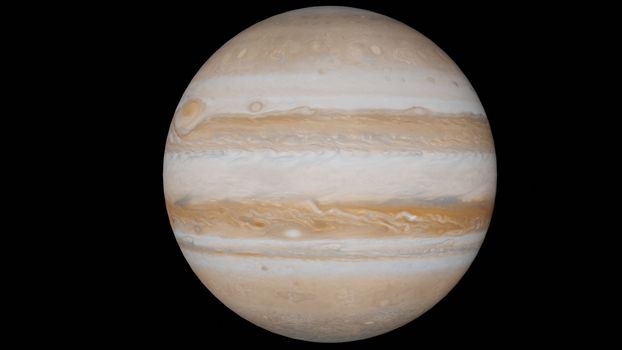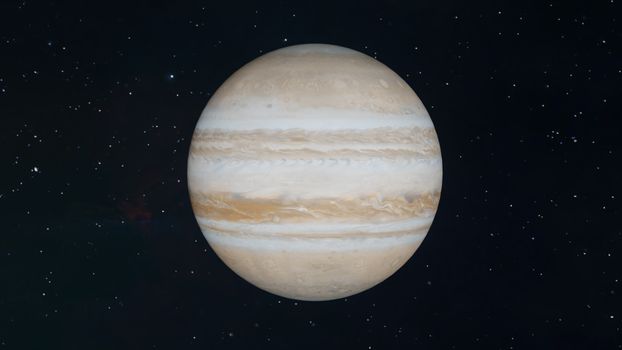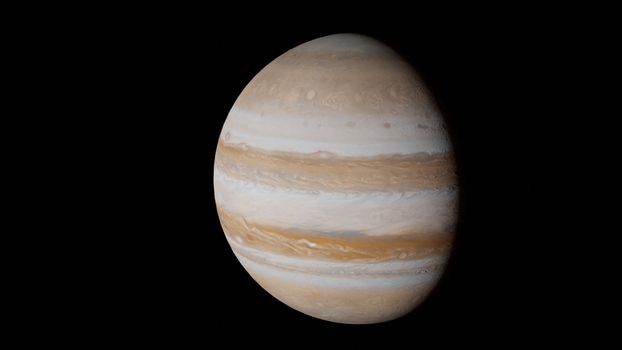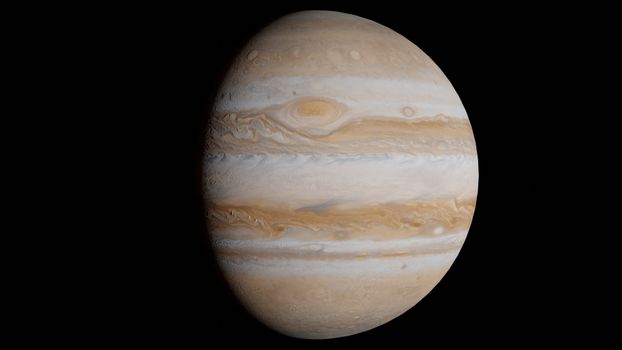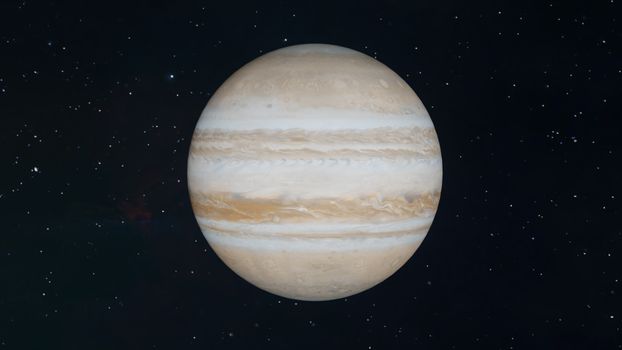
Jupiter, the largest planet in our solar system, has long fascinated astronomers and planetary scientists. Its swirling clouds, colossal storms, and deep, mysterious atmosphere present both a scientific challenge and a technological frontier. Traditional ground-based telescopes and early spacecraft delivered only glimpses of Jupiter’s atmospheric wonders. Today, however, a new generation of technologies is revolutionizing how we explore and understand the gas giant’s dynamic atmosphere. From cutting-edge orbiters equipped with next-level sensors to remote sensing innovations and even artificial intelligence, these tools are unlocking secrets hidden beneath Jupiter’s clouds.
Advancements in Spacecraft Instrumentation: Eyes on the Giant
In the last decade, spacecraft dedicated to Jupiter exploration have become increasingly sophisticated. NASA’s Juno mission, launched in 2011 and currently orbiting Jupiter, is a testament to these advancements. Juno’s payload includes an array of instruments that represent the latest in planetary science technology:
- JunoCam: Not just a camera, but a public outreach tool capturing high-resolution color images of Jupiter’s poles and cloud tops. - Microwave Radiometer (MWR): Penetrates deep into Jupiter’s thick clouds, measuring thermal emissions to probe up to 350 kilometers below the visible cloud deck. - Jovian Infrared Auroral Mapper (JIRAM): Detects infrared light to study atmospheric composition and temperature, especially near the polar auroras.These instruments provide data with unprecedented detail. For example, JIRAM has revealed that ammonia gas wells up from Jupiter’s depths in unexpected patterns, offering clues about atmospheric circulation. The MWR’s ability to see through clouds has shown that Jupiter’s famous belts and zones extend much deeper than previously thought—over 3,000 kilometers, according to 2018 findings.
.png)
Remote Sensing Breakthroughs: Probing Jupiter from Afar
While spacecraft offer close-up views, remote sensing technologies on Earth and in space-based observatories have taken giant leaps forward. Adaptive optics on ground-based telescopes like the Very Large Telescope (VLT) in Chile and the Keck Observatory in Hawaii now correct for atmospheric distortions, allowing for sharp, high-contrast images of Jupiter’s turbulent weather.
Spectroscopy, which splits light into its component wavelengths, is another critical tool. The James Webb Space Telescope (JWST), launched in 2021, brings near- and mid-infrared spectroscopic capabilities to bear on Jupiter’s atmosphere. In its first observations, JWST detected new signatures of water vapor, ammonia, and complex hydrocarbons in the planet’s upper atmosphere, revealing chemical processes never before observed.
These advances mean that scientists can now monitor changes in Jupiter’s atmosphere in real-time, track the formation and dissipation of storms, and study the planet’s auroras in fine detail—all from millions of kilometers away.
Data Analysis and Artificial Intelligence: Making Sense of the Storm
The sheer volume of data collected by modern instruments presents its own challenge. A single Juno flyby can generate over 6 terabytes of data. To process and interpret this information, researchers increasingly turn to artificial intelligence (AI) and machine learning.
AI algorithms now help classify cloud types, track storm evolution, and identify atmospheric features in images and spectroscopic data. For example, a 2022 study used convolutional neural networks (a type of deep learning) to automatically detect lightning flashes in JunoCam images, increasing detection rates by 40% compared to manual methods.
Machine learning also aids in predicting atmospheric events. By training models on historical data, scientists can forecast the development of storms or the appearance of new atmospheric features, leading to more targeted observation campaigns and a deeper understanding of Jupiter’s climate.
Balloon and Probe Technologies: The Next Frontier
Looking ahead, new missions propose to descend even deeper into Jupiter’s atmosphere using advanced probe and balloon technologies. While Galileo’s atmospheric probe (1995) provided the first direct measurements of pressure, temperature, and composition, its technology was limited by the era.
Future concepts, such as NASA’s proposed Jupiter Atmospheric Probe and the European Space Agency’s JUICE mission, plan to deploy miniaturized sensors that can withstand extreme pressures and temperatures. These probes may include:
- High-temperature electronics: Capable of surviving up to 1,000 atmospheres of pressure and temperatures over 500°C. - Miniature mass spectrometers: To directly sample and analyze atmospheric gases. - Super-pressure balloons: Designed to float at specific altitudes for extended periods, offering in situ observations of wind patterns, temperature gradients, and chemical processes.Such missions could provide the first continuous, long-term measurements from within Jupiter’s clouds, revolutionizing our understanding of its weather and deep atmospheric chemistry.
Comparing Technologies: How Far Have We Come?
To appreciate the leap in capability, consider the following comparison of past and current technologies used to study Jupiter’s atmosphere:
| Technology | Example Mission | Key Capabilities | Notable Discoveries |
|---|---|---|---|
| Radio Occultation | Pioneer 10 (1973) | Measured atmospheric density and temperature profiles via radio signal bending | First direct measurement of atmospheric layers |
| Entry Probe | Galileo Probe (1995) | In situ measurement of temperature, pressure, and composition up to 22 bars | Detected unexpected dryness and turbulence |
| Microwave Radiometry | Juno (2016–present) | Penetrates hundreds of km below clouds; maps ammonia, water distribution | Found deep atmospheric structure, unexpected ammonia patterns |
| Infrared Spectroscopy | James Webb Space Telescope (2021–present) | Remote sensing of chemical composition and thermal structure | Identified new hydrocarbon signatures, mapped auroras |
| AI Data Analysis | Juno, Hubble, JWST (2022–present) | Automated feature detection, storm tracking, event prediction | Improved detection of lightning, real-time storm monitoring |
This table highlights how each generation of technology has built upon the last, enabling ever more detailed and comprehensive studies of Jupiter’s complex atmosphere.
International Collaborations: A Global Effort to Unravel Jupiter’s Mysteries
No single nation or agency can claim all the advances in Jupiter atmospheric research. International collaboration is at the heart of this progress. The European Space Agency’s Jupiter Icy Moons Explorer (JUICE), launched in 2023, will study Jupiter’s atmosphere and magnetosphere while focusing on its moons. Japan’s Hisaki spacecraft, the Hubble Space Telescope, and ground-based observatories worldwide regularly coordinate observations to maximize scientific return.
Data-sharing platforms and joint observation campaigns allow researchers to combine datasets—such as simultaneous infrared, ultraviolet, and radio measurements—providing a multi-layered view of Jupiter’s atmospheric dynamics. For instance, during Juno’s close flybys, telescopes from Chile to Hawaii synchronously observe Jupiter, capturing changes in real-time and offering context for spacecraft data.
The Future of Jupiter Atmospheric Studies: What’s Next?
Looking ahead, several ambitious missions and technologies are on the horizon:
- Europa Clipper (NASA, launching 2024): While focused on Jupiter’s moon Europa, it will also make repeated passes through Jupiter’s magnetosphere, sampling charged particles and gases. - Next-generation balloons and drones: Concepts for robotic aerial vehicles that could sample multiple atmospheric layers for weeks or months, mapping wind speeds and chemical gradients in 3D. - Quantum sensors and advanced spectrometers: Offering greater sensitivity and precision, these devices promise to detect trace gases and isotopic ratios never before measured.With each new technology, scientists edge closer to answering fundamental questions: How does Jupiter’s atmosphere shape its weather and magnetic field? What processes drive its stunning auroras and storms? And what might Jupiter teach us about the atmospheres of giant exoplanets orbiting distant stars?
Final Thoughts on New Technologies for Studying Jupiter’s Atmosphere
The study of Jupiter’s atmosphere stands at the intersection of scientific curiosity and technological innovation. From deep-penetrating microwave sensors and AI-driven data analysis to international observational networks and future atmospheric probes, a new era has dawned for gas giant exploration. These breakthroughs not only unravel Jupiter’s mysteries but also refine our understanding of planetary atmospheres across the cosmos. As new missions launch and technologies mature, expect even more astonishing revelations from beneath Jupiter’s turbulent clouds.