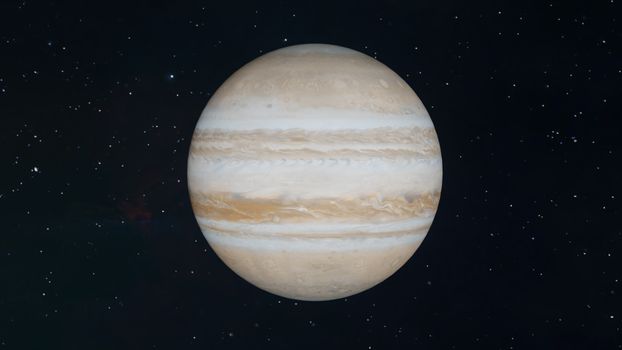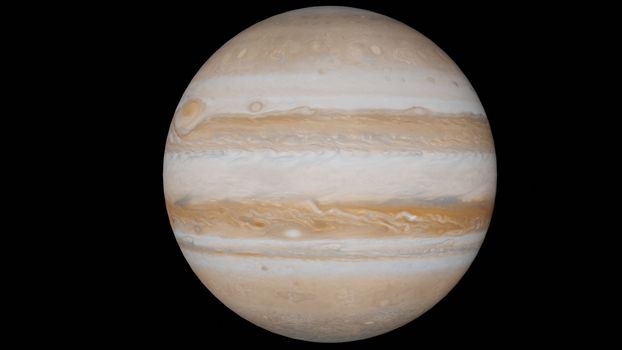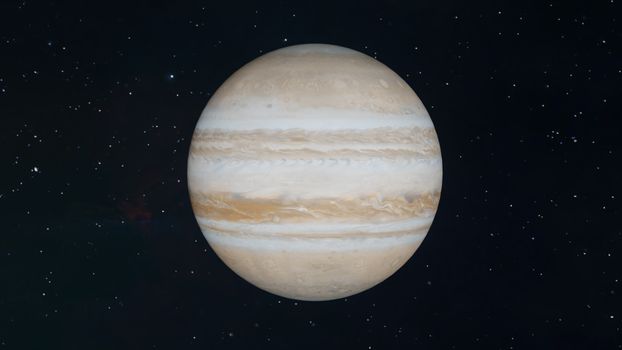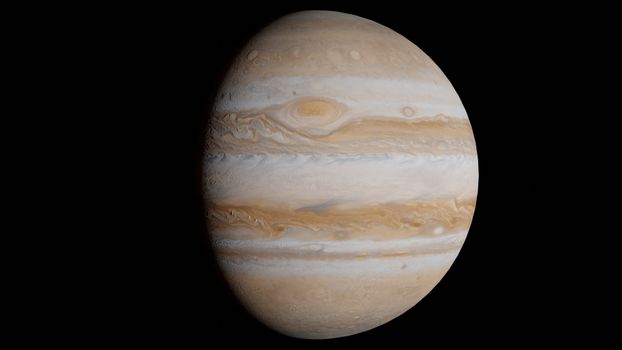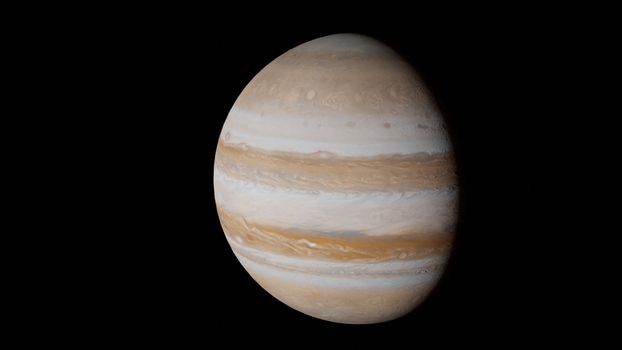
Jupiter, the largest planet in our solar system, is a world of extremes. Its swirling clouds, towering storms, and dynamic bands have long fascinated astronomers and planetary scientists. While much attention is given to Jupiter’s massive size, rapid rotation, and internal heat, one subtle yet significant factor also shapes its atmospheric dynamics: solar radiation. The Sun’s energy, though much weaker at Jupiter’s distance compared to Earth, plays a distinct and complex role in the evolution and behavior of the planet’s atmosphere. But what exactly is the impact of solar radiation on Jupiter’s atmospheric phenomena? In this article, we delve into the scientific insights, data, and ongoing mysteries surrounding this cosmic interplay.
The Journey of Solar Energy to Jupiter
Solar radiation is the energy emitted by the Sun, traveling through space in the form of electromagnetic waves, including visible light, ultraviolet (UV), and infrared. At Earth’s distance, this energy is substantial, driving weather, climate, and life itself. However, Jupiter orbits the Sun at an average distance of about 778 million kilometers (484 million miles), over five times farther from the Sun than Earth.
This distance dramatically weakens the intensity of solar radiation reaching Jupiter. According to the inverse square law, the solar energy per square meter at Jupiter is only about 4% of what reaches Earth. Specifically, Jupiter receives approximately 50.5 watts per square meter (W/m²) of solar irradiance at the top of its atmosphere, compared to Earth’s 1,361 W/m².
.png)
Despite this significant drop, solar radiation still has measurable effects on Jupiter’s upper atmosphere, influencing everything from temperature gradients to photochemical reactions. But unlike Earth, where sunlight is the dominant energy source, Jupiter’s atmospheric energy is mainly derived from its own internal heat. This distinction sets the stage for a unique interplay between internal and external energy inputs.
Solar Radiation’s Role in Jupiter’s Atmospheric Chemistry
Most of Jupiter’s atmospheric drama unfolds in its thick bands of ammonia clouds, colored by traces of compounds like ammonium hydrosulfide, phosphine, and hydrocarbons. Solar ultraviolet (UV) radiation, though relatively weak, is a powerful driver of photochemistry in Jupiter’s stratosphere and upper troposphere.
When UV photons penetrate Jupiter’s upper atmosphere, they break apart (photodissociate) molecules such as ammonia (NH₃), methane (CH₄), and water vapor (H₂O). This process triggers a cascade of chemical reactions that generate a host of complex compounds, including ethane, acetylene, and various organic hazes. These reactions help explain the planet’s subtle color variations and the formation of its high-altitude hazes.
For example, photolysis of methane by solar UV radiation leads to the production of heavier hydrocarbons:
CH₄ + UV photon → CH₃ + H CH₃ + CH₃ → C₂H₆ (ethane)
Over time, these products settle or react further, contributing to the formation of Jupiter’s characteristic brownish-red hues and its layered cloud structure. In fact, many of the chromophores (color-producing compounds) responsible for Jupiter’s bands are believed to be products of solar-driven photochemistry.
Heating Effects: Solar vs. Internal Energy
While solar radiation has clear chemical effects, its direct heating impact on Jupiter’s atmosphere is limited. Most of Jupiter’s atmospheric temperature profile is shaped by the planet’s internal heat—energy left over from its formation and ongoing gravitational contraction. In fact, Jupiter emits nearly twice as much energy as it receives from the Sun.
The table below compares the energy budgets of Earth and Jupiter:
| Planet | Solar Energy Received (W/m²) | Internal Energy Output (W/m²) | Primary Energy Source for Atmosphere |
|---|---|---|---|
| Earth | 1,361 | 0.08 | Solar Radiation |
| Jupiter | 50.5 | ~100 | Internal Heat |
This means that, unlike on Earth, where solar input dominates weather and climate, Jupiter’s weather systems are fueled more by heat rising from within the planet than by sunlight. However, the small amount of solar energy that does reach Jupiter is still crucial for driving temperature differences between the equator and the poles, albeit on a much smaller scale than on terrestrial planets.
Impact on Atmospheric Dynamics and Circulation Patterns
Jupiter’s iconic banded appearance and swirling storms are products of powerful atmospheric circulation. While internal heat drives most of these motions, solar radiation introduces subtle but important effects, particularly at high altitudes and in polar regions.
1. $1 Solar heating is most effective where sunlight strikes the planet directly: at the equator. Jupiter’s poles receive even less solar energy due to the planet’s slight axial tilt (just 3 degrees, compared to Earth’s 23.5 degrees). This leads to weak temperature gradients from equator to pole, much less pronounced than on Earth. The result is that Jupiter’s jet streams—high-altitude winds that define its bands—are mainly powered by internal convection, not solar-driven differences. 2. $1 Because Jupiter rotates rapidly (once every 9 hours and 55 minutes), any day-night heating differences caused by solar radiation are quickly evened out. This rapid rotation, combined with the dominance of internal heat, means Jupiter’s diurnal (day-night) temperature variation is less than 10 Kelvin (K) at most altitudes, compared to up to 20 K on Earth’s surface. 3. $1 Solar radiation also interacts with Jupiter’s powerful magnetic field, especially near the poles. When charged particles from the Sun (solar wind) collide with Jupiter’s upper atmosphere, they create stunning auroras—much brighter and more energetic than those on Earth. These auroras are visible in ultraviolet and infrared wavelengths and provide clues about the way solar energy is deposited in Jupiter’s uppermost atmospheric layers.Photochemical Hazes and Their Climatic Influence
One of the most visually distinctive impacts of solar radiation on Jupiter is the formation of photochemical hazes. These thin, high-altitude layers are produced when solar UV light drives chemical reactions among methane and other minor constituents.
Recent observations from NASA’s Juno spacecraft and the Hubble Space Telescope have revealed that Jupiter’s upper atmosphere contains several distinct haze layers. These hazes absorb solar radiation, altering the energy balance in the stratosphere. The presence of these layers affects the temperature structure, cloud formation, and even the colors seen in Jupiter’s cloud belts.
For instance, the so-called “blue haze” detected in ultraviolet images is attributed to the scattering of sunlight by small hydrocarbon particles formed through photochemistry. These hazes can also act as insulators, trapping heat in the stratosphere and contributing to temperature inversions—layers where the temperature actually increases with altitude, contrary to what’s found in the lower atmosphere.
Comparing Solar Radiation Impacts Across the Gas Giants
To better understand the role of solar radiation on Jupiter, it’s helpful to compare its effects with those on other gas giants in our solar system: Saturn, Uranus, and Neptune. Each of these planets receives varying amounts of solar energy due to their different distances from the Sun.
| Planet | Distance from Sun (AU) | Solar Irradiance (W/m²) | Main Source of Atmospheric Energy |
|---|---|---|---|
| Jupiter | 5.2 | 50.5 | Internal Heat |
| Saturn | 9.5 | 15 | Internal Heat |
| Uranus | 19.2 | 3.7 | Solar Radiation |
| Neptune | 30.1 | 1.5 | Internal Heat |
Interestingly, Uranus is a special case: it has almost no detectable internal heat source, so its thin atmosphere is primarily heated by the faint trickle of sunlight. In contrast, Jupiter, Saturn, and Neptune all have significant internal heat, making solar radiation a secondary player in their atmospheric energetics.
Why Understanding Solar Radiation’s Impact on Jupiter Matters
Studying the impact of solar radiation on Jupiter’s atmosphere is much more than a theoretical exercise. It helps scientists:
- Decipher the fundamental atmospheric processes at work on giant planets. - Understand the balance between internal and external energy sources. - Predict how similar processes might function on exoplanets orbiting distant stars. - Inform future missions, such as NASA’s Europa Clipper and ESA’s Jupiter Icy Moons Explorer (JUICE), by providing context for atmospheric entry and operations.Moreover, Jupiter serves as a natural laboratory for exploring how atmospheres can evolve under different energy regimes—knowledge that can be applied to the study of Earth, other solar system planets, and worlds beyond.
Final Reflections on Solar Radiation and Jupiter's Atmospheric Mysteries
Solar radiation may be a faint whisper compared to Jupiter’s roaring internal heat, but its influence is still written across the planet’s clouds, chemistry, and upper atmospheric dynamics. From igniting photochemical reactions that color the planet’s bands, to contributing to the formation of hazes and auroras, sunlight shapes Jupiter in ways both subtle and profound. By unraveling these effects, scientists not only unlock secrets about the king of planets, but also gain clues about the workings of gas giants around other stars—and perhaps, the very nature of planetary atmospheres themselves.