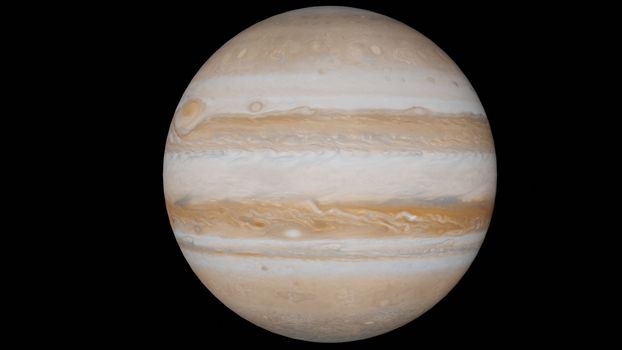
Jupiter’s Seasonal Chemistry: How the Gas Giant’s Atmosphere Evolves Throughout Its Long Year
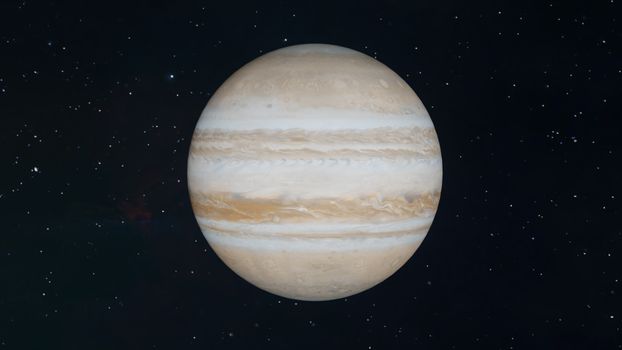
Jupiter, the giant of our solar system, has always inspired curiosity with its swirling storms, colorful bands, and enigmatic Great Red Spot. But beneath its mesmerizing clouds lies an even more fascinating story—one of chemistry in constant flux. Unlike Earth, Jupiter’s tilted axis is only about 3.1 degrees, meaning it doesn’t experience pronounced seasons like we do. Yet, subtle seasonal changes do occur, and they influence the chemical composition of Jupiter’s atmosphere in surprising ways.
Thanks to decades of spacecraft missions, telescopic observations, and advanced atmospheric modeling, scientists have begun to unravel how Jupiter’s atmospheric chemistry shifts over its nearly 12-Earth-year orbit around the Sun. This article will explore the key drivers of these changes, the main molecules involved, and what continuous monitoring has revealed about this gas giant’s ever-evolving face.
.png)
Understanding Jupiter’s Seasonal Cycle and Atmospheric Layers
To appreciate how Jupiter’s atmospheric chemistry changes with the seasons, it’s essential to understand its orbital and atmospheric context.
Jupiter’s orbital period is about 11.86 Earth years, meaning each “Jovian year” is nearly 12 times longer than a year on Earth. Its axis tilt of just 3.1 degrees (compared to Earth’s 23.5 degrees) means it has much milder seasonal variations. However, Jupiter’s eccentric orbit and immense size introduce other seasonal factors, especially in the upper atmosphere.
Jupiter’s atmosphere is layered, with each level containing different gases and responding differently to sunlight:
- $1 (up to ~50 km above clouds): Home to familiar clouds, ammonia, and water vapor. - $1 (50-320 km): Contains photochemical compounds like ethane and acetylene. - $1: Uppermost layers, influenced by solar radiation and Jupiter’s magnetic field.The chemical composition within and between these layers changes over time, driven by sunlight, internal heat, and complex atmospheric circulation.
The Main Ingredients: Jupiter’s Atmospheric Chemistry
Jupiter’s atmosphere is mostly hydrogen (about 90%) and helium (about 10%), but trace gases create its colorful appearance and dynamic weather.
The key chemical species include:
- $1: Forms the iconic white clouds in the upper troposphere. - $1: Uniformly mixed, but broken down by sunlight in the stratosphere. - $1: Exists deeper down; influences cloud formation. - $1: Present in small amounts, yet critical for cloud chemistry and color.The table below summarizes the main chemical constituents and their roles:
| Molecule | Typical Abundance | Atmospheric Layer | Role / Effects |
|---|---|---|---|
| Hydrogen (H₂) | ~90% | All layers | Main atmospheric component |
| Helium (He) | ~10% | All layers | Stable, inert background gas |
| Ammonia (NH₃) | 0.026% (260 ppm) | Troposphere | Cloud formation, color variation |
| Methane (CH₄) | 0.3% (3,000 ppm) | All layers | Photochemistry in stratosphere |
| Water vapor (H₂O) | ~0.0004% (variable) | Deeper troposphere | Clouds, energy balance |
| Hydrogen sulfide (H₂S) | Trace | Troposphere | Cloud chemistry, color |
| Phosphine (PH₃) | Trace | Troposphere | Clouds, provides spectral signatures |
| Ethane (C₂H₆), Acetylene (C₂H₂) | Trace | Stratosphere | Formed from methane by UV |
These molecules are not static; their concentrations and distributions shift in response to both internal dynamics and seasonal changes.
Seasonal Drivers: What Causes Changes in Jupiter’s Atmospheric Chemistry?
While Jupiter doesn’t have dramatic winters and summers like Earth, several seasonal and quasi-seasonal effects influence its atmospheric composition:
1. $1 Jupiter’s slightly elliptical orbit means its distance from the Sun changes by about 7% over a Jovian year. This small but significant variation alters the amount of solar energy reaching the atmosphere, especially at the top. Even a few percent change in sunlight can dramatically affect photochemical reactions in the upper layers. 2. $1 Jupiter’s rapid rotation (a day lasts just under 10 hours) and deep convection drive powerful jet streams and turbulence. These circulation patterns can enhance or suppress the movement of chemical species between layers, influencing how gases like ammonia and phosphine mix and distribute across latitudes and seasons. 3. $1 Jupiter’s powerful magnetic field funnels charged particles into its poles, triggering aurorae. These energetic events can break apart atmospheric molecules and trigger unique chemical reactions, especially near the poles, where seasonal sunlight also varies. 4. $1 Solar ultraviolet (UV) radiation breaks down methane, producing complex hydrocarbons (like ethane and acetylene). The rates of these reactions shift with changes in solar input and can vary by latitude and season.Observed Seasonal Changes: What Do the Data Show?
Thanks to missions like Voyager, Galileo, Cassini, Juno, and a fleet of ground-based telescopes, scientists have tracked several seasonal chemical changes in Jupiter’s atmosphere:
- $1 Observations from NASA’s Cassini spacecraft revealed that stratospheric hydrocarbons such as ethane (C₂H₆) and acetylene (C₂H₂) show significant seasonal changes, especially at the poles. During periods of prolonged sunlight in one hemisphere, hydrocarbon concentrations increase due to enhanced photolysis of methane. For example, Cassini data from 2000-2010 showed a 20-30% increase in ethane near the summer pole compared to the winter pole. - $1 Ammonia concentrations in the upper troposphere appear to fluctuate seasonally, with higher concentrations observed in regions experiencing greater solar illumination. This alters cloud opacity and coloration, contributing to subtle shifts in the bands and zones visible from Earth. - $1 Near Jupiter’s poles, the combination of seasonal sunlight and auroral particle bombardment produces unique chemical signatures. For instance, researchers have detected elevated levels of complex ions and nitriles (nitrogen-bearing molecules) in polar regions during periods of increased sunlight. - $1 Due to Jupiter’s minimal axial tilt, latitudinal differences are less pronounced than on Earth. However, during certain points in its orbit, one hemisphere receives more sunlight for several years, leading to hemispheric differences in stratospheric chemistry.Comparing Jupiter’s Seasonal Chemistry With Other Planets
Jupiter’s seasonal chemistry may seem subtle compared to Earth’s dramatic shifts, but it’s more pronounced than on some other gas giants. For context, here’s how Jupiter stacks up against Saturn, Uranus, and Neptune:
| Planet | Axial Tilt (degrees) | Orbital Period (Earth years) | Notable Seasonal Chemical Changes |
|---|---|---|---|
| Jupiter | 3.1 | 11.86 | Hydrocarbon increases at poles, subtle ammonia/cloud changes |
| Saturn | 26.7 | 29.45 | Strong hemispheric differences in hydrocarbons and haze, pronounced seasonal bands |
| Uranus | 97.8 | 84.0 | Extreme seasonal changes, methane cloud shifts |
| Neptune | 28.3 | 164.8 | Gradual seasonal trends in cloud activity and methane chemistry |
As the table shows, Jupiter’s low axial tilt means its seasonal chemistry is less dramatic than Saturn or Uranus, but its long year and dynamic atmosphere still produce measurable, fascinating changes.
Why Seasonal Changes in Jupiter’s Chemistry Matter
Understanding Jupiter’s seasonal atmospheric chemistry isn’t just an academic exercise—it has broader implications for planetary science and even for studying exoplanets:
- $1 Tracking chemical changes helps scientists model Jupiter’s circulation, cloud formation, and storm evolution. These insights improve our understanding of gas giant weather systems, which are far more powerful and enduring than anything on Earth. - $1 Seasonal shifts in trace chemicals like ammonia and water vapor can reveal clues about Jupiter’s deep interior and its formation history. For example, recent Juno results suggest that water makes up about 0.25% of the molecules in Jupiter’s atmosphere near the equator, a number that helps constrain models of how the planet formed. - $1 By comparing Jupiter’s seasonal chemistry with other planets, both in our solar system and around other stars, scientists can learn how gas giants evolve and what atmospheric traits might be common in exoplanets. - $1 Knowing when and where atmospheric changes occur helps space agencies plan future missions and observations to capture the most interesting data.Looking Ahead: The Future of Monitoring Jupiter’s Seasonal Chemistry
Continuous observation is key to unraveling Jupiter’s atmospheric secrets. The Juno mission (since 2016) continues to deliver high-resolution data on atmospheric composition and dynamics. Meanwhile, the James Webb Space Telescope (JWST) and powerful ground-based observatories are poised to detect even subtler chemical changes over time.
In the coming years, multi-spectral imaging and advanced spectroscopy will allow researchers to track the evolution of specific molecules across Jupiter’s long seasons. The European Space Agency’s Jupiter Icy Moons Explorer (JUICE), set to arrive in the early 2030s, will further expand our knowledge, linking atmospheric changes to interactions with Jupiter’s moons.