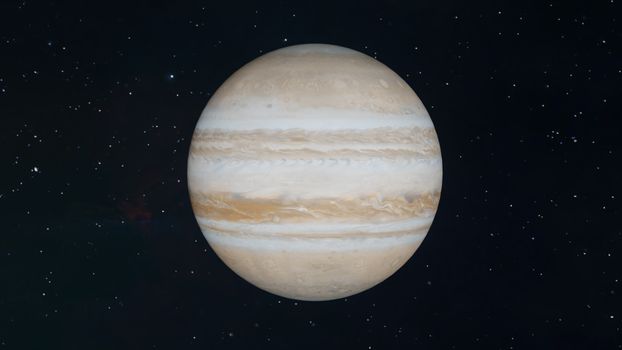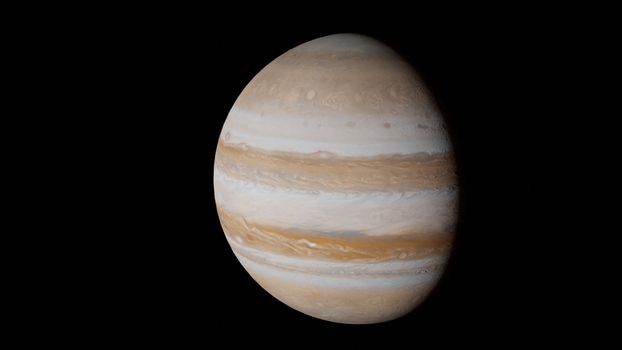
Jupiter is the largest planet in our solar system, boasting a mass 318 times greater than Earth and a diameter over 11 times wider. But what truly sets Jupiter apart isn’t just its size—it’s the planet’s mesmerizing, complex atmosphere. Composed mostly of gases rather than solid ground, Jupiter’s atmosphere is a swirling, ever-changing tapestry of storms, bands, and colors, all governed by the unique mix of gases found within. But what exactly are the main gases in Jupiter’s atmosphere, and how do these gases shape the planet’s most iconic features and characteristics? Let’s dive deep into Jupiter’s atmospheric makeup and discover the science behind its spectacular appearance and behavior.
The Core Composition: Dominant Gases in Jupiter’s Atmosphere
Jupiter is often described as a “gas giant,” but what does this term really mean? Unlike Earth, which has a solid surface and a relatively thin atmosphere, Jupiter’s entire body is made up of gases and liquids, with any solid core buried deep beneath thick, turbulent layers. The two primary gases in Jupiter’s atmosphere are hydrogen and helium, but a host of other trace gases play a crucial role as well.
According to measurements from the Galileo spacecraft and Earth-based spectroscopy, Jupiter’s atmospheric composition by volume is approximately:
.png) - Hydrogen (H₂): 89.8%
- Helium (He): 10.2%
- Methane (CH₄): 0.3%
- Ammonia (NH₃): 0.026%
- Water vapor (H₂O): 0.0004% (variable)
- Trace amounts of ethane, phosphine, and other compounds
- Hydrogen (H₂): 89.8%
- Helium (He): 10.2%
- Methane (CH₄): 0.3%
- Ammonia (NH₃): 0.026%
- Water vapor (H₂O): 0.0004% (variable)
- Trace amounts of ethane, phosphine, and other compounds
This simple mixture sets the stage for the planet’s unique weather, colors, and overall behavior.
Hydrogen and Helium: The Foundation of a Gas Giant
Hydrogen and helium dominate Jupiter’s atmosphere, making up more than 99% of its composition. These two elements are the most abundant in the universe and are also the main building blocks of our Sun. But on Jupiter, they behave differently due to the planet’s immense gravity and pressure.
Hydrogen exists in molecular form in the upper atmosphere but transitions into a metallic state at extreme pressures deep within the planet. This metallic hydrogen acts like an electrical conductor and is thought to generate Jupiter’s powerful magnetic field—the strongest of any planet in the solar system, measuring about 20,000 times stronger than Earth’s.
Helium, being inert and lighter than hydrogen, is distributed more evenly but is slightly depleted in the upper layers compared to the Sun. Scientists believe this is because helium slowly “rains out” deeper into the planet, forming droplets that sink, releasing heat as they fall. This process is a key contributor to Jupiter’s internal heat, which radiates more energy than the planet receives from the Sun.
Trace Gases: The Colors and Clouds of Jupiter
While hydrogen and helium set the background, it’s the trace gases—methane, ammonia, water vapor, and more—that paint Jupiter’s atmospheric masterpiece.
Methane (CH₄) is responsible for absorbing certain wavelengths of light, contributing to the subtle hues observed in Jupiter’s clouds. Ammonia (NH₃), on the other hand, condenses in the upper atmosphere to form brilliant white clouds. Below these clouds, deeper layers contain water vapor and traces of other chemicals, each forming their own cloud decks at different altitudes.
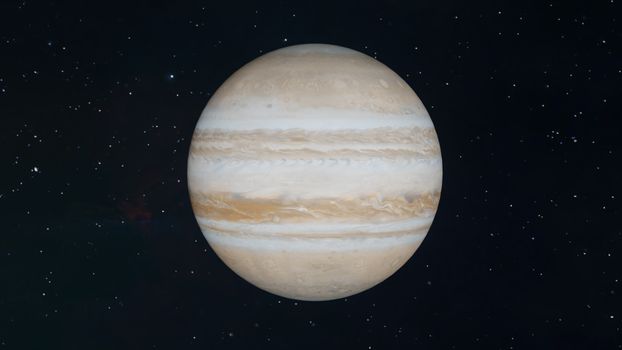
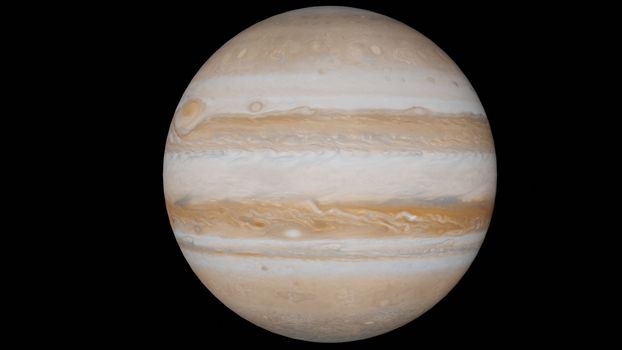
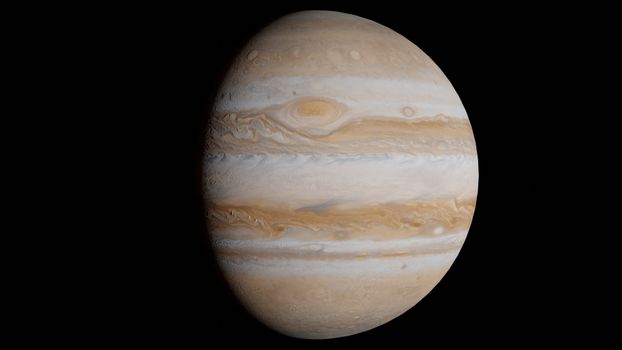
The most famous features of Jupiter, such as the Great Red Spot and the alternating light and dark cloud bands, are shaped by the complex interactions between these gases. For example, ammonia ice clouds create the planet’s white zones, while deeper clouds of ammonium hydrosulfide and water give rise to the brown and orange belts.
Interestingly, the exact compounds responsible for the Great Red Spot’s color remain a mystery. Scientists suspect complex organic molecules, sulfur compounds, or phosphorus-based chemicals, all formed from the interplay of trace gases under intense ultraviolet radiation from the Sun.
How Jupiter’s Gases Drive Its Weather and Climate
Jupiter’s atmosphere is in constant motion, driven by rapid rotation (a Jovian day lasts just under 10 hours) and the heat generated within the planet. The varying composition and distribution of gases at different altitudes create powerful jet streams, storms, and persistent cloud bands.
For example, ammonia freezes at higher altitudes, forming thick, reflective clouds that drive energy exchange between different layers. Below, water vapor condenses into storm systems far more massive than those on Earth. The planet’s rapid rotation causes the Coriolis effect to split its atmosphere into multiple east-west jet streams, resulting in the striking striped appearance.
The presence of methane and ammonia also means that Jupiter’s atmosphere is more “reducing” than Earth’s, preventing the formation of free oxygen and thus leading to very different chemical and weather patterns. Lightning storms on Jupiter, detected by the Juno spacecraft, are fueled by water vapor and can be ten times more powerful than those on Earth.
Comparing Jupiter’s Atmospheric Gases to Other Planets
Jupiter isn’t alone in having a thick, gaseous envelope—but its exact mix of gases is unique. Comparing Jupiter’s atmosphere to those of Saturn, Uranus, and Earth reveals fascinating differences in composition and resulting characteristics.
| Planet | Hydrogen (%) | Helium (%) | Methane (%) | Ammonia (%) | Water Vapor (%) |
|---|---|---|---|---|---|
| Jupiter | 89.8 | 10.2 | 0.3 | 0.026 | 0.0004 |
| Saturn | 96.3 | 3.25 | 0.45 | 0.012 | 0.0004 |
| Uranus | 82.5 | 15.2 | 2.3 | Trace | Trace |
| Earth | 0.000055 | 0.00052 | 0.00018 | Trace | ~1 (variable) |
As the table shows, the gas giants are dominated by hydrogen and helium, but the ratios—and the trace amounts of methane and ammonia—set each planet apart. Earth, by contrast, is mostly nitrogen and oxygen, with virtually no hydrogen or helium in its atmosphere.
The Role of Minor Gases in Shaping Jupiter’s Magnetosphere and Radiation Belts
While hydrogen and helium drive Jupiter’s bulk properties, minor gases like phosphine (PH₃), ethane (C₂H₆), and acetylene (C₂H₂) play a surprising role in the planet’s intense radiation environment.
Phosphine, for example, is detected in relatively high amounts in Jupiter’s atmosphere, suggesting vigorous vertical mixing from deep, hot layers. This mixing brings up other molecules that, when exposed to sunlight and charged particles, break apart and recombine, forming the complex haze layers seen high above the clouds.
Jupiter’s strong magnetic field traps charged particles—mostly electrons and protons—creating radiation belts far more intense than those around Earth. The interaction of these particles with atmospheric gases produces radio emissions and auroras at Jupiter’s poles, which can be observed even from Earth-based telescopes.
What We’ve Learned from Probes and Telescopes
Our understanding of Jupiter’s atmospheric gases has dramatically improved thanks to a series of spacecraft missions and advances in telescope technology. The Galileo probe, which entered Jupiter’s atmosphere in 1995, directly sampled its composition, confirming predictions about hydrogen and helium ratios and detecting important trace gases.
The ongoing Juno mission, orbiting Jupiter since 2016, uses microwave and infrared sensors to probe beneath the cloud tops, revealing detailed maps of ammonia and water distribution. These findings have challenged previous assumptions, showing that Jupiter’s atmosphere is far more dynamic and variable than once thought.
Ground-based telescopes and the Hubble Space Telescope continue to monitor changes in Jupiter’s colors and storms, providing crucial context for interpreting chemical data.
Jupiter’s Gases: The Key to Its Mysteries
From its swirling storms to its vibrant bands and colossal magnetic field, Jupiter’s unique characteristics all tie back to the interplay of its main atmospheric gases. Hydrogen and helium form the base upon which trace gases like methane, ammonia, and water vapor create the planet’s visible features and drive its weather. Minor gases further influence its complex radiation environment and atmospheric chemistry.
As our tools for observing Jupiter become ever more sophisticated, new discoveries about these gases continue to reshape our understanding—not just of Jupiter, but of giant planets across the galaxy.