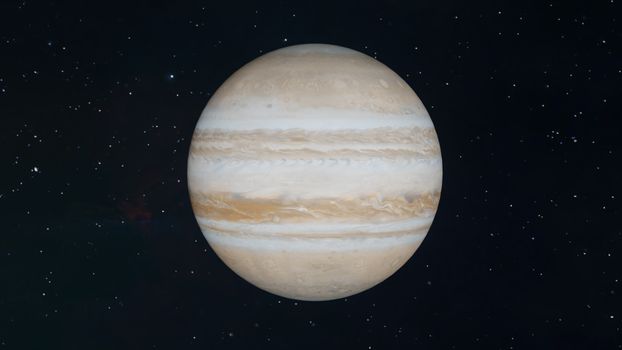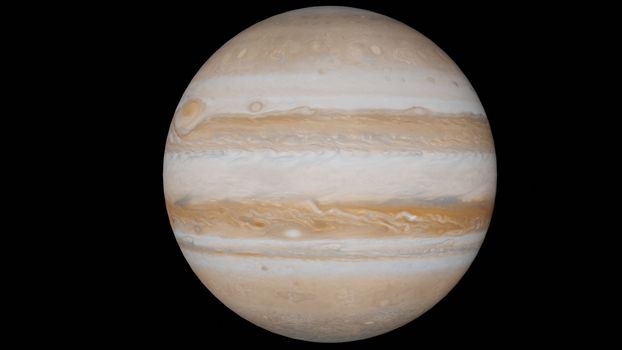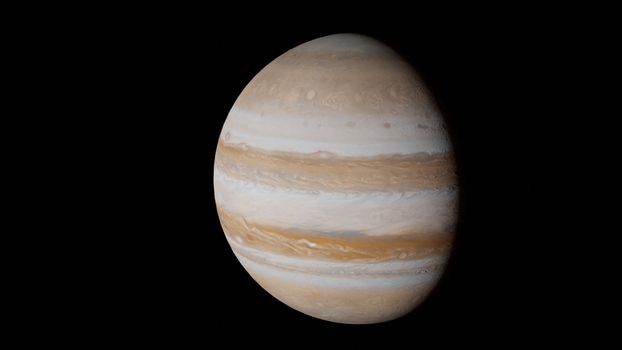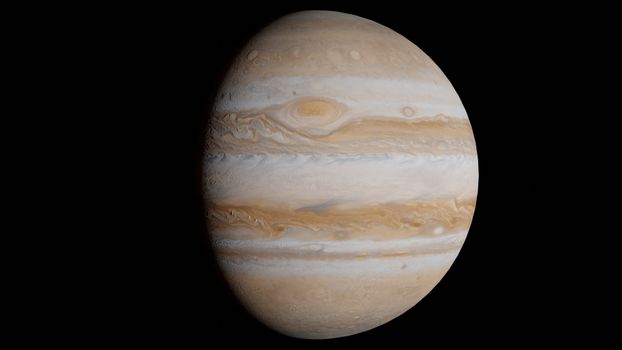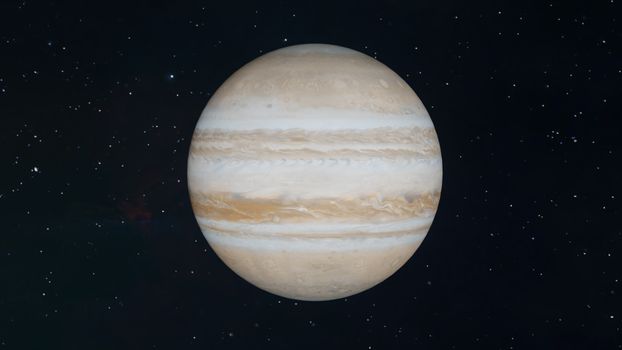
Jupiter is the largest planet in our solar system and boasts an atmosphere so vast and complex that it has fascinated astronomers for centuries. Unlike Earth, Jupiter doesn’t have a solid surface; instead, it’s enveloped by thick layers of gas, storms larger than our planet, and cloud patterns that shift and swirl with mesmerizing intensity. But how do scientists study such a distant and dynamic atmosphere, separated from us by over 588 million kilometers at its closest approach? The answer lies in a suite of cutting-edge technologies—both remote and up-close—that work together to peel back the mysteries of the Jovian skies. In this article, we’ll explore the remarkable technologies used to probe Jupiter’s atmosphere, from orbiting spacecraft to powerful telescopes and innovative instruments.
Remote Sensing: Observing Jupiter from Afar
One of the primary ways scientists study Jupiter’s atmosphere is through remote sensing—using instruments that observe the planet from a distance, either from Earth or from spacecraft. Remote sensing allows us to gather data on atmospheric composition, temperature, and motion without ever needing to touch Jupiter itself.
Ground-based telescopes, such as the Keck Observatory in Hawaii and the Very Large Telescope in Chile, have played a crucial role. These observatories are equipped with advanced spectrometers and adaptive optics systems that compensate for the blurring effects of Earth’s atmosphere. With these technologies, astronomers can resolve cloud features in Jupiter’s atmosphere as small as a few hundred kilometers across.
.png)
Space-based telescopes take this a step further. The Hubble Space Telescope, orbiting above Earth’s atmosphere, has provided breathtaking images and ultraviolet (UV) observations of Jupiter’s auroras. The James Webb Space Telescope (JWST), launched in 2021, is contributing groundbreaking infrared data, revealing heat signatures and chemical compositions hidden beneath Jupiter’s upper clouds.
Remote sensing doesn’t just capture pretty pictures; it provides hard data. For example, in 1995, the Galileo spacecraft’s Near-Infrared Mapping Spectrometer (NIMS) analyzed the composition of clouds and the distribution of ammonia, water vapor, and other molecules, giving us a new understanding of Jupiter’s chemical soup.
Spacecraft Flybys and Orbiters: Up-Close Exploration
While telescopes provide a global view, spacecraft sent to Jupiter offer a much closer look at its atmospheric layers. Several missions have made invaluable contributions by flying past Jupiter or orbiting the giant planet.
The Galileo orbiter, launched by NASA in 1989, became the first spacecraft to orbit Jupiter in 1995. Over the course of eight years, Galileo sent back a treasure trove of data with its suite of instruments, including the Photopolarimeter Radiometer (PPR) and the Near-Infrared Mapping Spectrometer (NIMS). These instruments measured temperatures, cloud heights, and the distribution of gases, helping scientists map Jupiter’s atmospheric structure in three dimensions.
NASA’s Juno spacecraft, which arrived at Jupiter in 2016, represents a new era in Jovian atmospheric research. Juno is equipped with a microwave radiometer that penetrates deep into Jupiter’s cloud layers, revealing structures and dynamics hidden from view at other wavelengths. Its JunoCam camera, though primarily for public outreach, has captured high-resolution images of Jupiter’s polar cyclones and storm systems.
Flyby missions from the Voyager, Cassini, and New Horizons spacecraft have also contributed. For instance, the Voyagers’ ultraviolet spectrometers measured the energetic processes driving Jupiter’s auroras, while Cassini’s composite infrared spectrometer revealed details about Jupiter’s heat emission.
Atmospheric Probes: Direct Sampling of Jupiter’s Gases
Perhaps the most dramatic method of studying Jupiter’s atmosphere is by sending probes directly into it. This was accomplished in 1995, when the Galileo Probe detached from the orbiter and plunged into Jupiter’s atmosphere at a blistering speed of 170,000 km/h.
The Galileo Probe was equipped with six scientific instruments, including a mass spectrometer, a nephelometer (to measure cloud density), and sensors for temperature, pressure, and lightning. In just 58 minutes before being destroyed by pressure and heat, the probe transmitted crucial data from more than 150 kilometers beneath the cloud tops. Among its findings: the abundance of helium was lower than expected, and water vapor was less prevalent than models had predicted.
The success of the Galileo Probe demonstrated the unique value of in-situ measurements—data that can’t be obtained by remote sensing alone. While no new atmospheric probes are currently en route to Jupiter, future missions may employ advanced technologies, such as miniaturized sensors and high-temperature electronics, to survive longer and dive deeper.
Spectroscopy and Radiometry: Unveiling Jupiter’s Chemical Secrets
Spectroscopy is a powerful tool in planetary science, allowing researchers to decode the composition of Jupiter’s atmosphere by analyzing the light it emits and absorbs. Different molecules absorb and emit light at specific wavelengths, creating a spectral fingerprint that scientists can use to identify them, even from millions of kilometers away.
Jupiter’s atmosphere contains hydrogen, helium, ammonia, methane, water vapor, and trace amounts of other gases. By using spectrometers aboard spacecraft and telescopes, scientists have detected and measured these gases at various altitudes. For example, the JIRAM (Jovian Infrared Auroral Mapper) instrument on Juno analyzes infrared light to study auroras and thermal emissions, mapping temperature variations and gas concentrations across Jupiter’s poles.
Radiometry, meanwhile, measures the intensity of electromagnetic radiation (like infrared or microwave) coming from Jupiter. The Juno Microwave Radiometer (MWR) can probe up to 350 kilometers below the cloud tops, mapping ammonia concentrations and revealing how deep Jupiter’s iconic belts and zones extend.
Technological Comparison: Jupiter Atmospheric Research Tools
To better understand the range and capabilities of technologies used to study Jupiter’s atmosphere, see the comparative table below:
| Technology | Example Missions/Tools | Key Measurements | Unique Strengths | Limitations |
|---|---|---|---|---|
| Ground-based Telescopes | Keck, VLT | Cloud features, storm tracking, chemical signatures | Continuous monitoring, high-resolution imaging | Atmospheric distortion, limited by weather |
| Space-based Telescopes | Hubble, JWST | UV/IR imaging, auroras, heat signatures | No atmospheric interference, broad spectrum | Limited observing time, distance from Jupiter |
| Orbiters | Galileo, Juno | 3D atmospheric mapping, deep probing | Direct, long-term, close-up data collection | Limited lifespan, radiation exposure |
| Atmospheric Probes | Galileo Probe | Direct gas sampling, pressure, temperature | In-situ, ground-truth measurements | Short duration, destroyed by atmospheric conditions |
| Spectrometers & Radiometers | JIRAM, NIMS, MWR | Chemical composition, thermal mapping | High sensitivity, multi-depth analysis | Requires calibration, indirect sampling |
Emerging Technologies and Future Missions to Jupiter
As technology advances, so too does our ability to study Jupiter’s atmosphere with greater precision and depth. Several upcoming and proposed missions promise to expand our knowledge even further.
The European Space Agency’s Jupiter Icy Moons Explorer (JUICE), set to arrive at Jupiter in the early 2030s, will carry a host of next-generation instruments including the Sub-millimetre Wave Instrument (SWI) and the UVS spectrograph. While JUICE is primarily focused on Jupiter’s moons, its suite of sensors will also study Jupiter’s upper atmosphere, auroras, and magnetosphere interactions.
NASA is also considering future atmospheric probes equipped with modernized sensors, potentially using heat-resistant materials and artificial intelligence to survive longer in Jupiter’s hostile atmosphere. Innovations in miniaturized electronics, wireless telemetry, and even drone-like vehicles could one day allow for sustained exploration of Jupiter’s cloud layers.
Meanwhile, advances in Earth-based astronomy—such as the coming Extremely Large Telescope (ELT) with a 39-meter mirror—will offer unprecedented resolution, enabling us to monitor atmospheric changes in real time and in greater detail than ever before.
The Impact of Technology on Our Understanding of Jupiter’s Atmosphere
The technologies used to study Jupiter’s atmosphere have fundamentally changed our understanding of this giant planet. With each new tool or mission, we have uncovered surprising facts: ammonia storms that churn hundreds of kilometers deep, giant polar cyclones, and a dynamic chemistry far more complex than previously believed.
These advances aren’t just academic. By studying Jupiter, scientists gain insights into the formation of our solar system, the behavior of giant planets in other star systems, and the fundamental physics of atmospheric dynamics. Technologies developed for Jupiter missions—such as radiation-hardened electronics and advanced imaging systems—often find applications back on Earth, from weather forecasting to environmental monitoring.
The quest to understand Jupiter’s atmosphere is far from over. As new instruments come online and innovative missions are launched, we can expect even more dramatic discoveries from the gas giant’s ever-changing skies.