Jupiter: Unveiling the Secrets of Our Solar System's Giant
Jupiter, the behemoth of our solar system, holds the title of the largest planet and continues to captivate both astronomers and the general public with its mesmerizing storms and profound mysteries. This gas giant's unique attributes and pivotal role in the solar system make it a subject of fascination and scientific study. Here, we delve into some of the most intriguing aspects of Jupiter, shedding light on its complexities and astonishing features.
Jupiter's Composition and Atmosphere
.png)
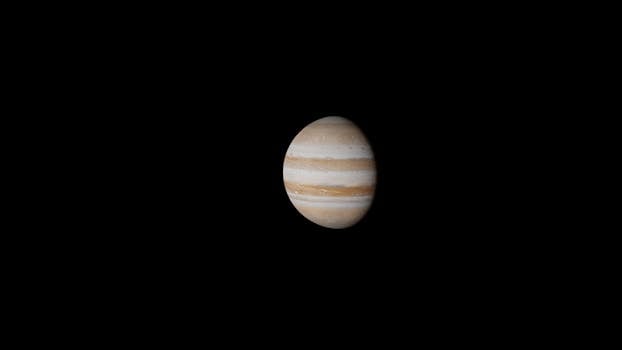
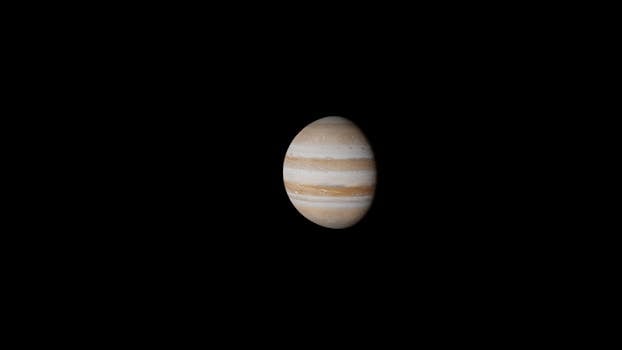
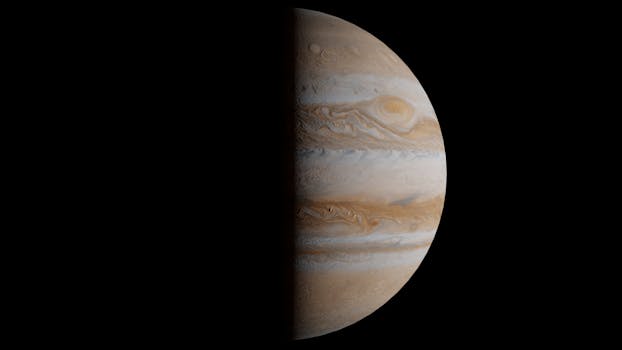
At its core, Jupiter is composed of hydrogen and helium, bearing a stark resemblance to the Sun but lacking sufficient mass to ignite nuclear fusion. This composition underpins its classification as a gas giant. Jupiter's atmosphere is a vibrant tapestry of colorful bands, swirling storms, and dramatic cloud formations, including the iconic Great Red Spot—a colossal storm larger than Earth that has persisted for centuries.
Magnetic Field and Gravitational Influence
Jupiter's magnetic field is the most intense of any planet in our solar system. This immense field generates spectacular auroras at the planet's poles, similar to Earth's northern and southern lights but on a grander scale. The giant's gravitational pull not only influences its moons but also plays a crucial role in the orbital mechanics of the solar system. Jupiter's gravity assists in stabilizing the orbits of the inner planets and acts as a sentinel, steering harmful comets and asteroids away from Earth.
A System of Moons and Rings
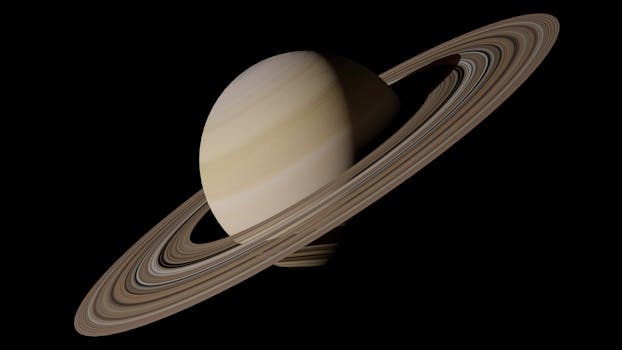
Jupiter's entourage includes an impressive array of 79 moons, with notable members such as Ganymede—the largest moon in the solar system—as well as Europa and Io, each with their own unique geological features. Europa, in particular, with its icy crust potentially concealing an ocean beneath, is a hotbed for astrobiological research. Additionally, Jupiter's faint ring system, though not as prominent as Saturn's, adds to its allure and mystery.
Exploration: Rewards and Risks
The scientific exploration of Jupiter offers profound insights into the origin and evolution of the solar system. Space missions like NASA’s Juno probe have provided invaluable data about Jupiter’s magnetic field, atmospheric dynamics, and internal structure. However, exploring Jupiter comes with significant challenges, including intense radiation belts and profound atmospheric pressure, which pose risks to spacecraft and instruments.
Jupiter’s Practical Influence on Earth
Beyond academic interest, Jupiter has practical implications for Earth. The giant planet’s gravitational field influences the trajectories of space debris and asteroids, aiding astronomers in tracking potentially dangerous objects. Moreover, studying Jupiter's complex weather systems—comprising massive cyclones and anticyclones—can enhance our understanding of meteorological processes on Earth, potentially improving weather forecasting models.
Conclusion: Jupiter, the Giant Protector
In conclusion, Jupiter is more than just a planetary giant; it is a complex, dynamic world that offers valuable lessons about our solar system. Its grandeur and intricacies not only deepen our understanding of planetary science but also underscore our ongoing quest to comprehend the cosmos. As technology progresses, our exploratory missions will continue to unravel Jupiter’s secrets, enhancing our knowledge and perhaps, one day, leading us to discover signs of life beyond Earth. Jupiter, with its profound influence and myriad mysteries, remains a cornerstone in our celestial endeavors.