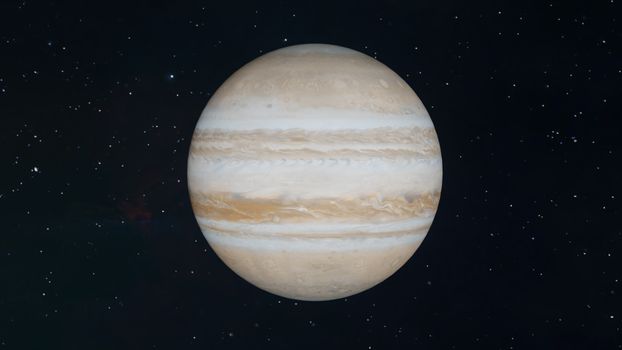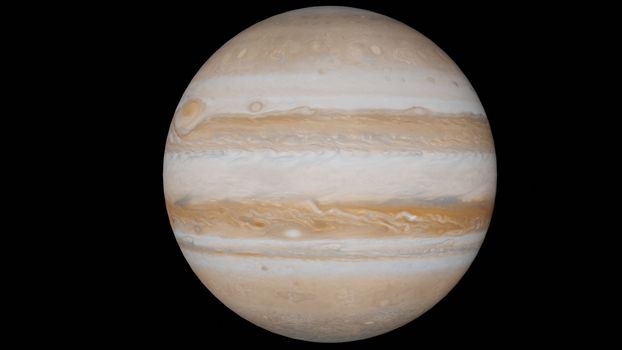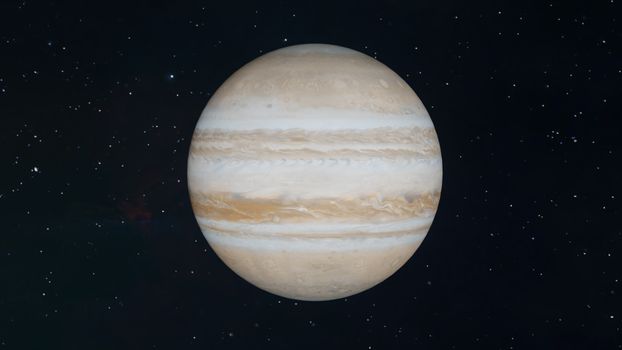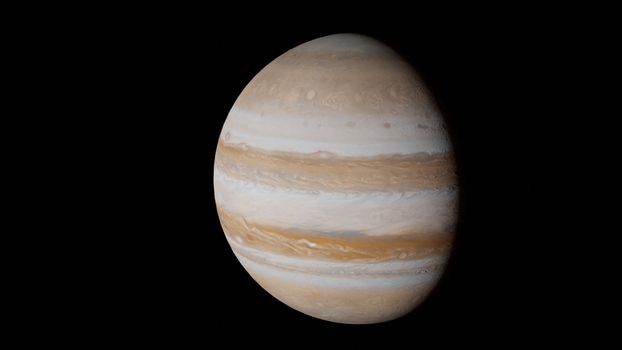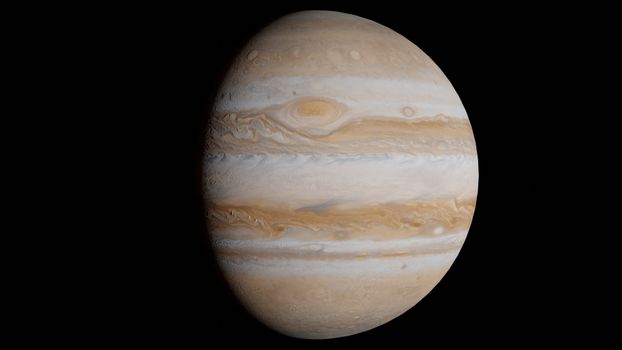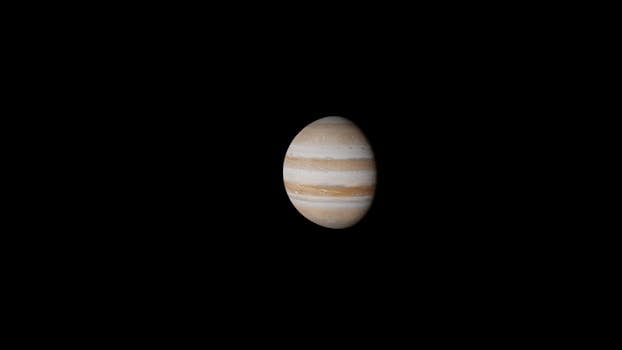
Jupiter, the largest planet in our solar system, is a world of swirling storms, vibrant stripes, and mesmerizing colors. Its atmosphere is unlike anything on Earth, dominated by hydrogen and helium and painted with complex cloud bands and iconic features like the Great Red Spot. But beneath this ever-churning tapestry, Jupiter’s atmosphere is not static — it undergoes subtle, yet fascinating changes as the planet experiences its own version of seasons. While Jupiter’s seasonal shifts are not as dramatic as those on Earth, they offer a unique window into the workings of gas giant atmospheres and the interplay between solar energy, planetary tilt, and atmospheric dynamics.
Jupiter’s Orbit and the Nature of Its Seasons
To understand how Jupiter’s atmosphere changes with the seasons, it’s important to first recognize what gives rise to planetary seasons at all. On Earth, seasons are driven by the 23.5-degree tilt of our planet’s rotational axis, causing varying sunlight angles throughout the year. Jupiter, however, tilts only about 3.1 degrees relative to its orbital plane. This means that, unlike Earth, Jupiter does not have highly pronounced seasons.
Still, Jupiter completes an orbit around the Sun every 11.86 Earth years. During this nearly 12-year journey, the planet’s distance from the Sun varies slightly, and the solar energy received at its poles and equator shifts just enough to create subtle atmospheric changes. These minor seasonal effects are amplified by Jupiter’s rapid rotation — a day lasts just under 10 Earth hours — and the immense scale of its atmosphere.
.png) Key facts:
- Jupiter’s axial tilt: 3.1 degrees (Earth’s is 23.5 degrees)
- One Jovian year: 11.86 Earth years
- Jupiter’s equator receives only about 4% more sunlight than its poles
Key facts:
- Jupiter’s axial tilt: 3.1 degrees (Earth’s is 23.5 degrees)
- One Jovian year: 11.86 Earth years
- Jupiter’s equator receives only about 4% more sunlight than its poles
Despite these mild differences in sunlight, Jupiter’s seasons do affect its atmospheric temperatures, cloud formations, and even the behavior of its famed storms.
Atmospheric Composition and Layered Structure
Jupiter’s atmosphere is a colossal envelope more than 5,000 kilometers deep, made chiefly of hydrogen (about 90%) and helium (roughly 10%), with trace amounts of methane, ammonia, and water vapor. These components are distributed in distinct layers, each responding differently to sunlight and seasonal shifts.
The uppermost layer is the troposphere, where colorful cloud bands, storms, and jet streams reside. Below that lies the stratosphere, rich in hydrocarbons formed by solar ultraviolet (UV) radiation breaking down methane. Even deeper, the thermosphere and ionosphere interact with solar energy and Jupiter’s powerful magnetic field.
Clouds on Jupiter are primarily composed of ammonia ice at high altitudes, with deeper layers of ammonium hydrosulfide and water clouds. Variations in sunlight — even slight ones — can alter the chemistry and appearance of these clouds over the course of Jupiter’s long year.
How Jupiter’s Atmosphere Responds to Seasonal Changes
While Jupiter’s seasons are subtle, they are not inconsequential. Observations from missions like Voyager, Galileo, Cassini, and Juno, as well as Earth-based telescopes, have revealed detectable changes in temperature, cloud color, and atmospheric circulation tied to different points in Jupiter’s orbit.
One of the most noticeable effects involves temperature gradients between the poles and the equator. During a Jovian year, the small axial tilt means that the difference in solar energy between hemispheres is minimal, but not zero. At solstices, when one pole tips slightly toward the Sun, that hemisphere experiences a modest warming. This can lead to localized changes in the cloud bands and polar hoods — thick layers of haze over the poles.
Another seasonal marker is the shifting chemistry in the stratosphere. Solar UV radiation is strongest at the summer pole, increasing the production of hydrocarbon hazes and leading to a more pronounced bluish tint in ultraviolet images. These chemical changes can influence the appearance and opacity of the clouds below.
Furthermore, long-term monitoring has found that certain features, like the North Equatorial Belt and South Equatorial Belt, can fade or intensify over several years, sometimes in sync with Jupiter’s orbital position. For example, the South Equatorial Belt faded entirely in 2010, only to return months later in a dramatic upheaval that some scientists suspect could be linked to seasonal effects.
Jupiter’s Great Red Spot and Other Storms Across the Seasons
No discussion of Jupiter’s atmosphere would be complete without mentioning its storms — particularly the Great Red Spot (GRS), a monumental anticyclonic storm that has raged for at least 350 years. While the GRS and other vortices are mostly driven by complex internal heat and turbulence, subtle seasonal factors may play a role in their behavior.
For instance, researchers have observed that the size, color, and intensity of the GRS can fluctuate over time. During periods when the southern hemisphere is slightly more illuminated (Jovian summer), the increased solar energy might enhance chemical reactions that produce the reddish chromophores — compounds thought to give the GRS its color. Similarly, changes in the temperature gradient between the equator and poles can affect the stability and drift of storms, leading to observable variations year by year.
Other storms and jet streams also exhibit patterns that loosely track Jupiter’s seasonal cycle. These changes are far less predictable than terrestrial weather, but ongoing observations continue to reveal connections between solar energy input and atmospheric dynamics.
Comparing Jupiter’s Seasonal Changes to Other Planets
How do Jupiter’s seasonal atmospheric changes compare to those on other planets in our solar system? The table below provides an overview of seasonal variations on Jupiter, Earth, Mars, and Saturn:
| Planet | Axial Tilt (degrees) | Year Length (Earth years) | Seasonal Effects on Atmosphere | Notable Features |
|---|---|---|---|---|
| Jupiter | 3.1 | 11.86 | Subtle changes in temperature, cloud bands, storm activity | Faint polar hazes, shifting belts, Great Red Spot changes |
| Earth | 23.5 | 1.0 | Large temperature swings, weather pattern shifts, snow/ice cycles | Four distinct seasons, monsoons, hurricanes |
| Mars | 25.2 | 1.88 | Dramatic dust storms, polar cap growth/shrinkage, temperature changes | Global dust storms, visible polar ice caps |
| Saturn | 26.7 | 29.5 | Significant cloud and haze variations, storm activity linked to seasons | Periodic massive storms, polar vortex changes |
As the table shows, Jupiter’s seasons are milder compared to the dramatic atmospheric swings on planets like Earth and Mars. Saturn, however, exhibits more pronounced seasonal effects than Jupiter, thanks to its greater axial tilt and longer year.
Unraveling the Mysteries with Modern Observations
Our understanding of how Jupiter’s atmosphere changes with the seasons has grown substantially thanks to a fleet of spacecraft and advanced telescopes. The Juno spacecraft, which has been orbiting Jupiter since 2016, provides unprecedented data on atmospheric temperatures, cloud motions, and chemical composition at different latitudes and seasons.
For example, Juno’s microwave radiometer has detected subtle changes in ammonia concentration tied to Jupiter’s position in its orbit. Similarly, Earth-based infrared telescopes like NASA’s Infrared Telescope Facility (IRTF) have tracked temperature variations of up to 10 Kelvin (about 18°F) at the poles during different seasons, confirming that even a small tilt can have measurable effects.
Moreover, computer models and laboratory experiments have helped scientists simulate how solar energy, planetary rotation, and internal heat combine to produce the observed seasonal patterns. These tools are vital for decoding the complexities of gas giant atmospheres and may one day help us understand exoplanets orbiting distant stars.
Looking Ahead: Why Jupiter’s Seasonal Changes Matter
The study of Jupiter’s seasonal atmospheric changes is more than an academic exercise. By unraveling these subtle shifts, scientists gain critical insights into the behavior of giant planet atmospheres, atmospheric chemistry, and the influence of solar energy on weather systems. Since gas giants like Jupiter are common throughout the galaxy, understanding their seasonal cycles helps us interpret observations of exoplanets and refine our models of planet formation and evolution.
Moreover, the lessons learned from Jupiter reverberate beyond planetary science. By contrasting Jupiter’s mild seasons with the more extreme cycles on Earth, Mars, and Saturn, we appreciate the diversity and dynamism of planetary atmospheres. The ongoing study of Jupiter’s seasons remains a testament to the power of careful observation, cutting-edge technology, and human curiosity.