Jupiter's Great Red Spot: A Perpetual Storm
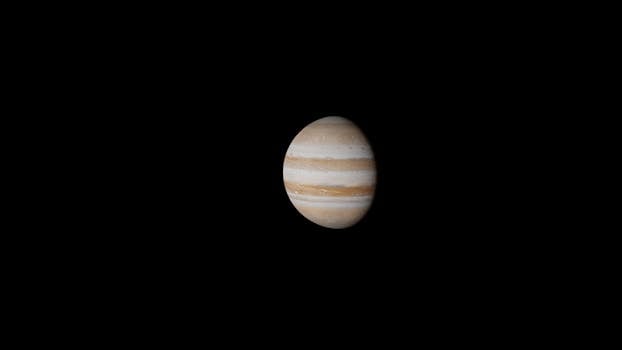
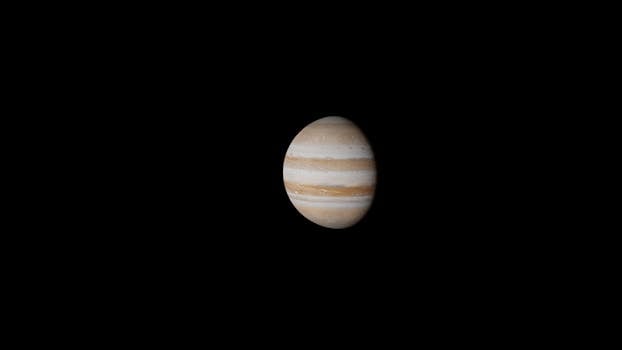
Jupiter's Great Red Spot, a colossal and enduring storm, remains one of the most intriguing atmospheric phenomena in the solar system. This storm has been active for at least 400 years, possibly longer, making it a key feature for studying the atmospheric dynamics of gas giants like Jupiter.
Understanding the Great Red Spot
.png)
Situated in Jupiter's southern hemisphere, the Great Red Spot is a vast anticyclonic storm roughly 16,350 kilometers wide—large enough to fit two or three Earths within its boundaries. The storm rotates counterclockwise with a periodicity of about six Earth days. The storm's iconic red hue may stem from complex organic molecules, red phosphorus, or unidentified sulfur compounds that are drawn up from deeper layers of Jupiter's atmosphere by strong winds.
Key Approaches to Studying the Storm
Researchers employ various methods to study the Great Red Spot, each offering unique insights:
- Observational Astronomy: Telescopes with advanced imaging capabilities allow astronomers to monitor changes in the storm’s size, shape, color, and velocity. Instruments such as the Hubble Space Telescope and the Juno spacecraft provide crucial high-resolution images that help decode the storm's dynamics.
- Atmospheric Modeling: Through computer simulations, scientists can create models that mimic the conditions of Jupiter’s atmosphere, helping to predict the storm's behavior and evolution. These models are vital for testing theories about the storm's mechanisms and its role within the larger context of Jupiter's atmospheric system.
- Spectroscopy: This method analyzes the light the storm emits or absorbs, helping scientists determine its composition. Identifying the chemicals within the Great Red Spot is essential for understanding its nature and origins.
Advantages and Disadvantages of Each Approach
Each research method has its pros and cons:
- Observational Astronomy offers direct visual observation, which is invaluable. However, its effectiveness is limited by the distance to Jupiter and the resolution of current imaging technologies.
- Atmospheric Modeling provides profound insights into the storm's potential internal processes, but the accuracy of these models depends heavily on the underlying data and theoretical frameworks.
- Spectroscopy reveals the storm's chemical makeup, though interpreting these data can be complex due to Jupiter's intricate atmospheric chemistry.
Practical Examples
The Juno spacecraft, orbiting Jupiter since 2016, has significantly enhanced our understanding of the Great Red Spot. Juno's close flybys have enabled detailed measurements of the storm's depth and internal structure, enriching the data used to refine atmospheric models of Jupiter.
Conclusion
Jupiter's Great Red Spot is an immense and complex atmospheric feature, presenting a unique opportunity to explore the dynamics of a gas giant's atmosphere. Continuous research and observation improve our understanding not only of Jupiter but also of planetary atmospheres in general. This knowledge extends beyond mere academic interest, influencing how we model and predict weather and climate patterns on Earth. As technological capabilities advance, our grasp of such distant celestial phenomena will undoubtedly deepen, offering further insights into the mysteries of our solar system.