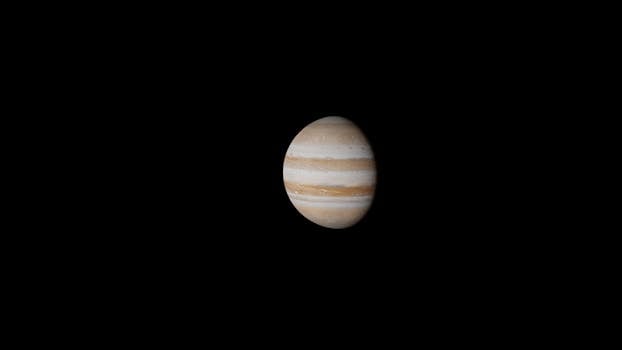
Jupiter, the behemoth of our solar system, hosts one of the most awe-inspiring natural phenomena known to science: its auroras. Far more intense and spectacular than Earth's more familiar northern and southern lights, Jupiter's auroras illuminate its poles with stunning colors and continuous activity. Understanding these celestial light shows not only satisfies human curiosity about the cosmos but also serves as a window into the magnetic and atmospheric dynamics of the largest planet in our solar system.
What Are Auroras?
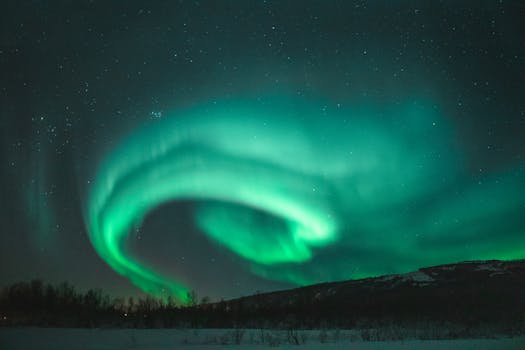
Auroras are natural light displays that occur when charged particles from the sun collide with a planet's magnetic field and atmospheric gases, causing those gases to glow. On Earth, these displays create beautiful green, purple, and sometimes red curtains of light in the high-latitude regions around the poles. However, Jupiter's auroras present a far more dramatic spectacle due to its unique atmospheric and magnetic properties.
.png)
The Formation of Jupiter’s Auroras
Jupiter's auroras are primarily powered by two sources: the solar wind and the planet's own moon Io, which is the most volcanically active body in the solar system. These factors combine under the influence of Jupiter’s extraordinarily strong magnetic field, which is about 20,000 times more powerful than Earth's.
The solar wind, a stream of charged particles emitted by the sun, is a common cause of auroral activity on planets with magnetic fields. However, on Jupiter, the Io flux tube—a stream of charged particles ejected by Io, which is caught in Jupiter’s magnetic field—plays a significant role as well. These particles interact with Jupiter’s magnetic field lines, channeling vast amounts of energy into the planet's atmosphere and generating spectacular and permanent auroral displays.
The Color and Intensity of Jupiter’s Auroras
Unlike the auroras on Earth, which mostly glow in shades of green due to the interaction with oxygen at lower altitudes, Jupiter's auroras can shine in shades of blue, red, and ultraviolet. This variation in colors results from the interaction of charged particles with different gases, including hydrogen in Jupiter's upper atmosphere. The intensity and permanence of these lights are a direct result of the continuous and intense bombardment of charged particles facilitated by Jupiter's strong magnetic field and its close interaction with Io.
Scientific Importance of Jupiter’s Auroras
Studying Jupiter's auroras is crucial for multiple scientific fields. This spectacular light show provides key insights into the planet's atmospheric composition, magnetic field dynamics, and the complex gravitational interplay between Jupiter and its moons. Observations and data collected, particularly by spacecraft like NASA’s Juno mission, help scientists understand not only Jupiter itself but also broader astrophysical processes.
Broader Implications
Understanding how Jupiter's auroras work helps scientists make comparisons with similar phenomena across the solar system and beyond. This comparative planetology can help refine our models of how planetary magnetic fields interact with solar and environmental factors, enriching our understanding of not only planetary science but also contributing to practical applications in space travel, telecommunications, and even Earth’s climate science.
In essence, Jupiter’s auroras are more than just a cosmic light show; they are a dynamic and powerful manifestation of the forces at play in our solar system. They not only contribute to our understanding of Jupiter itself but also enhance our knowledge of planetary systems in general, offering insights that reach far beyond the immediate spectacle of shimmering lights. As our exploratory technology and methodologies improve, the secrets unlocked by Jupiter’s auroras promise to further illuminate our place in the cosmos.