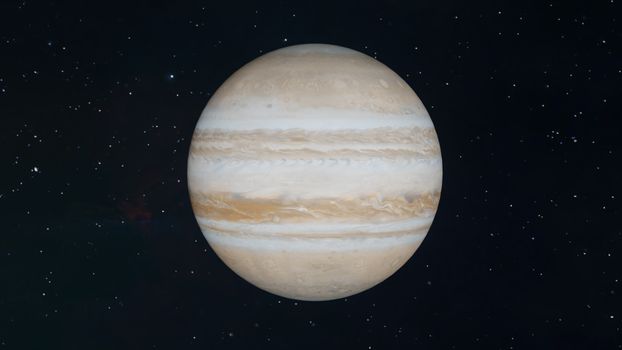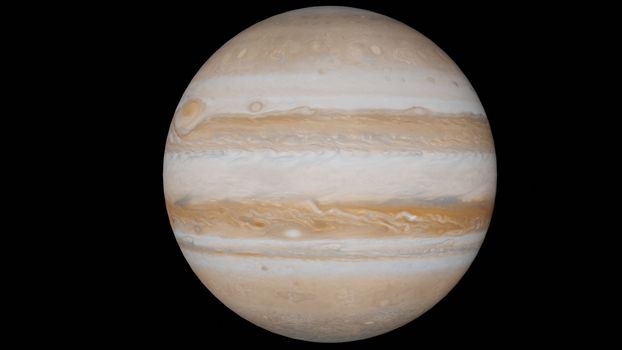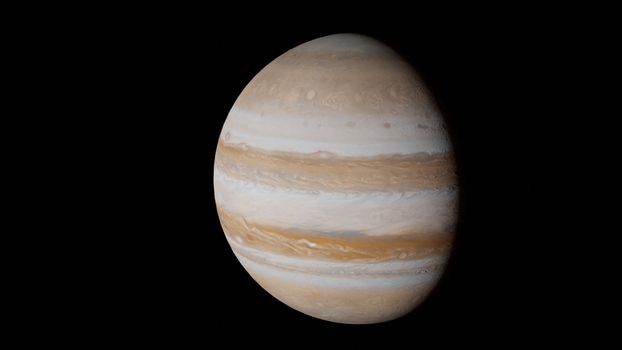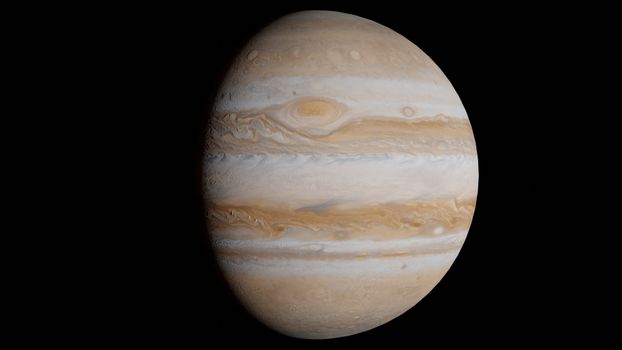
For centuries, Jupiter has fascinated astronomers and planetary scientists not only for its immense size and swirling atmospheric storms but also for the clues it holds about the early days of our solar system. As the largest planet in our cosmic neighborhood, Jupiter’s origins are deeply entwined with the solar system’s formation and evolution. Understanding how Jupiter formed is a cornerstone in planetary science, as its birth influenced the fate of the other planets—including Earth. Today, scientists debate various theories and hypotheses about Jupiter’s formation, drawing from cutting-edge observations, computer models, and samples from space missions. In this article, we’ll unravel the leading ideas surrounding the formation of Jupiter, explore the evidence supporting each view, and examine the implications for our understanding of planet formation across the universe.
The Significance of Jupiter’s Formation in Planetary Science
Jupiter is not just another planet—it is a gas giant nearly 318 times as massive as Earth, containing more than twice the mass of all the other planets combined. Its immense gravity has shaped the architecture of the solar system, influencing asteroid belts, planetary orbits, and even the delivery of water to Earth. The formation of Jupiter is therefore a gateway to understanding the processes that govern the birth and evolution of planetary systems.
One of the earliest clues to Jupiter’s importance comes from isotopic analyses of meteorites, which suggest that Jupiter formed early—within the first 3 to 5 million years after the sun ignited. This early formation would have allowed Jupiter to vacuum up large amounts of gas before the solar nebula dispersed, setting the stage for the formation of other planets by either clearing or trapping material in its gravitational pull. Recent data from NASA’s Juno mission have added further intrigue, revealing unexpected details about Jupiter’s internal structure and composition.
.png)
The Core Accretion Model: The Traditional View
For decades, the most widely accepted explanation for Jupiter’s formation has been the Core Accretion Model. This theory suggests that Jupiter began as a solid core, composed mostly of rock and ice, which formed through the gradual collision and accumulation of planetesimals—small solid bodies in the early solar nebula.
According to the core accretion scenario, once this core reached a critical mass—estimated at around 10 Earth masses—it rapidly attracted a thick envelope of hydrogen and helium gas from the surrounding solar nebula. This runaway gas accretion phase allowed Jupiter to balloon to its current size within a relatively short timespan, possibly less than a million years.
Some key facts supporting the Core Accretion Model include:
- Observations of protoplanetary disks around young stars show that solid materials can coalesce into planetary embryos within a few million years. - The presence of a significant amount of heavy elements in Jupiter’s atmosphere, as detected by the Galileo probe, is more consistent with a massive core. - Computer simulations indicate that core accretion can produce gas giants like Jupiter, especially in regions beyond the “ice line” where solid materials are more abundant.However, the model faces some challenges. For instance, the process of building a core large enough before the gas in the disk dissipates may require very specific conditions, and recent Juno data suggest Jupiter’s core may be more diffuse or “fuzzy” than previously assumed.
The Disk Instability Model: A Rapid Alternative
An alternative theory, known as the Disk Instability Model, proposes that Jupiter formed not by slow accumulation of solids, but rather by the direct gravitational collapse of a segment of the solar nebula’s gas disk. In this scenario, regions of the disk become gravitationally unstable and collapse under their own weight, forming a massive gas giant in a matter of thousands of years—a much faster timescale than core accretion.
The Disk Instability Model is attractive because it can explain the rapid formation of large planets in disks with short lifespans. It is especially appealing for systems where gas giants are found at great distances from their stars, as often observed in extrasolar planetary systems.
Notable points in favor of Disk Instability include:
- Simulations demonstrate that under certain conditions, massive clumps can form directly from the disk and become giant planets. - This model accounts for gas giants found far from their stars, where core accretion is less likely due to low solid material density. - It provides a solution for the formation of gas giants in systems where the protoplanetary disk dissipates rapidly (in less than 1 million years).Yet, disk instability also has drawbacks. It struggles to explain the relatively high abundance of heavy elements in Jupiter compared to the sun, and direct evidence for this process in our solar system remains limited.
Comparing Jupiter’s Formation Theories
To better understand the strengths and weaknesses of each model, consider the following comparative overview:
| Aspect | Core Accretion Model | Disk Instability Model |
|---|---|---|
| Timescale | 1-10 million years | 1,000-100,000 years |
| Formation Mechanism | Gradual growth of solid core, then gas accretion | Direct collapse of gas disk region |
| Heavy Element Content | Higher, due to solid core | Lower, unless enriched by later impacts |
| Best Explains | Jupiter-like planets near ice line; heavy element enrichment | Gas giants at wide orbits; fast planet formation |
| Observational Evidence | Meteorite isotopes; Galileo probe; protoplanetary disks | Exoplanets on wide orbits; disk instability simulations |
Hybrid and Evolving Models: A Complex Picture Emerges
Recent findings, especially from the Juno mission and improved computer models, hint that reality may be more nuanced than a single theory can explain. Some scientists propose hybrid models that combine elements of both core accretion and disk instability. For instance, Jupiter may have begun with a traditional solid core, but subsequent mixing or late heavy bombardments could have “diluted” its core, resulting in the diffuse, extended core structure observed today.
Additionally, Jupiter’s migration through the early solar system may have played a crucial role. The “Grand Tack” hypothesis suggests that after its initial formation, Jupiter migrated inward towards the sun and then back outward, sculpting the distribution of material in the solar system and influencing the formation of the terrestrial planets.
Key data supporting evolving models include:
- Juno’s measurements of Jupiter’s gravitational field, indicating a “fuzzy” core extending up to half the planet’s radius. - Isotopic differences in meteorites, which suggest Jupiter’s presence divided the solar nebula into distinct regions early on. - Planetary migration models that fit both the current orbits of the gas giants and the structure of the asteroid belt.Hybrid theories better accommodate the complexity of Jupiter’s internal structure and the observed distribution of material in the solar system, but they also require more sophisticated simulations and detailed data from ongoing and future space missions.
Clues from Exoplanets: Jupiter’s Formation in a Cosmic Context
The discovery of more than 5,300 exoplanets as of 2024 has revolutionized our understanding of planet formation. Many of these exoplanets are gas giants—some even larger than Jupiter, and some located much closer or farther from their stars than Jupiter is from the sun. This diversity challenges the idea of a single formation mechanism.
Statistical studies reveal that gas giants are rare around low-mass stars, supporting the idea that a massive protoplanetary disk (as needed for core accretion or disk instability) is a prerequisite for their formation. Observations of young stellar systems, such as HL Tauri, show protoplanetary disks with gaps and rings—potentially the footprints of forming giant planets.
A notable example is the HR 8799 system, which contains four massive gas giants at wide orbits (15-70 astronomical units from their host star). These planets may have formed by disk instability, unlike Jupiter, which is located just over 5 AU from the sun. Such findings underscore that multiple formation pathways can produce gas giants, depending on environmental conditions.
Implications for the Solar System and Beyond
Jupiter’s formation did not occur in isolation. Its immense gravity shaped the destinies of the other planets, altered the distribution of asteroids and comets, and possibly played a role in delivering water and organic materials to the inner planets, including Earth. Understanding how Jupiter formed helps scientists assess the likelihood of similar gas giants—and potentially habitable worlds—forming around other stars.
Moreover, Jupiter’s early formation may have protected Earth from frequent giant impacts, stabilizing the inner solar system and fostering conditions for life. In a broader sense, unraveling Jupiter’s origins illuminates the processes that transform clouds of dust and gas into the diverse planetary systems observed throughout the galaxy.