The Influence of Jupiter on Asteroid Belts: Guardianship, Gaps, and Cosmic Sculpture
For centuries, Jupiter has captivated astronomers with its sheer size, swirling storms, and complex system of moons. Yet one of its most profound influences in our solar system lies not just with its own satellites, but with the vast population of rocky remnants floating between Mars and itself: the asteroid belt. Far from being a passive bystander, Jupiter’s colossal gravity actively shapes the asteroid belt, carving gaps, shepherding orbits, and shielding the inner planets from cosmic debris. But how exactly does Jupiter wield this influence, and what does it mean for the solar system as a whole? Let’s journey into the dynamic relationship between Jupiter and the asteroid belts—where celestial mechanics, planetary protection, and solar system history all intersect.
Jupiter: The Solar System’s Gravitational Giant
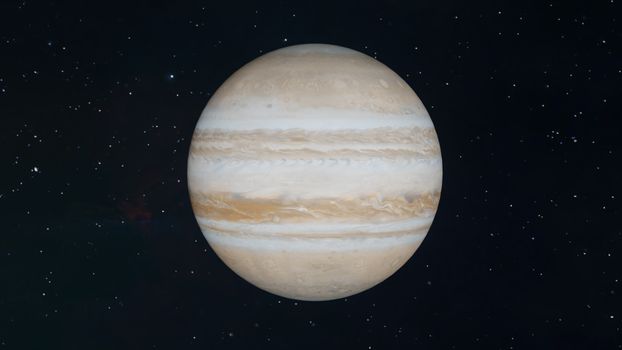
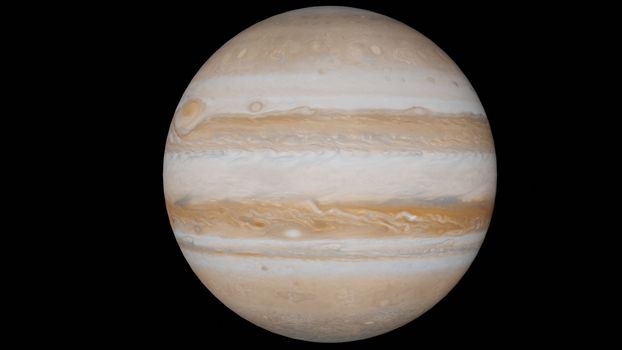
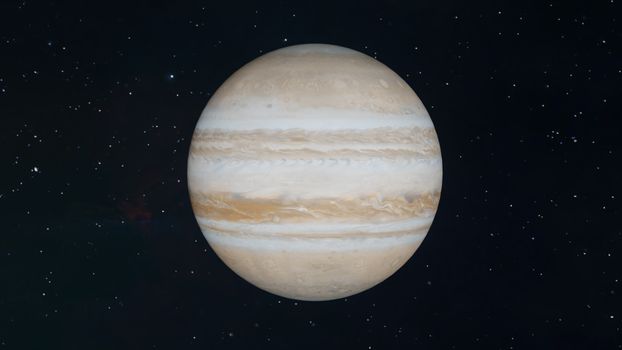
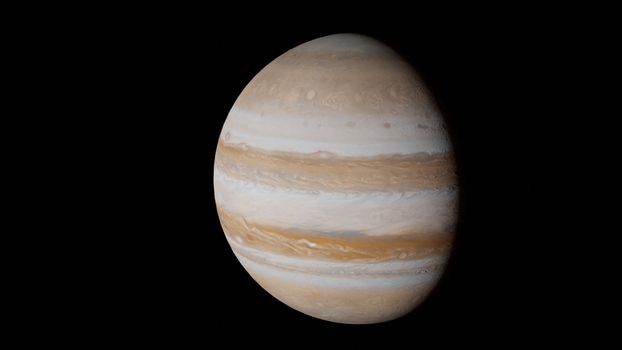
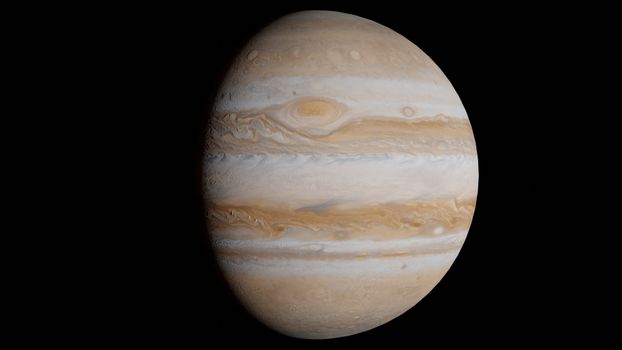
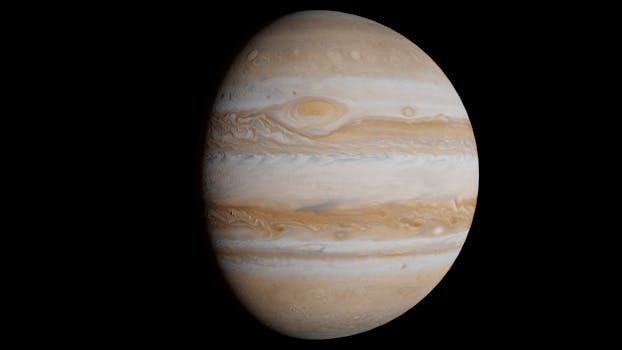
Jupiter is the king of the planets, outweighing all the other planets in the solar system combined. With a mass of 1.9 x 1027 kg—over 318 times that of Earth—Jupiter’s gravity is a dominant force, capable of influencing objects millions of kilometers away. This immense gravitational field doesn’t just keep its own moons in line; it extends deep into the asteroid belt, which lies between 2.1 and 3.3 astronomical units (AU) from the Sun.
Jupiter’s influence on the asteroid belt is rooted in two key factors:
.png) 1. $1 Its gravitational pull disrupts and organizes the orbits of countless asteroids.
2. $1 Jupiter’s orbital period (11.86 Earth years) creates powerful resonances—locations where asteroid orbits align in simple ratios with Jupiter’s year.
1. $1 Its gravitational pull disrupts and organizes the orbits of countless asteroids.
2. $1 Jupiter’s orbital period (11.86 Earth years) creates powerful resonances—locations where asteroid orbits align in simple ratios with Jupiter’s year.
These factors combine to make Jupiter the architect, guardian, and sometimes destroyer of the asteroid belt’s structure.
Asteroid Belt Structure: Gaps, Families, and Kirkwood’s Discovery
The asteroid belt is not a uniform ring of rocks but a highly structured region, with concentrations, families, and—most intriguingly—gaps. These gaps, known as Kirkwood gaps, were first identified by Daniel Kirkwood in 1866. They are regions within the asteroid belt where very few asteroids are found, and their locations are directly tied to Jupiter’s influence.
The Kirkwood gaps occur at orbital radii where the period of an asteroid’s orbit is a simple fraction (like 1/2, 1/3, 2/5) of Jupiter’s period. For example, an asteroid in the 3:1 resonance completes three orbits for every one of Jupiter’s. The gravitational tugs at these points destabilize asteroid orbits, either ejecting them from the belt or altering their paths.
Here is an overview of some major Kirkwood gaps and their resonance ratios:
| Resonance with Jupiter | Distance from Sun (AU) | Notable Features |
|---|---|---|
| 4:1 | 2.06 | Inner edge of belt, few asteroids |
| 3:1 | 2.50 | Major gap, source of many Earth-crossing asteroids |
| 5:2 | 2.82 | Prominent gap, divides inner/outer belt |
| 2:1 | 3.28 | Outer edge, strong depletion |
The presence of these gaps is a clear fingerprint of Jupiter’s dynamical influence, sculpting the belt over billions of years.
Jupiter’s Role as a Cosmic Shepherd and Shield
Jupiter’s gravitational reach does more than carve empty spaces; it also acts as a shepherd, both stabilizing and destabilizing the region. Some asteroid families—groups of asteroids with similar orbits and compositions—owe their existence to past collisions, but their continued coherence is often due to Jupiter’s steadying hand.
Crucially, Jupiter also serves as a kind of cosmic shield for the inner solar system. By influencing the orbits of many asteroids, Jupiter can either deflect them away from the inner planets or, in some cases, send them inward as potential impactors. Statistically, models show that Jupiter reduces the impact rate of large asteroids on Earth by up to a factor of 3, acting as both a protector and, at times, a source of danger.
A dramatic example of Jupiter’s shielding role was observed in July 1994, when Comet Shoemaker-Levy 9 collided with Jupiter. The planet’s gravity had captured and fragmented the comet, preventing it from potentially crossing Earth’s path. The resulting impact released energy equivalent to 6 million megatons of TNT—an event that, had it occurred on Earth, would have been catastrophic.
Asteroid Belt Evolution: Jupiter’s Ongoing Sculpting
The asteroid belt has not always looked as it does today. In the early solar system, the region between Mars and Jupiter may have contained enough material to form another planet. However, Jupiter’s formation and rapid growth disrupted this process. Its powerful gravity stirred up the planetesimals (the building blocks of planets), increasing their velocities and causing them to smash into each other instead of coalescing.
Today, the asteroid belt contains only about 4% of the Moon’s mass—roughly 3 x 10²¹ kg. This is a tiny fraction of what might have been there originally. Jupiter’s influence continues today, as it slowly pushes some asteroids into unstable orbits, sending them either into the Sun, out of the solar system, or inward toward Earth.
Researchers estimate that over 99% of the original mass of the asteroid belt has been lost, much of it due to Jupiter’s gravitational perturbations. This ongoing evolution means that the asteroid belt is a dynamic, ever-changing environment, with Jupiter as its chief architect.
Beyond the Main Belt: Jupiter’s Trojan Asteroids and Resonant Populations
Jupiter’s influence doesn’t stop at the main asteroid belt. It also extends farther out, capturing and maintaining entire populations of asteroids at specific points in its own orbit. These are known as the Trojan asteroids, and they reside in two large swarms—one leading and one trailing Jupiter by 60 degrees—at the planet’s stable Lagrange points (L4 and L5).
As of 2024, astronomers have identified over 12,000 Jupiter Trojans, and the actual population may exceed 1 million objects larger than 1 kilometer. These asteroids are thought to be remnants of the early solar system, preserved by Jupiter’s gravity in these stable niches. The study of Trojans is a rapidly growing field, with NASA’s Lucy mission launched in 2021 to investigate several of these enigmatic bodies up close.
Jupiter’s resonant populations don’t end with the Trojans. The planet also creates “Hilda” asteroids, which orbit the Sun in a 3:2 resonance with Jupiter, and other groups trapped in gravitational dances around the giant.
Comparing Jupiter’s Influence: Main Belt, Trojans, and Beyond
To appreciate the full extent of Jupiter’s gravitational reach, it’s helpful to compare the different asteroid populations under its sway. The table below highlights key features of the main asteroid belt, Jupiter Trojans, and resonant groups:
| Asteroid Group | Location | Estimated Number (>1 km) | Jupiter’s Influence |
|---|---|---|---|
| Main Belt | 2.1–3.3 AU | 700,000 | Gaps, orbital control, ejections |
| Jupiter Trojans | 5.2 AU (L4 & L5 points) | 1,000,000+ | Stable capture at Lagrange points |
| Hilda Group | 3.97–4.01 AU | 4,000 | 3:2 resonance with Jupiter |
This comparison underscores how Jupiter’s gravity not only shapes the main asteroid belt but also corrals and preserves distant populations, influencing the architecture of the solar system far beyond its immediate neighborhood.
Final Thoughts on Jupiter’s Cosmic Role in Asteroid Dynamics
Jupiter’s role in shaping the asteroid belt is a striking example of how a single planet’s gravity can sculpt an entire region of the solar system. By creating resonant gaps, capturing Trojans, and shepherding asteroids, Jupiter has prevented the formation of a planet between Mars and itself, and shielded the inner planets from many catastrophic impacts. Its gravitational reach continues to mold the solar system’s structure, influencing not just the fate of asteroids but the very habitability of the planets within.
As we continue to explore the solar system, missions like NASA’s Lucy and the study of near-Earth asteroids will further uncover the intricate dance between Jupiter and the rocky remnants of our solar past. Understanding Jupiter’s influence is not just an astronomical pursuit—it’s a key to understanding how our planetary neighborhood came to be, and how it may continue to evolve.