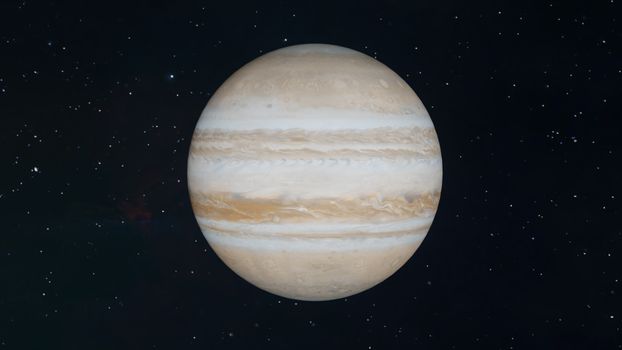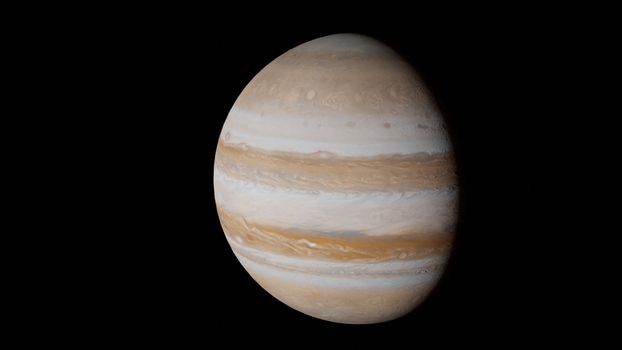
Jupiter is often called the king of the planets, not only for its immense size but also for its dramatic and mysterious atmosphere. One of the most fascinating aspects of Jupiter is the incredible pressure found within its atmospheric layers—a force that shapes everything from its iconic stripes to its violent storms. But how exactly does this pressure sculpt the phenomena we observe on Jupiter, and why are these effects so different from anything on Earth? Let’s dive beneath Jupiter’s swirling clouds to explore how pressure drives its atmospheric wonders.
Understanding Jupiter’s Atmospheric Pressure: The Basics
Jupiter’s atmosphere is a colossal ocean of gas, mostly hydrogen and helium, with trace amounts of methane, ammonia, water vapor, and other compounds. Unlike Earth, Jupiter has no solid surface, so its “atmosphere” blends seamlessly into its interior, with pressure increasing the deeper you go.
At the top of Jupiter’s clouds—the level where Earth-based telescopes often observe—the pressure is about 1 bar, roughly equivalent to sea-level pressure on Earth. However, this changes rapidly with depth. For every 10 kilometers you descend, the pressure roughly doubles. By the time you reach 1,000 kilometers below the cloud tops, the pressure soars to more than 1,000 times Earth’s atmospheric pressure.
.png) To put this into perspective:
- At 1 bar (cloud tops): Similar to Earth sea level.
- At 10 bars: Comparable to the pressure 10 times deeper than Earth’s ocean bottom.
- At 1,000 bars: No natural place on Earth experiences this pressure.
To put this into perspective:
- At 1 bar (cloud tops): Similar to Earth sea level.
- At 10 bars: Comparable to the pressure 10 times deeper than Earth’s ocean bottom.
- At 1,000 bars: No natural place on Earth experiences this pressure.
This staggering gradient is central to Jupiter’s atmospheric phenomena, affecting its weather, cloud chemistry, and even the physics of its storms.
How Pressure Shapes Jupiter’s Cloud Layers
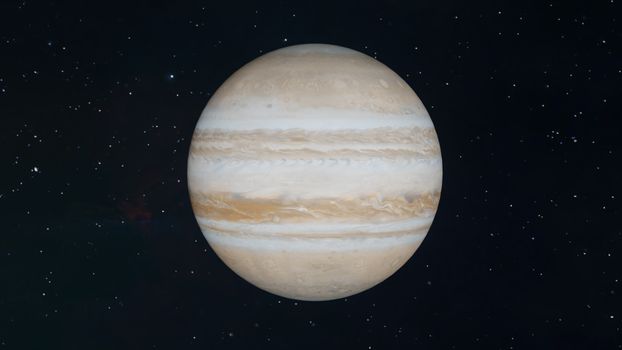
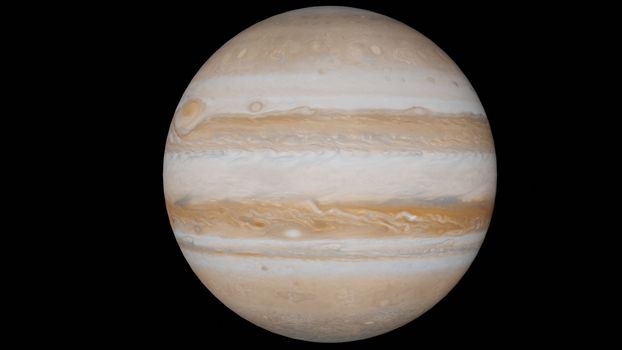
Jupiter’s famous banded appearance comes from its distinct cloud layers—a direct result of the planet’s pressure and temperature structure. As pressure and temperature increase with depth, different gases condense into clouds at specific layers.
- Ammonia ice clouds form at pressures of about 0.7 bars and temperatures near -145°C. - Below this, at higher pressures (~2–3 bars), ammonium hydrosulfide clouds appear. - At even greater depths (5–7 bars and around -60°C), water clouds are thought to form.Unlike Earth, where most weather occurs in a thin troposphere, Jupiter’s weather-producing region is hundreds of kilometers deep, spanning these multiple cloud layers. The pressure difference between layers governs the types of clouds and their chemical reactions, leading to banded coloration and dynamic weather systems.
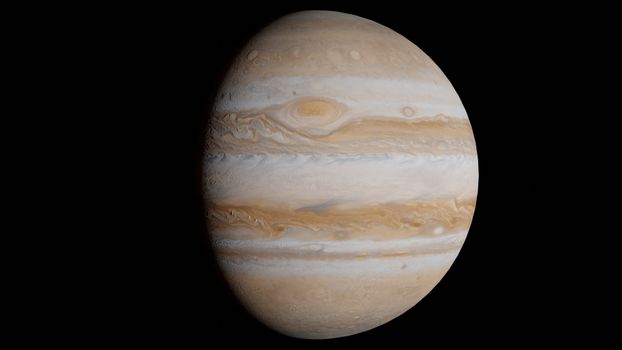
For example, the white zones seen from Earth are ammonia ice clouds at relatively low pressure, while the darker belts are deeper, warmer regions where different chemicals condense due to higher pressure.
Pressure and the Creation of Jupiter’s Giant Storms
Perhaps the most dramatic atmospheric phenomenon on Jupiter is the Great Red Spot—a titanic storm larger than Earth itself, persisting for at least 350 years. Pressure plays a vital role in both the formation and longevity of storms like this.
On Jupiter, the combination of rapid rotation and steep pressure gradients leads to fierce winds—up to 650 kilometers per hour in some jet streams. These winds are driven by heat rising from the planet’s interior, which interacts with the pressure layers to create powerful convection currents.
As rising columns of warm gas encounter different pressure levels, they form vast, swirling vortices. The intense pressure differences between cloud layers act as barriers or “floors” for these storms, allowing them to persist far longer than typical terrestrial storms. For example, the Great Red Spot is believed to extend at least 200 kilometers below the cloud tops, experiencing pressures dozens of times higher than at the surface.
Additionally, the high pressure at depth compresses gases, affecting their density and the speed at which storms can circulate. This is one reason why Jupiter’s storms are so much larger, more stable, and longer-lasting than those on Earth.
Comparing Atmospheric Pressure: Jupiter vs. Other Planets
To appreciate Jupiter’s uniqueness, it’s helpful to compare its atmospheric pressure with that of other planets. This comparison demonstrates why Jupiter’s weather and cloud dynamics are so extreme.
| Planet | Atmosphere Composition | Surface/Cloud Top Pressure (bars) | Maximum Pressure (estimated, bars) |
|---|---|---|---|
| Earth | Nitrogen, Oxygen | 1 | 1 (at sea level) |
| Venus | CO2, Nitrogen | 92 | 92 (surface) |
| Mars | CO2, Nitrogen | 0.006 | 0.006 (surface) |
| Jupiter | Hydrogen, Helium | 1 (cloud tops) | Unknown, >100,000 |
| Saturn | Hydrogen, Helium | 1 (cloud tops) | Unknown, >10,000 |
On Jupiter, there is no “surface pressure” since it lacks a solid surface. Instead, pressure increases continuously toward the core, potentially reaching millions of bars. This is vastly higher than any other planet in the Solar System, making Jupiter’s atmospheric pressure an outlier with profound effects on its weather and interior structure.
Pressure-Driven Chemistry and Coloration in Jupiter’s Atmosphere
Pressure does more than shape clouds and storms; it also influences the chemistry that gives Jupiter its colorful appearance. As gases descend into higher-pressure regions, they undergo chemical reactions that would never happen on Earth.
For instance, at certain pressures and temperatures, ammonia reacts with hydrogen sulfide to form ammonium hydrosulfide—the compound responsible for the reddish-brown colors in Jupiter’s belts. At even greater pressures, water vapor condenses into clouds, and lightning—100 times more powerful than Earth’s—can form, initiating further complex chemistry.
The deep interior pressure may also help create exotic forms of matter. Scientists speculate that at pressures above 2 million bars (200 GPa), hydrogen in Jupiter’s interior turns into a metallic state, conducting electricity and contributing to the planet’s massive magnetic field—a phenomenon unseen on any terrestrial planet.
Pressure’s Role in Jupiter’s Energy Transport and Heat Flow
Unlike Earth, which receives most of its energy from the Sun, Jupiter emits about 1.6 times more energy than it receives. This excess heat is left over from the planet’s formation and is transported upward through the atmosphere, a process intimately tied to pressure.
The immense pressure deep inside Jupiter helps trap this internal heat. As it rises, the heat drives convection, powering the vast belts, zones, and storms that define Jupiter’s atmosphere. The pressure gradient also determines how quickly or slowly heat can move upward, controlling the size and intensity of atmospheric phenomena.
This internal heat flow, regulated by pressure, means that Jupiter’s atmosphere is always in motion. Even in the absence of sunlight, the planet would still have turbulent weather—a stark contrast to Earth, where sunlight is the primary driver of atmospheric activity.
Final Insights: Why Jupiter’s Pressure Makes It a Weather Wonder
Jupiter’s breathtaking atmospheric phenomena—from its multicolored cloud bands to its legendary storms—are fundamentally sculpted by the planet’s immense pressure. This pressure not only defines the structure and chemistry of the clouds, but also sustains storms for centuries and powers the internal heat engine that drives Jupiter’s dynamic weather.
The study of Jupiter’s pressure and its effects offers a glimpse into the workings of giant planets everywhere, both within and beyond our Solar System. As new missions like NASA’s Juno probe continue to send back data, scientists are unraveling even more surprises about how pressure shapes the largest planet in our cosmic neighborhood.