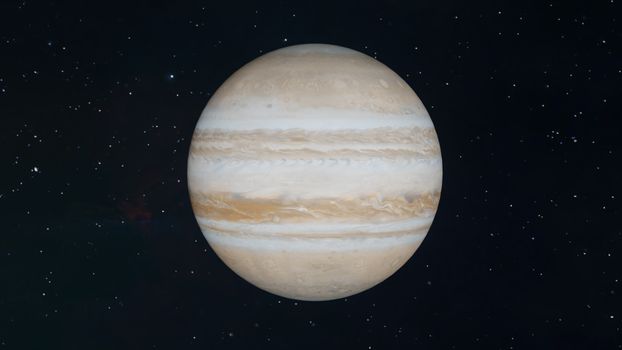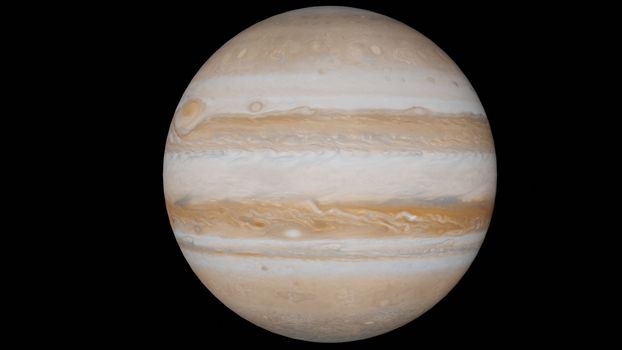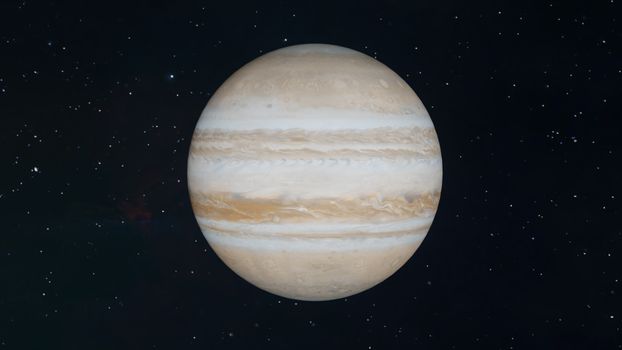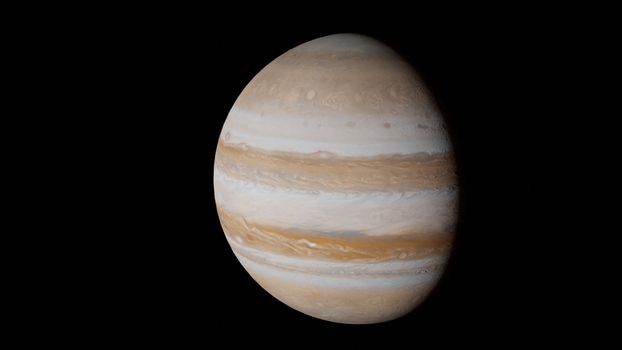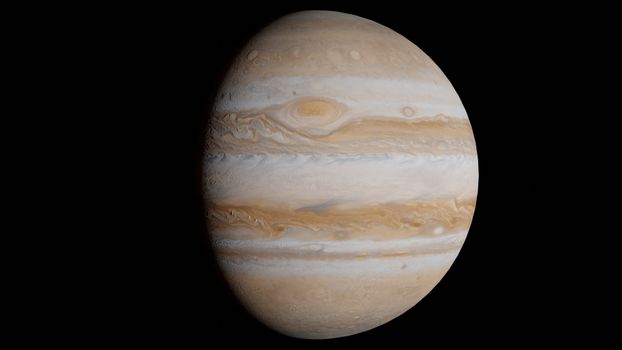
Jupiter, the largest planet in our solar system, is a true giant in every sense—more than 1,300 Earths could fit inside it. But what truly sets Jupiter apart is its enormous, multilayered atmosphere, where temperatures swing from freezing cold to searing heat as you venture from the clouds down toward the planet’s mysterious core. Understanding how temperature changes within these atmospheric layers not only unravels the secrets of Jupiter’s complex weather systems but also offers a window into the workings of gas giants both in our solar system and beyond.
Unveiling Jupiter’s Atmosphere: A Layered Giant
Jupiter’s atmosphere is not a uniform blanket of gas but is composed of several distinct layers, each with unique characteristics and temperature profiles. Unlike Earth, where the surface is solid and easily defined, Jupiter lacks a true surface. Instead, scientists refer to an “atmospheric surface” at the pressure level where the planet’s pressure equals that at sea level on Earth (1 bar).
The main layers of Jupiter’s atmosphere, moving from the outermost to the deepest, are:
.png) - The Exosphere
- The Thermosphere
- The Stratosphere
- The Troposphere
- The Exosphere
- The Thermosphere
- The Stratosphere
- The Troposphere
Each of these layers displays sharp contrasts in temperature, composition, and behavior, shaped by both internal heat and the weak sunlight reaching this distant world.
The Chilly Heights: Exosphere and Thermosphere
At the very top of Jupiter’s atmosphere lies the exosphere, followed by the thermosphere. These outer layers are where the planet’s atmosphere thins out into space and where temperatures are surprisingly high, despite their distance from the Sun.
The exosphere is virtually a vacuum, with extremely sparse hydrogen and helium atoms. Temperatures here can soar to around 1,100 Kelvin (827°C or 1,520°F). Counterintuitively, this is much hotter than the layers directly beneath. The reason? Charged particles from the Sun (the solar wind), along with Jupiter’s intense magnetic field and auroras, energize the molecules in the thermosphere and exosphere, causing them to heat up dramatically.
Below the exosphere, the thermosphere stretches down to about 1,000 km above the “surface.” Scientists have measured thermospheric temperatures as high as 725–1,100 K (452–827°C), placing them among the most extreme in the solar system. For comparison, Earth’s thermosphere can reach up to about 2,500°C, but Jupiter’s is much further from the Sun, making these temperatures especially impressive.
The Middle Layers: Stratosphere and Temperature Inversion
Below the thermosphere lies the stratosphere, extending from roughly 1,000 km down to about 320 km above the 1-bar pressure level. The stratosphere is where things become particularly interesting. Here, temperatures actually increase with height—a phenomenon known as a temperature inversion.
At the base of the stratosphere, temperatures hover around 110 K (−163°C or −261°F). As you ascend, temperatures gradually rise to about 165 K (−108°C or −162°F) at the boundary with the thermosphere. This warming is caused by the absorption of ultraviolet sunlight by atmospheric molecules such as methane. The presence of hydrocarbons and haze compounds also plays a role in trapping heat.
This temperature inversion is similar in principle to what happens in Earth’s stratosphere, where ozone absorbs ultraviolet light, causing temperatures to increase with altitude. However, on Jupiter, different molecules drive this process, and the overall temperature range is much colder due to the planet’s great distance from the Sun.
The Troposphere: Jupiter’s Weather Factory
Descending further, we enter the troposphere, the atmospheric layer where nearly all of Jupiter’s clouds and weather phenomena occur. This layer extends from the 1-bar “surface” down to several hundred kilometers below, where pressures reach up to 10 bars or more.
Here, temperatures decrease with altitude, just as they do in Earth’s troposphere. At the cloud tops (around 0.1 bar), temperatures plunge to about 110 K (−163°C). As one moves deeper, temperatures rise steadily due to increasing pressure and the immense internal heat radiating from Jupiter’s core.
At the 1-bar level—the “surface” scientists use for reference—temperatures average about 165 K (−108°C). Descending to the base of the visible clouds (around 5–10 bars), temperatures can climb to 330 K (57°C or 135°F). This is already hotter than a summer’s day on Earth, despite being buried under thick layers of clouds.
The troposphere is also where Jupiter’s famous weather patterns, such as the Great Red Spot and powerful zonal winds (reaching up to 400 mph), originate. The temperature gradients in this layer drive convection currents, fueling storms and turbulence that make Jupiter’s atmosphere so dynamic.
Deeper Down: The Transition to Liquid Layers
Beneath the troposphere, the pressure and temperature continue to rise steadily. Scientists estimate that at pressures of around 100 bars (about 1,000 times Earth’s atmospheric pressure), temperatures can reach 600 K (327°C or 620°F). Going even deeper, at 1,000 bars, the temperature soars to over 2,000 K (1,727°C or 3,140°F).
At these depths, hydrogen—the main component of Jupiter’s atmosphere—begins to behave more like a liquid, and eventually as a metallic fluid. This region is thought to be the source of Jupiter’s powerful magnetic field. The transition from gas to liquid and then to metallic hydrogen is a gradual process, with no clear boundary between layers, but the temperature increase with depth is undeniable and dramatic.
For context, in Jupiter’s deep interior, temperatures are thought to reach as high as 24,000 K (about 43,000°F), hotter than the surface of the Sun. This immense internal heat is largely a remnant from the planet’s formation and is a key driver of Jupiter’s atmospheric activity.
Comparing Temperature Ranges Across Jupiter’s Atmospheric Layers
To clarify the dramatic changes in temperature as you move through Jupiter’s atmosphere, the following table summarizes key temperature and pressure data for each major atmospheric layer:
| Atmospheric Layer | Approximate Altitude (from 1-bar level) | Pressure Range (bar) | Temperature Range (K) | Temperature Range (°C) |
|---|---|---|---|---|
| Exosphere | ~2,000 km above | <0.001 | ~1,100 | ~827 |
| Thermosphere | 1,000–2,000 km above | 0.001–0.01 | 725–1,100 | 452–827 |
| Stratosphere | 320–1,000 km above | 0.01–0.1 | 110–165 | −163 to −108 |
| Troposphere (cloud tops) | 0 km (reference) | ~1 | ~165 | −108 |
| Troposphere (deeper) | Below 0 km | 5–10 | 200–330 | −73 to 57 |
| Deep Interior | Thousands of km below | 100–1,000+ | 600–24,000 | 327–23,727 |
What Drives Jupiter’s Atmospheric Temperature Structure?
The extreme temperature variations across Jupiter’s atmosphere are not just the product of distance from the Sun. In fact, solar energy plays a surprisingly minor role. Jupiter receives only about 4% as much sunlight as Earth does due to its distance (about 778 million km from the Sun), yet its upper atmosphere is still remarkably hot.
The real engine behind Jupiter’s temperature structure is its internal heat. The planet emits about 1.6 times as much energy as it receives from the Sun. This heat, left over from its formation 4.5 billion years ago and continually generated by slow gravitational contraction, drives convection and temperature gradients in the lower and middle atmosphere.
At higher altitudes, interactions between charged particles from the solar wind and Jupiter’s magnetic field—particularly near the poles—create intense auroras that heat the thermosphere and exosphere. This “Jovian auroral heating” can raise temperatures far above what sunlight alone could produce.
In the troposphere, temperature differences between the equator and poles are surprisingly small (less than 10 K), thanks to vigorous mixing by Jupiter’s powerful winds and storms. In contrast, temperature differences with altitude are extreme, driven by the balance of heating from below and cooling at the top.
How Jupiter’s Temperature Profile Compares to Earth
While both Jupiter and Earth have layered atmospheres and temperature gradients, the specifics differ dramatically. Earth’s surface is warm due to solar heating, while Jupiter’s “surface” is chilly, with warmth increasing as you descend. Earth’s stratosphere is warmed by ozone, while Jupiter’s is heated by methane and other hydrocarbons.
Furthermore, Jupiter’s atmosphere is vastly thicker, stretching thousands of kilometers compared to Earth’s mere 100 km. The temperature extremes—from near absolute zero in the upper clouds to tens of thousands of degrees in the deep interior—are unmatched on Earth.
Final Insights: Why Jupiter’s Atmospheric Temperatures Matter
Studying how temperature changes in Jupiter’s atmospheric layers has far-reaching implications. It helps scientists understand the planet’s weather systems, cloud chemistry, and the origins of its iconic storms. Temperature data also reveal details about Jupiter’s internal structure, hinting at the processes that heat its depths and shape its powerful magnetic field.
Moreover, understanding Jupiter’s atmospheric temperatures provides a blueprint for studying exoplanets and other gas giants. The same physics that govern Jupiter’s layers are at work across the universe, making Jupiter a natural laboratory for planetary science.
From the freezing clouds to the furnace-like depths, Jupiter’s atmosphere is a study in extremes—each layer telling a different chapter in the story of our solar system’s largest and most mysterious planet.