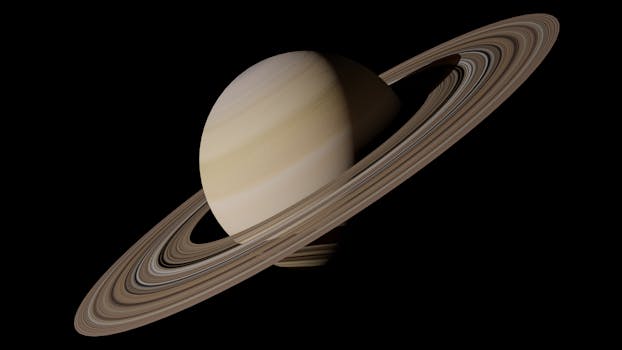
Jupiter: The Colossal Giant of Our Solar System
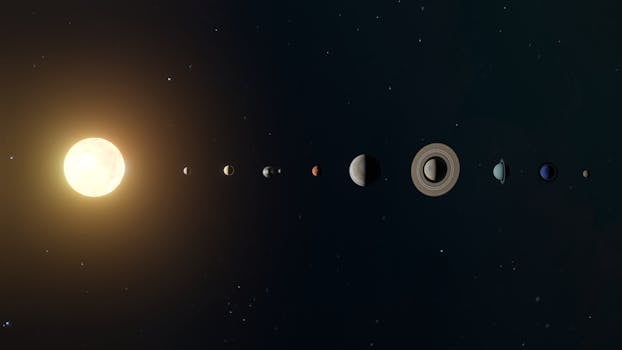
Jupiter, the fifth planet from the Sun, stands as the largest in our solar system, renowned not only for its immense size but also for its significant influence on the solar neighborhood. This gas giant's unique characteristics and their impacts make it a key focus for astronomical study.
Size and Gravitational Influence
.png)
Jupiter's enormity is staggering—about 1,300 Earths could fit inside it. This massive size results in a gravitational pull stronger than any other planet in our solar system, except the Sun. Jupiter's gravity affects the orbits of nearby planets and the asteroid belt, helping to stabilize the solar system's structure.
Composition and Atmospheric Features
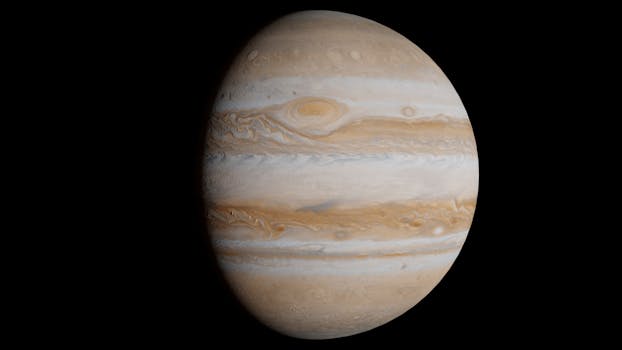
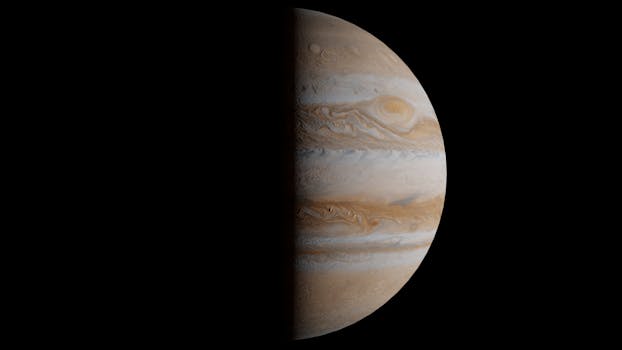
Primarily made of hydrogen and helium, Jupiter shares its composition with stars, though it lacks sufficient mass for nuclear fusion. This composition underpins one of Jupiter’s most notable features: the Great Red Spot, a vast storm exceeding the size of Earth that has persisted for at least 350 years. Jupiter’s atmosphere is marked by colorful bands and zones, created by variations in temperature and chemical composition, visible thanks to ammonia crystals and other elements. These bands are accentuated by Jupiter’s rapid rotation, which completes in about 10 hours, lending the planet an oblate shape.
Magnetic Field and Magnetosphere
Jupiter boasts the strongest planetary magnetic field in our solar system, about 20 times that of Earth's. This powerful magnetic field supports a vast magnetosphere, extending up to 3 million kilometers towards the Sun, which shields the planet from solar winds and is populated with charged particles. This results in spectacular auroras at Jupiter’s poles, much more intense than those on Earth.
Moons and Their Mysteries
With 79 known moons, Jupiter’s system is a celestial wonder. The four largest moons, known as the Galilean moons—Io, Europa, Ganymede, and Callisto—were discovered in 1610 and have been subjects of interest ever since. Ganymede is the largest moon in the solar system and even possesses its own magnetic field. Europa is particularly intriguing, with its icy surface potentially hiding a subsurface ocean, positing it as a likely candidate in the search for extraterrestrial life.
Jupiter’s Protective Role
Beyond its physical features, Jupiter plays a protective role in our solar system. Its strong gravitational pull influences the paths of comets and asteroids, acting as a guardian that can divert or capture potentially hazardous objects. This was highlighted in 1994 when Comet Shoemaker-Levy 9 collided with Jupiter, providing a vivid demonstration of the planet’s impact on solar system dynamics.
Conclusion
Jupiter is much more than just a large planet; it is a complex and dynamic system that significantly affects our solar system. Its massive size, powerful magnetic field, and intriguing moons make it a focal point of continuous scientific research. Studying Jupiter not only enhances our understanding of our own solar system but also offers insights into planetary systems beyond ours, contributing to our broader knowledge of the universe.