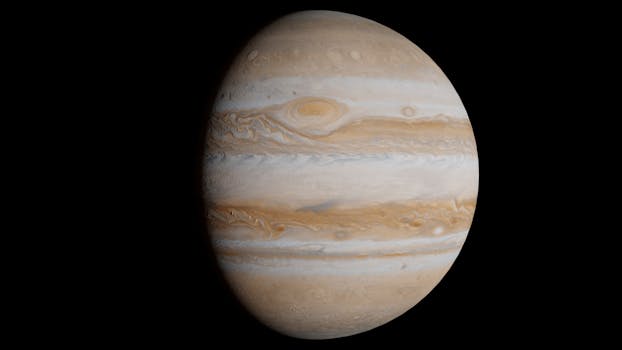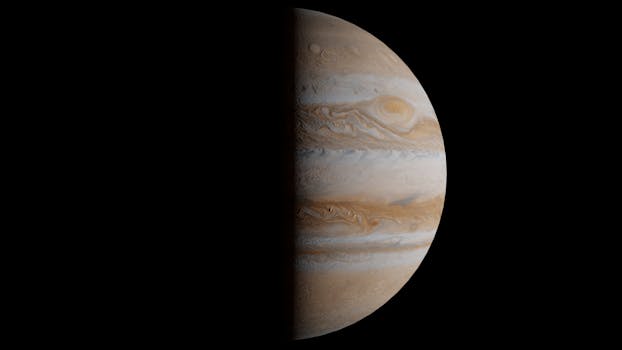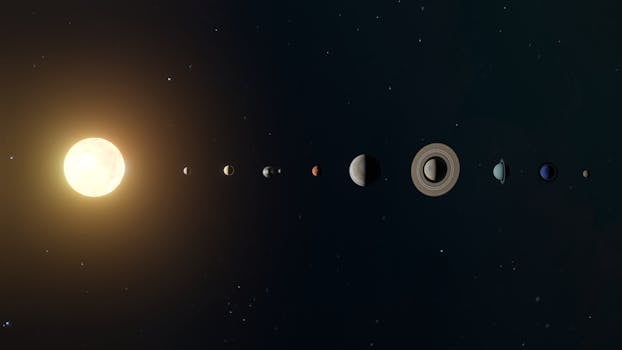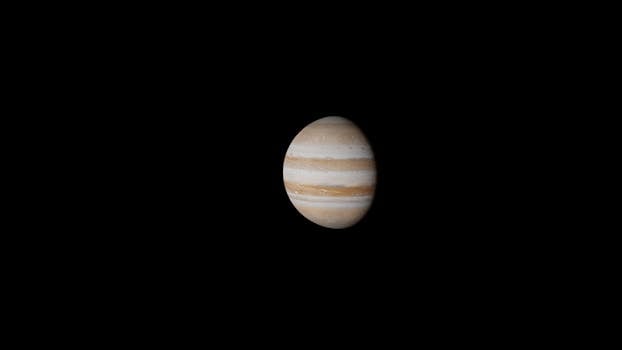
Jupiter, the behemoth of our solar system, has profoundly influenced the cosmic neighborhood's structure and evolution. Its massive size and gravitational strength have played pivotal roles in shaping the trajectory and composition of the other solar bodies surrounding it. This article delves into how Jupiter's formation and presence have impacted the development of our solar system, offering insights that extend beyond our local celestial confines to other star systems in the universe.
Jupiter's Formation and Its Immediate Effects
Jupiter is primarily composed of hydrogen and helium, making it a gas giant. Although it shares chemical similarities with stars, it lacks sufficient mass to ignite nuclear fusion. Formed about 4.5 billion years ago, Jupiter quickly assumed a dominant role due to its substantial mass and gravitational pull. This early emergence and the subsequent gravitational influence were crucial in the accretion of materials in the nascent solar system.
.png)
Architect of the Solar System
Jupiter's gravitational force exerted significant influence over the path and speed of the accreting material in the solar nebula. This influence not only accelerated the formation of planetary bodies by promoting faster aggregation of dust and gases but also helped in clearing the path for their orbits.
Guardian of the Inner Planets
Jupiter has been aptly nicknamed the solar system's "vacuum cleaner." Its strong gravitational pull captures or diverts many comets and asteroids, potentially hazardous objects that might otherwise threaten Earth and other inner planets. This protective role has been crucial in preserving stable and life-supporting conditions on Earth, reducing the frequency and severity of mass extinction events.
Stabilizer of Planetary Orbits
The presence of Jupiter has helped stabilize the orbits of the solar system’s inner planets. Without Jupiter, it is likely that the inner planetary orbits could be more erratic or eccentric, possibly leading to dramatic variations in Earth's climate and orbital characteristics, which could make it less conducive to life.
Creator of the Asteroid Belt
The asteroid belt, a region teeming with rocky and metallic debris between Mars and Jupiter, owes its existence to Jupiter's immense gravitational forces. These forces inhibited the accretion of these materials into a single larger planet, instead maintaining them as a "belt" of myriad small bodies orbiting the Sun.
Influencer of the Outer Solar System
The Grand Tack Hypothesis posits that Jupiter once migrated close to the Sun, then retreated to its current position. This significant movement could have had a reshaping effect on the outer solar system, influencing the orbital configuration of Uranus, Neptune, and the Kuiper Belt. This migration might have also led to the capture or ejection of other bodies in the early solar system.
Continuous Contribution to Solar System Science
The exploration of Jupiter, through missions like NASA’s Juno spacecraft, continues to provide valuable data about its atmospheric conditions, magnetic fields, and gravitational forces. These insights are crucial for understanding not only Jupiter itself but also the broader processes that govern planetary formation and stability in other star systems.
Conclusion
Jupiter’s multifaceted role in the development and dynamics of our solar system underscores its importance not just as a planetary body but as a critical factor in the formation and evolution of Earth and its neighboring planets. Its influence extends from enhancing planetary formation to protecting the inner solar system and stabilizing the conditions that foster life on Earth. The ongoing study of Jupiter not only sheds light on our own solar system’s past but also informs our understanding of planetary systems throughout the cosmos, highlighting the complex interdependencies that characterize our universe.