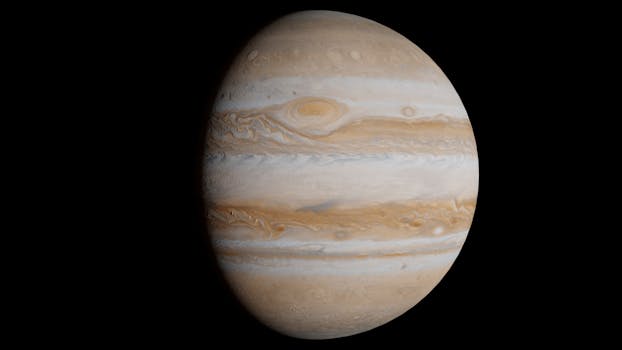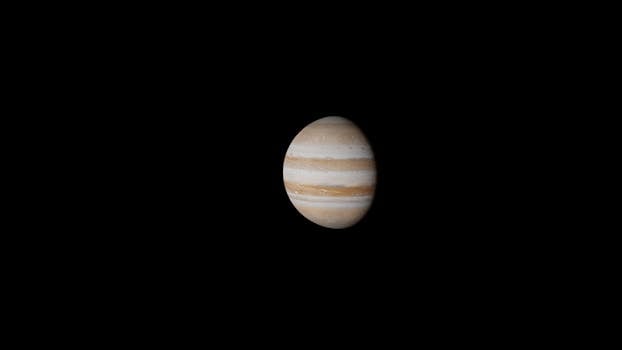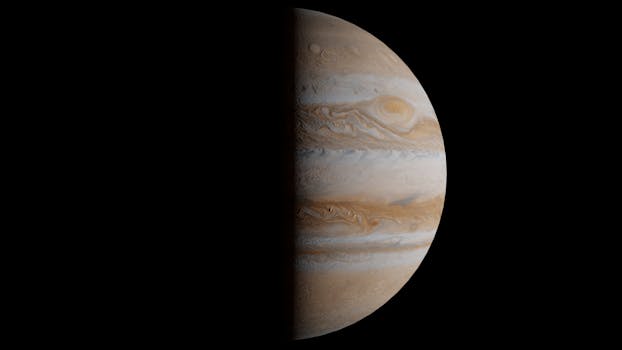
Jupiter, the behemoth of our solar system, plays a pivotal role in shaping our understanding of life beyond Earth. As astrobiology delves into the mysteries of life's existence and persistence in the universe, Jupiter's influence is of crucial importance, impacting everything from the safety of Earth to the potential habitability of extraterrestrial moons.
Jupiter: The Cosmic Shield
One of Jupiter's most significant astrobiological roles is its function as a guardian of Earth. With its enormous mass, Jupiter's gravitational field acts as a cosmic vacuum cleaner, capturing or deflecting asteroids and comets that could otherwise pose a serious threat to life on our planet. This protective mechanism has likely contributed to the stability necessary for life on Earth to evolve and flourish. By reducing the frequency of catastrophic impacts, Jupiter may have helped preserve the conditions needed for complex organisms to develop.
.png)
Exploring the Moons of Jupiter
Beyond its role as Earth's protector, Jupiter's moons are of prime interest in the search for extraterrestrial life, particularly Europa. Hidden beneath Europa's icy crust is a vast ocean of liquid water, heated by the tidal forces exerted by Jupiter's immense gravity. This subsurface ocean is considered one of the most promising places to look for life beyond Earth, offering a potentially habitable environment shielded from the harsh conditions of space.
Ganymede and Callisto, other Jovian moons, also harbor hidden oceans beneath their icy surfaces. Studying these moons provides invaluable insights into the diverse conditions that might support life and helps broaden our understanding of where and how life could exist.
Jupiter's Atmospheric Laboratory
Jupiter itself is a treasure trove of chemical processes. Its atmosphere, rich in hydrogen, helium, ammonia, methane, and water vapor, serves as a natural laboratory for studying the formation of organic molecules. The high pressures and temperatures mimic conditions that are not replicable on Earth, offering a unique glimpse into the chemical dynamics that could lead to the development of life-sustaining compounds.
Radiation Belts: Harsh Testing Grounds
The intense radiation belts surrounding Jupiter present another fascinating study area. These belts test the resilience of biological molecules, providing insights into how organic compounds react to severe radiation. This understanding could reveal the types of environments in which life might not just survive but thrive, expanding the scope of conditions considered habitable.
Jupiter's Impact on Solar System Architecture
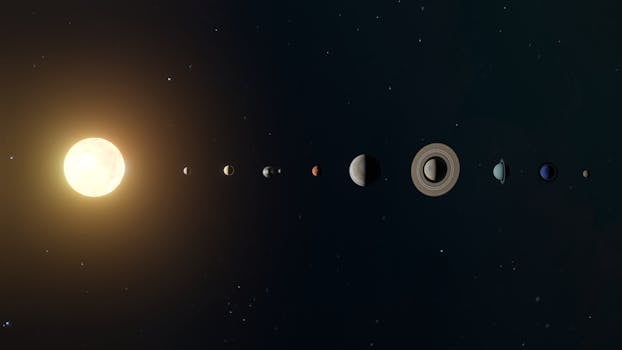
Jupiter's massive size and gravitational pull also influence the architecture of the entire solar system. It affects the orbits of other bodies, capturing comets and affecting their trajectories. These comets, often considered as carriers of organic material and water, are like floating laboratories that provide clues about the early solar system and the distribution of life's building blocks.
Conclusion: Jupiter's Broader Implications
The study of Jupiter and its influence on astrobiology not only helps us understand the potential for life on other worlds but also enriches our understanding of Earth's biological history and potential future. By examining how Jupiter’s moons might host life, and how its atmosphere contributes to organic chemistry, we gain insights into the universal conditions favorable for life.
As we continue to advance our technology and deepen our space exploration, Jupiter will remain a central figure in astrobiology. Its vastness and complexity make it not merely a planet but a fundamental framework for understanding life’s potential across the universe. Every discovery in this giant laboratory brings us one step closer to answering the profound question: Are we alone in the universe?