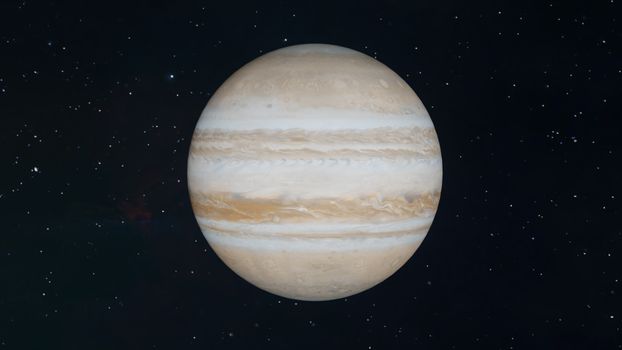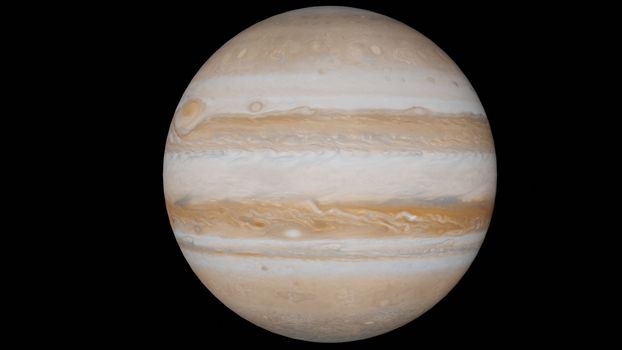
For centuries, the giant planet Jupiter has been a beacon of fascination for astronomers and skywatchers alike. Yet, as our telescopes sharpen and robotic explorers venture ever closer, it is not only Jupiter itself that captures our imagination—it is the diverse and mysterious collection of moons that orbit this gas giant. These moons, ranging from volcanic infernos to ice-crusted worlds, conceal secrets that could reshape our understanding of planetary science, the possibility of alien life, and the history of our solar system. From the lava-spewing surface of Io to the enigmatic frozen crust of Europa, Jupiter’s moons are windows into processes and phenomena found nowhere else. Let’s embark on a journey through the secrets hidden by Jupiter’s moons, and discover why these celestial companions are central to some of the greatest mysteries in astronomy.
Jupiter’s Moons: An Overview of a Miniature Solar System
Jupiter is accompanied by a retinue of at least 95 moons as of early 2024, according to data from the International Astronomical Union. These range in size from tiny, irregular rocks only a few kilometers across to the four massive Galilean moons: Io, Europa, Ganymede, and Callisto. Discovered by Galileo Galilei in 1610, these four largest moons are among the most prominent and scientifically significant objects in the solar system.
The diversity among Jupiter’s moons is staggering. Some, like Io, are geologically active beyond anything seen elsewhere, while others, like Europa, may conceal subsurface oceans beneath their icy exteriors. This variety has led scientists to refer to Jupiter’s moon system as a “miniature solar system,” a term that captures both the complexity and the potential for discovery.
.png)
To appreciate just how varied these moons are, consider the following comparative table of the four Galilean moons:
| Moon | Diameter (km) | Surface Composition | Key Feature | Distance from Jupiter (km) |
|---|---|---|---|---|
| Io | 3,643 | Silicate rock, sulfur | Most volcanically active body in the solar system | 421,700 |
| Europa | 3,121 | Water ice | Possible subsurface ocean | 671,100 |
| Ganymede | 5,268 | Water ice, silicate rock | Largest moon in the solar system | 1,070,400 |
| Callisto | 4,821 | Water ice, rock | Heavily cratered, ancient surface | 1,882,700 |
These numbers only hint at the extraordinary stories each moon has to tell. In the next sections, we will focus particularly on Io and Europa, two moons that have become prime targets in the search for life and the study of planetary evolution.
Io: The Solar System’s Volcanic Powerhouse
Io stands out as the most volcanically active body in the solar system, boasting over 400 active volcanoes. Its fiery landscape is the result of intense tidal heating—gravitational forces from both Jupiter and neighboring moons stretch and squeeze Io, generating heat in its interior. This process powers continuous volcanic eruptions that spew sulfur and silicate materials across the moon's surface, reshaping the landscape in real time.
The first hints of Io’s extraordinary nature came from the Voyager 1 spacecraft, which flew past Jupiter in 1979 and captured images of erupting volcanos on Io. Since then, the Galileo orbiter and Earth-based telescopes have tracked these eruptions, revealing plumes that reach up to 500 kilometers above the surface—taller than the diameter of the entire United Kingdom.
Io’s volcanic activity is not just a spectacle; it plays a critical role in Jupiter’s environment. The moon’s eruptions eject vast amounts of material into space, creating a doughnut-shaped ring of charged particles known as the Io plasma torus. This torus interacts with Jupiter’s powerful magnetic field, generating auroras and contributing to the planet’s radiation belts. In fact, Io’s influence extends so far that its material can even be detected in the atmosphere of Jupiter itself.
The study of Io provides invaluable insights into how tidal forces can drive geological activity, a process that might also operate on exoplanets orbiting close to their stars. However, Io’s extreme environment—surface temperatures can swing from -143°C in the shade to 17°C near active lava flows—makes it a hostile place for life as we know it.
Europa: The Search for Life Beneath the Ice
In stark contrast to Io's hellish surface, Europa presents a frigid, smooth, and bright exterior composed mainly of water ice. Yet beneath its frozen shell, scientists believe there exists a global ocean containing more than twice the water of all Earth's oceans combined. The evidence for this hidden sea comes from several sources: the cracked and shifting ice seen in spacecraft imagery, magnetic field data indicating a conductive layer below the surface, and the detection of water vapor plumes by the Hubble Space Telescope.
Europa’s ocean is kept liquid by the same tidal forces that energize Io’s volcanoes, though to a lesser degree. Heat generated by the flexing of Europa’s interior prevents the ocean from freezing solid, creating a tantalizing environment where life could potentially thrive.
Why do scientists think Europa’s ocean could be habitable? First, water is a fundamental ingredient for life as we know it. Second, the interaction between the ocean and the rocky seafloor could provide chemical energy, similar to hydrothermal vents on Earth’s ocean floors where a remarkable array of life flourishes without sunlight. Third, recent studies have identified organic molecules on Europa’s surface—possible precursors to life.
The upcoming Europa Clipper mission, set for launch by NASA in the 2020s, aims to explore these questions further. It will carry a suite of instruments to analyze the moon’s ice, atmosphere, and potential plumes, searching for signs of habitability and perhaps even direct evidence of life.
The Impact of Jupiter’s Moons on Planetary Science
Jupiter’s moons, especially Io and Europa, have fundamentally changed our understanding of what moons—and even planets—can be. Before the discoveries of the last few decades, scientists assumed that moons were geologically dead, frozen relics. Instead, Jupiter’s satellites have proven to be dynamic worlds, each with its own story.
This realization has had profound implications for planetary science:
- The concept of tidal heating, first observed on Io and Europa, is now applied to exoplanets and moons around other giant planets. - The possibility of subsurface oceans has expanded the search for life beyond the traditional “habitable zone” where liquid water can exist on a planet’s surface. - The study of magnetic interactions between moons and their host planets has led to new insights into planetary magnetospheres and radiation environments.In 2015, the Hubble Space Telescope even detected evidence of plumes emerging from Europa’s surface, suggesting that material from the ocean below might be accessible for direct sampling by future missions. This prospect, once science fiction, is now at the forefront of astrobiology.
Other Moons: Ganymede, Callisto, and the Lesser-Known Satellites
While Io and Europa attract much of the spotlight, Jupiter’s other large moons are equally intriguing. Ganymede is the largest moon in the solar system, with a diameter of 5,268 kilometers—larger than the planet Mercury. Ganymede is unique in being the only moon known to have its own magnetic field, likely generated by a partially liquid iron-nickel core.
Callisto, the outermost Galilean moon, preserves one of the oldest and most heavily cratered surfaces in the solar system, providing a record of impacts stretching back over 4 billion years. Yet, like Europa and Ganymede, Callisto may also harbor a subsurface ocean, making it another potential target in the search for life.
Beyond the Galilean moons, Jupiter is orbited by dozens of smaller satellites, including irregularly shaped captured asteroids and tiny moonlets. These bodies provide clues to the history of Jupiter’s formation and the evolution of the outer solar system.
The Future: Unlocking More Secrets from Jupiter’s Moons
The coming decades promise a revolution in our understanding of Jupiter’s satellites. Missions like NASA’s Europa Clipper and ESA’s JUICE (Jupiter Icy Moons Explorer), set to arrive in the Jovian system in the early 2030s, will provide unprecedented close-up studies of Europa, Ganymede, and Callisto. JUICE, for instance, will spend at least nine months orbiting Ganymede, studying its ice shell, magnetic field, and potential habitability.
These missions are designed to answer some of the most profound questions in planetary science: Are there habitable environments beyond Earth? How do worlds change when subjected to intense gravitational forces? What can Jupiter’s moons teach us about the formation and evolution of planetary systems, both here and in distant star systems?