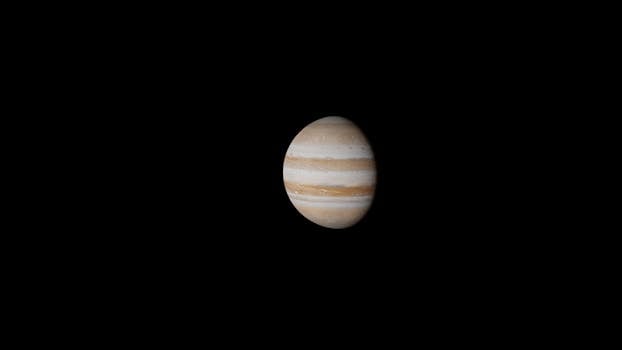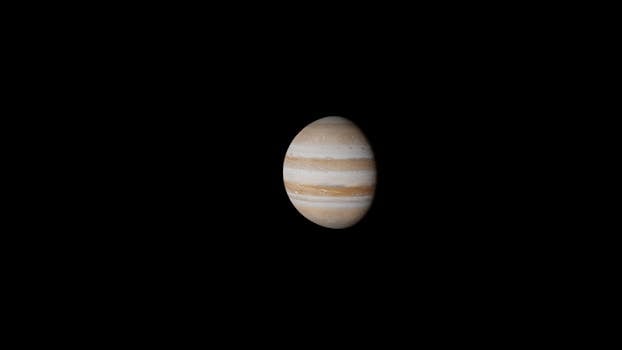
Jupiter, the colossal guardian of our solar system, remains one of the most intriguing and well-studied planets in our cosmic neighborhood. This gas giant, known for its majestic storms and powerful magnetic field, continues to be a focal point in the quest to understand the fundamental processes that govern our solar system and beyond.
The Composition and Atmosphere of Jupiter
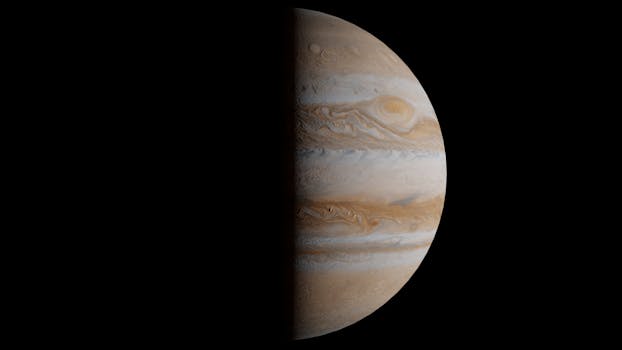
Jupiter is a true behemoth, primarily composed of hydrogen and helium, elements that hark back to the early days of the solar system. Its atmosphere is a swirling mix of gases, with clouds of ammonia, water vapor, and methane creating a tapestry of colorful bands and spots. The planet's most iconic feature, the Great Red Spot, is a storm larger than Earth itself, showcasing the dynamic and turbulent nature of Jupiter's atmosphere.
.png)
Key Milestones in Jupiter Exploration
The exploration of Jupiter has been marked by groundbreaking missions that have expanded our knowledge of the giant planet. The Pioneer and Voyager missions provided the first close-up images of Jupiter, revolutionizing our understanding of its storms, rings, and moons. The Galileo spacecraft, launched in 1989, spent eight years orbiting Jupiter, dropping a probe into its atmosphere and delivering a wealth of data about the planet's composition and the magnetic environment.
More recently, NASA's Juno mission, which arrived at Jupiter in 2016, has been instrumental in peeling back the upper layers of Jupiter's atmosphere. Juno’s suite of scientific instruments is designed to delve into the unseen depths of the planet, measuring its composition, wind patterns, temperature, and gravity. These measurements help scientists understand the planet's origin and evolution.
Technological Challenges in Jupiter Exploration
Exploring Jupiter is no small feat. The planet's great distance from Earth and its harsh radiation environment pose significant challenges. Spacecraft exploring Jupiter must be equipped with special radiation-hardened electronics and robust shielding to survive the intense belts of charged particle radiation. The extreme conditions have spurred numerous technological innovations, from advanced propulsion systems to autonomous robotic technologies.
Jupiter's Role in Our Solar System
Jupiter’s immense mass and gravitational pull have made it a pivotal figure in the solar system. It is believed that Jupiter had a profound impact on the early shaping of the solar system, influencing the orbital arrangement of the other planets and capturing or ejecting debris that might have otherwise bombarded the inner planets. Understanding Jupiter's role can provide insights into the dynamics of our solar system and planetary systems around other stars.
The Future of Jupiter Exploration
Looking ahead, the exploration of Jupiter is set to continue with ambitious missions like the upcoming Europa Clipper mission, slated for launch in the 2020s. This mission will focus on Jupiter’s moon Europa, which is suspected to house an ocean beneath its icy crust, raising the tantalizing possibility of life. Such missions will not only probe the mysteries of Jupiter itself but also explore the potential habitability of moons orbiting other gas giants in the galaxy.
In essence, Jupiter is not just a planet but a key to understanding the larger universe. Each mission and discovery peels back a layer of mystery, helping us to understand more about the giant planet and, by extension, about the fundamental processes that shape our cosmic surroundings. As we continue to gaze up at the night sky, Jupiter reminds us of the endless wonders waiting to be discovered in the vast expanse of space.