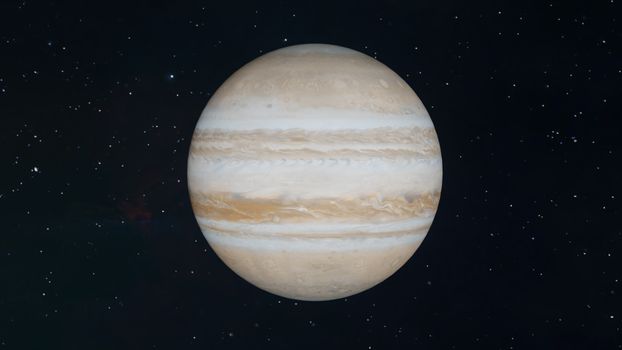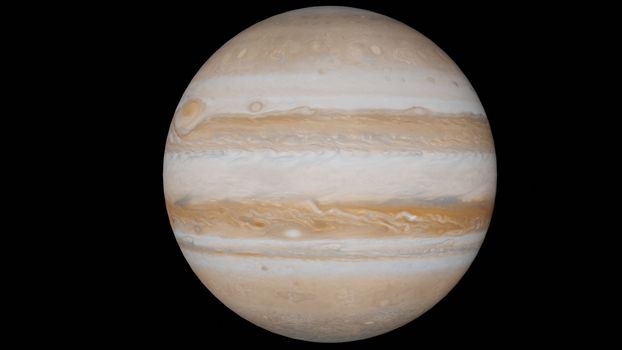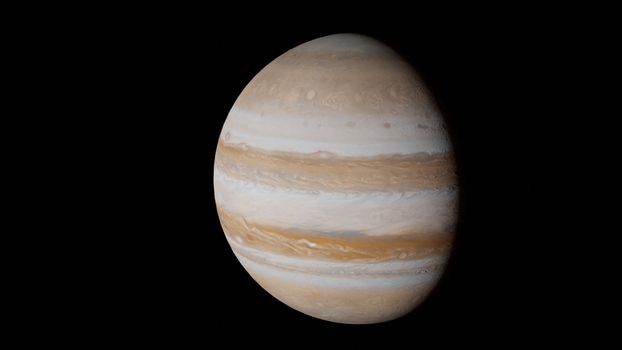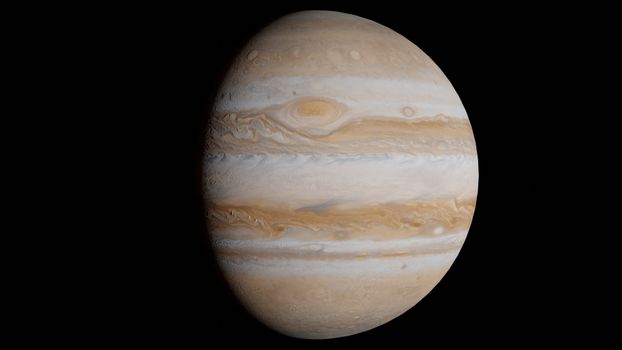
Jupiter, the largest planet in our solar system, along with its more than 90 moons, has long fascinated astronomers and planetary scientists. The mysterious cloud bands, colossal storms like the Great Red Spot, and the icy, potentially habitable surfaces of its moons—such as Europa and Ganymede—offer tantalizing clues about the origins and diversity of planetary systems. As our curiosity grows, so does the need for advanced technologies capable of unlocking Jupiter’s secrets. The next generation of space exploration tools promises to revolutionize how we study this giant planet and its intriguing satellites. This article delves into the cutting-edge technologies that will enable future discoveries at Jupiter and its moons, highlighting their impact, challenges, and exciting possibilities.
The Next Leap: Advanced Space Probes and Orbiters
The backbone of Jupiter exploration has always been robotic spacecraft. From the Pioneer and Voyager flybys in the 1970s to the Galileo orbiter in the 1990s and NASA’s Juno mission, each generation of probes has pushed the boundaries of what we know. Looking forward, space agencies are developing more robust, autonomous, and sophisticated orbiters and probes.
Future missions like ESA’s Jupiter Icy Moons Explorer (JUICE), set to arrive in the Jovian system in the early 2030s, represent a leap in capability. JUICE is equipped with 10 state-of-the-art instruments, including the GALA laser altimeter, JANUS camera, and RIME radar, which can penetrate up to 9 kilometers beneath icy surfaces. NASA’s Europa Clipper, launching in the mid-2020s, is designed to perform nearly 50 flybys of Europa, carrying advanced spectrometers, ice-penetrating radar, and thermal imagers. These spacecraft are built to withstand Jupiter’s intense radiation—up to 20 million rads, nearly 1,000 times more than what humans would survive.
.png)
Key improvements in autonomous navigation and AI-driven data analysis will allow future probes to make real-time decisions, prioritize data, and operate with minimal input from Earth, crucial for missions millions of kilometers away.
Next-Generation Telescopes and Remote Sensing Tools
While spacecraft provide close-up views, telescopes—both in space and on the ground—remain vital for long-term monitoring and discovery. The James Webb Space Telescope (JWST), launched in 2021, already offers unprecedented infrared views of Jupiter and its moons, revealing atmospheric phenomena and thermal signatures invisible to earlier instruments.
On Earth, the upcoming Extremely Large Telescope (ELT) in Chile, with a 39-meter primary mirror, will offer ten times the resolving power of the Hubble Space Telescope. Its adaptive optics and high-resolution spectrographs will allow astronomers to detect changes in Jupiter’s atmosphere and search for faint plumes or eruptions from moons like Europa and Io.
Future telescopes will also use technologies such as:
- Doppler imaging: To map atmospheric winds and rotation in detail. - Polarimetry: To deduce cloud properties and surface materials on moons. - High-speed photometry: To capture short-lived events like lightning or volcanic eruptions.These advances in remote sensing will complement probe data and help guide future missions by identifying targets of interest.
Penetrating the Ice: Landers, Cryobots, and Subsurface Explorers
Some of Jupiter’s moons, especially Europa and Ganymede, are believed to have subsurface oceans beneath their icy crusts—prime locations to search for life. Exploring these hidden realms requires technologies that go beyond orbiters and flybys.
Future landers must survive surface temperatures as low as -160°C and radiation hundreds of times stronger than Earth’s. NASA has funded concepts for “cryobots”—robotic probes capable of melting through kilometers of ice using heated drills or nuclear-powered systems. Once beneath the ice, miniature submarines, or “hydrobots,” could analyze ocean chemistry and search for microbial life.
For example, the Europa Lander concept features an autonomous drill capable of penetrating 10 centimeters into the ice to collect pristine samples. Advanced sterilization and contamination control technologies are essential to prevent Earth microbes from hitching a ride and compromising the search for native life.
Innovative Power and Propulsion Systems
Operating in the cold, dark reaches of the outer solar system demands reliable power sources. Traditional solar panels become less effective at Jupiter’s distance—nearly five times farther from the Sun than Earth. The Juno spacecraft set a record by operating on solar power at Jupiter, but its panels span over 60 square meters.
Future missions will likely combine high-efficiency solar panels with next-generation nuclear power systems, such as advanced radioisotope thermoelectric generators (RTGs) and the newly developed Kilopower fission reactors. These technologies can deliver steady power for years, enabling landers, cryobots, and orbiters to operate without sunlight.
For propulsion, new ion and Hall-effect thrusters, which use electromagnetic fields to accelerate ions, offer greater efficiency than chemical rockets. NASA’s upcoming Psyche mission demonstrates this approach, and similar electric propulsion systems could allow spacecraft to maneuver more flexibly around Jupiter and its moons.
Breakthrough Communication and Data Transmission Technologies
Jupiter is, on average, 778 million kilometers from Earth—a distance that causes substantial signal delay and limits data transfer rates. The Galileo mission, for instance, was plagued by a malfunctioning high-gain antenna that restricted data return.
To overcome these challenges, future missions will leverage:
- Laser (optical) communication: Capable of delivering up to 100 times more data than traditional radio systems. NASA’s Deep Space Optical Communications (DSOC) experiments are paving the way for this technology. - Autonomous data management: Onboard AI can select and compress the most valuable data, ensuring critical discoveries are prioritized. - Relay satellites: A network of small, cooperative satellites could orbit Jupiter to relay data back to Earth, reducing bottlenecks and allowing for more continuous communication.These advances will make it possible to transmit high-resolution images, spectroscopic data, and even video from the Jovian system in near real-time.
Comparing Key Technologies for Future Jupiter Exploration
To better understand the transformative potential of these technologies, here is a comparative overview of their capabilities and expected impact:
| Technology | Function | Key Missions | Expected Impact |
|---|---|---|---|
| Advanced Orbiters | Long-term observations, mapping, atmosphere analysis | JUICE, Europa Clipper | Detailed surface and subsurface mapping, high-res data return |
| Ice-Penetrating Radar | Probe subsurface oceans and structures | JUICE, Europa Clipper | Detects water layers, guides lander sites |
| Cryobots/Subsurface Explorers | Drill through ice and explore ocean interiors | Europa Lander (concept), future missions | Direct search for life, sampling of ocean environments |
| High-Efficiency Power Systems | Provide energy far from the Sun | Juno, future RTG-powered landers | Long-duration missions, enables surface and subsurface ops |
| Laser Communication | Fast, high-volume data transmission | DSOC (testbed), future orbiters | Enables real-time science, high-resolution video/images |
| Next-Gen Telescopes | Remote sensing, event monitoring | JWST, ELT | Discovery of new moons, atmospheric events, plumes |
The Future of Jovian Exploration: What Lies Ahead?
The technologies outlined above will redefine our ability to explore Jupiter and its moons over the next few decades. As these tools mature, they will help answer profound questions: Can life exist in Europa’s ocean? How do Jupiter’s intense magnetic fields affect its moons? What drives the planet’s turbulent weather?
Just as the Voyager missions transformed our view of the outer planets in the 20th century, the new wave of probes, landers, telescopes, and data systems will unlock discoveries that we can hardly imagine today. By blending remote observation, in-situ analysis, and even subsurface exploration, humanity stands poised to make Jupiter and its moons not just objects of distant wonder, but worlds we can study as never before.