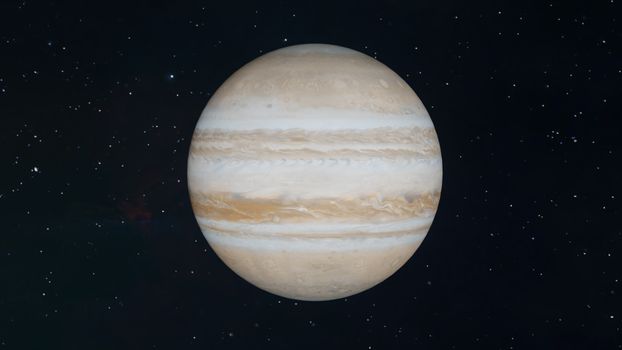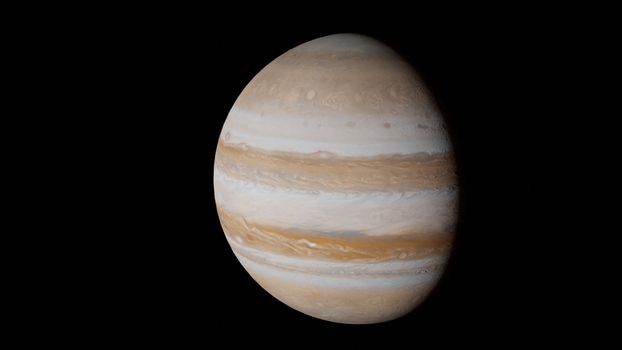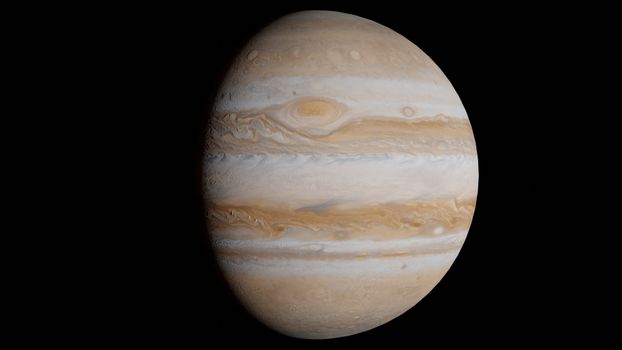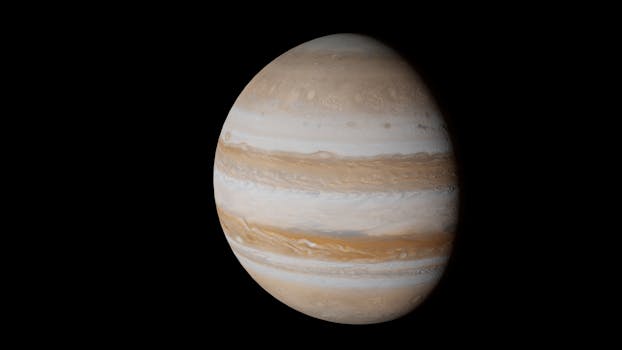
Jupiter, the largest planet in our solar system, is a dazzling and dynamic world. Beyond its staggering size—over 11 times the diameter of Earth—Jupiter stands out for its ever-changing, mesmerizing cloud formations. These clouds, swirling in vibrant bands and punctuated by colossal storms, offer scientists a living laboratory to study planetary atmospheres and weather phenomena on a grand scale. But what makes Jupiter’s clouds so extraordinary? Let’s take a closer look at the science, structure, and surprising secrets behind Jupiter’s complex cloud formations.
The Building Blocks of Jupiter’s Clouds: Composition and Structure
At first glance, Jupiter’s cloud tops might seem chaotic, but they are, in fact, the result of intricate chemical and physical processes. Unlike Earth’s atmosphere, which is dominated by nitrogen and oxygen, Jupiter’s atmosphere is primarily composed of hydrogen (about 90%) and helium (nearly 10%), with traces of other compounds.
The most visually striking clouds are found in the upper layers of Jupiter’s atmosphere. There, the temperatures and pressures are just right for various chemicals to condense and form clouds:
.png) - $1: The highest visible clouds are made of ammonia ice crystals, forming at temperatures around -145°C (-230°F). These clouds give Jupiter its pale, whitish hues.
- $1: Deeper down, where it’s warmer, clouds consist of ammonium hydrosulfide (NH4SH). This layer is responsible for some of the planet’s yellow-brown colors.
- $1: Even further below, where pressures reach several times that of Earth’s surface, water vapor condenses into clouds, much like those found on Earth—but far thicker and more turbulent.
- $1: The highest visible clouds are made of ammonia ice crystals, forming at temperatures around -145°C (-230°F). These clouds give Jupiter its pale, whitish hues.
- $1: Deeper down, where it’s warmer, clouds consist of ammonium hydrosulfide (NH4SH). This layer is responsible for some of the planet’s yellow-brown colors.
- $1: Even further below, where pressures reach several times that of Earth’s surface, water vapor condenses into clouds, much like those found on Earth—but far thicker and more turbulent.
These layers stack atop one another, creating the famous multicolored bands and swirling formations we see through telescopes and spacecraft imagery.
Dynamic Patterns: Zones, Belts, and the Power of Jet Streams
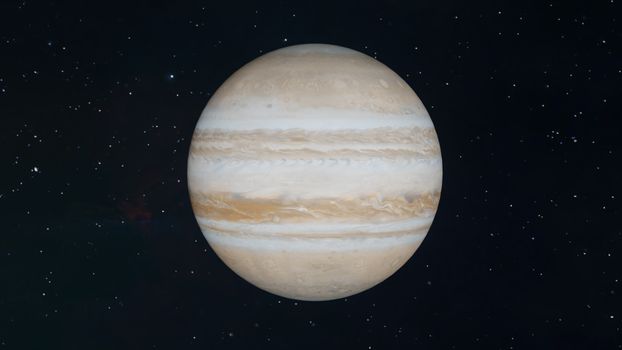
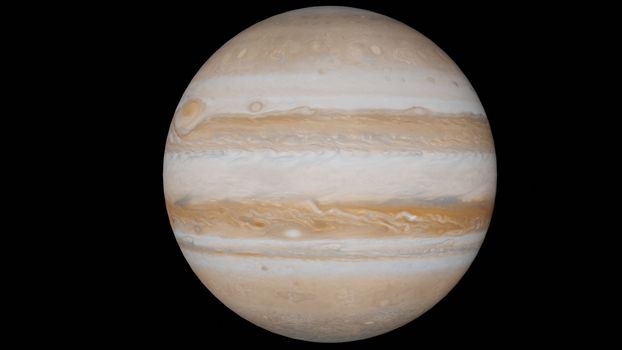
Jupiter’s atmosphere is dominated by alternating bands of light and dark clouds that wrap around the planet parallel to its equator. These are known as zones (lighter bands) and belts (darker bands), and they are far more than simple color variations.
- $1: These are regions of rising air, colder temperatures, and higher concentrations of ammonia ice, giving them their lighter color. Zones are typically areas of high pressure and form the planet’s signature white bands. - $1: These are areas of descending air, warmer temperatures, and fewer ammonia clouds. They contain more complex chemicals, like ammonium hydrosulfide, resulting in deeper, reddish-brown hues.The boundaries between these bands are marked by powerful jet streams—winds that can exceed 400 km/h (about 250 mph). These jet streams flow in opposite directions along the edges of each band, creating turbulence, vortices, and the famous “wavy” appearance of Jupiter’s cloud layers.
| Feature | Location | Main Components | Wind Speeds |
|---|---|---|---|
| Zones | Lighter bands, higher altitudes | Ammonia ice | Up to 400 km/h (250 mph) |
| Belts | Darker bands, lower altitudes | Ammonium hydrosulfide, other compounds | Up to 400 km/h (250 mph) |
| Great Red Spot | Southern hemisphere | Complex mix, including ammonia and unknown chromophores | Speeds up to 432 km/h (268 mph) |
| White Ovals | Various latitudes | Ammonia ice, water ice | Variable, typically 300–400 km/h (186–250 mph) |
These atmospheric bands are not static; they shift, merge, and fragment over time, making Jupiter’s appearance ever-changing. For instance, the South Equatorial Belt has disappeared and reappeared several times in the past century, a testament to the planet’s dynamic weather.
Storms of Epic Proportions: The Great Red Spot and Beyond
Perhaps the most iconic feature of Jupiter’s cloudscape is the Great Red Spot—a gigantic, crimson-hued storm that has been raging for at least 350 years. This anticyclonic storm measures about 16,350 kilometers (10,159 miles) across, wide enough to swallow Earth whole. Winds within the Great Red Spot can reach 432 km/h (268 mph), far surpassing the most powerful hurricanes ever recorded on Earth.
But the Great Red Spot is just one of many storms that pepper Jupiter’s atmosphere. White ovals, string-of-pearls formations, and smaller brown barges are all manifestations of the planet’s turbulent weather. These storms can last for decades, and sometimes, multiple storms merge to create new, even larger features.
Recent observations by NASA’s Juno spacecraft have revealed that some of these storms extend deep into Jupiter’s atmosphere, with roots stretching over 50 kilometers (31 miles) below the cloud tops. This depth is far greater than previously thought and suggests that Jupiter’s storms are not merely surface phenomena, but vast, three-dimensional systems driven by internal heat and rapid rotation.
Colorful Mysteries: What Gives Jupiter’s Clouds Their Distinctive Hues?
Jupiter’s clouds are a riot of colors—creamy whites, ochres, reds, and browns. But what causes these striking shades? While much is known about the basic chemistry, several mysteries remain.
- $1 tends to be white or pale yellow, accounting for the planet’s lighter bands. - $1 clouds are more yellow-brown. - $1 and trace elements, such as phosphorus and sulfur, are believed to react in Jupiter’s upper atmosphere, creating reddish compounds called chromophores. The exact identity of these chromophores is still under investigation.The Great Red Spot, for example, owes its color to unknown compounds that may include phosphorus, sulfur, or even complex organics formed under intense ultraviolet sunlight. Laboratory experiments have tried to replicate these colors, but so far, scientists have not been able to perfectly match the hues seen on Jupiter. This ongoing mystery underscores just how unique and complex Jupiter’s atmosphere really is.
Unraveling the Layers: Insights from Spacecraft and Telescopes
Our understanding of Jupiter’s clouds has grown dramatically over the past few decades, thanks to a combination of Earth-based telescopes, space telescopes like Hubble, and a series of dedicated spacecraft missions.
- $1 provided the first close-up images in the 1970s. - $1 flew by in 1979, delivering thousands of high-resolution images and revealing the intricate structure of Jupiter’s cloud bands and storms. - $1 orbited Jupiter for eight years, sending back detailed data on cloud composition, lightning, and atmospheric dynamics. - $1 is currently providing unprecedented close-up views and probing the depths of Jupiter’s atmosphere using microwave and infrared instruments.One of Juno’s key findings is that Jupiter’s jet streams and storms extend much deeper than previously believed, sometimes down to a depth of 3,000 kilometers (1,900 miles). Observations have also shown that lightning on Jupiter is up to three times more powerful than on Earth, indicating intense processes within the planet’s water clouds—another clue to the planet’s dynamic weather.
Why Studying Jupiter’s Clouds Matters for Science and Beyond
Jupiter’s clouds are more than a feast for the eyes. Studying them helps scientists understand not just our solar system’s largest planet, but also the broader processes that shape planetary atmospheres. Here are a few reasons why Jupiter’s clouds are so important:
1. $1: By studying Jupiter, scientists gain insights into the formation and evolution of gas giants, both in our solar system and around other stars. 2. $1: The turbulent, fast-changing weather on Jupiter provides a testbed for atmospheric models that can be applied to Earth and exoplanets alike. 3. $1: Jupiter’s massive size and intense gravity have influenced the evolution of the entire solar system. Its clouds and storms record information about its composition and internal heat, offering clues to its origins.In short, unlocking the secrets of Jupiter’s clouds is not just about understanding one planet—it’s about understanding the fundamental workings of planetary weather, chemistry, and evolution.
Final Reflections: The Endless Wonders of Jupiter’s Clouds
Jupiter’s cloud formations are among the most complex and captivating features in our solar system. With their towering storms, vivid colors, and ever-shifting bands, they continue to intrigue both scientists and skywatchers alike. As new missions like NASA’s Juno probe deeper into Jupiter’s atmosphere, we can expect even more astonishing discoveries about the planet’s weather, chemistry, and hidden depths.
The study of Jupiter’s clouds is a reminder of just how dynamic and mysterious our cosmic neighborhood remains. With every new image and data point, we come a little closer to understanding the forces that shape not just Jupiter, but all planetary atmospheres—including our own.