Jupiter’s Metamorphosis: A Study of the Planet’s Evolution
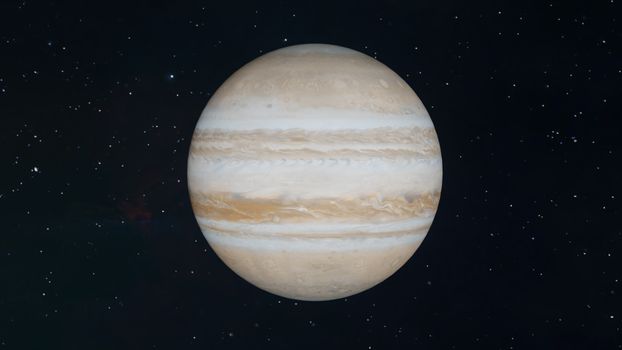
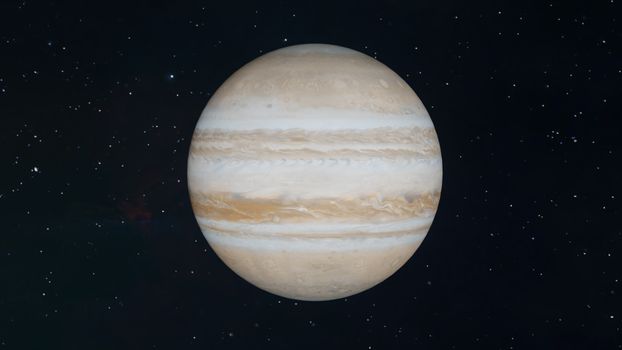
Jupiter, the largest planet in our solar system, has always fascinated astronomers and planetary scientists with its colossal size, swirling storms, and mysterious magnetosphere. Yet, beyond its current appearance lies a story of profound transformation—a metamorphosis billions of years in the making. From its tumultuous birth in the early solar system to its dynamic present, Jupiter’s evolution offers insights not only into the history of our own planetary neighborhood but also into the very processes that shape gas giants throughout the universe. In this article, we’ll explore Jupiter’s metamorphosis, examining how it formed, how it has changed over time, and what new discoveries are revealing about its ongoing transformation.
The Birth of a Giant: Jupiter’s Formation
Jupiter’s story begins over 4.5 billion years ago, during the chaotic infancy of our solar system. Unlike the rocky terrestrial planets, Jupiter is a gas giant, composed mostly of hydrogen (about 90%) and helium (nearly 10%), with traces of other elements. Scientists believe that Jupiter formed by a process known as core accretion.
In the early solar nebula, a dense region of gas and dust, solid materials collided and stuck together, gradually building up a solid core estimated to be about 10–20 times the mass of Earth. Once this core reached a critical size, it began to rapidly attract surrounding gas, ballooning into the behemoth we see today. Recent data from NASA’s Juno mission suggests that Jupiter’s core may be more diffuse and mixed than previously thought, challenging traditional models of gas giant formation.
.png)
The rapid growth of Jupiter had far-reaching effects. Its immense gravitational pull likely shaped the architecture of the entire solar system, influencing the formation and migration of other planets and contributing to the asteroid belt’s structure. In less than 10 million years—a blink of an eye on cosmic timescales—Jupiter had achieved much of its present mass, making it the first planet to fully form.
Atmospheric Evolution: From Primordial Soup to Turbulent Bands
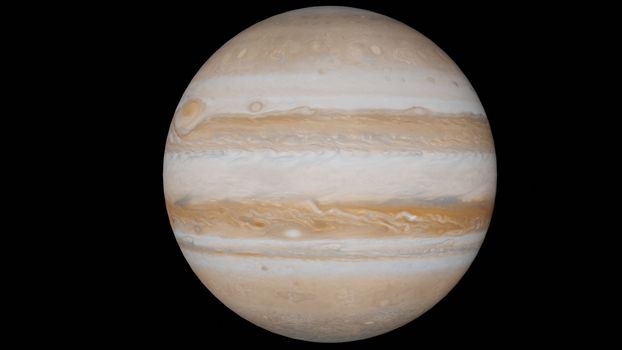
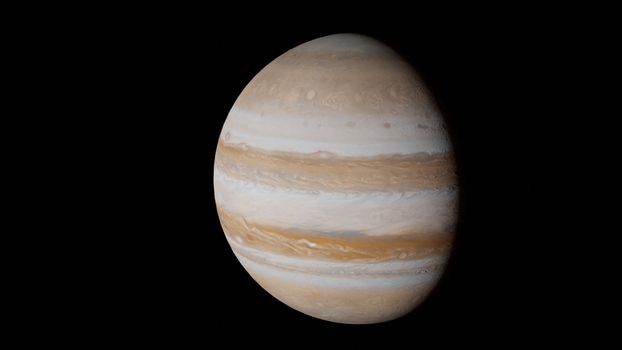
Jupiter’s atmosphere is a dynamic and ever-changing environment, marked by colorful bands, swirling storms, and powerful jet streams. But it wasn’t always this way. The planet’s early atmosphere, inherited from the solar nebula, was likely much more uniform and lacked the distinctive features we see today.
As Jupiter cooled, its atmosphere began to change. The separation of elements, known as differentiation, led to the formation of distinct cloud layers: ammonia ice at the top, followed by ammonium hydrosulfide, and water clouds deeper down. The familiar bands, or “zones” and “belts,” are a result of high-speed winds—some exceeding 400 km/h—that circle the planet in alternating directions.
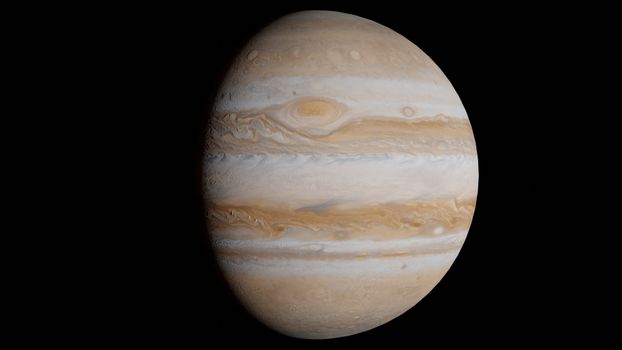
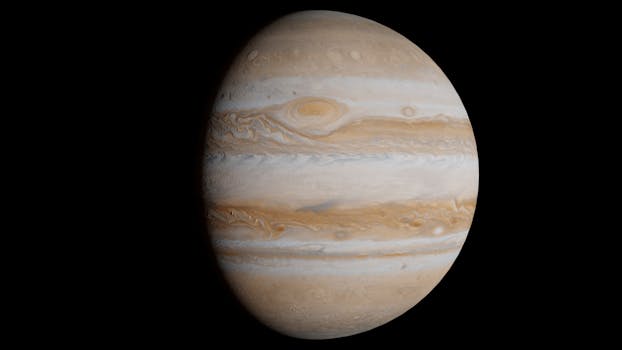
One of the most striking features of Jupiter’s atmospheric evolution is the persistence of its Great Red Spot, a gigantic storm larger than Earth that has raged for at least 350 years. However, recent observations show that the Great Red Spot is shrinking, now measuring about 16,350 kilometers across—half the size it was in the late 1800s. Scientists are still debating whether this iconic feature will eventually disappear, a reminder that Jupiter’s metamorphosis is ongoing.
Internal Changes: The Shifting Heart of Jupiter
Beneath Jupiter’s swirling clouds lies a complex and still poorly understood interior. Early models depicted Jupiter as having a small, dense core surrounded by layers of metallic hydrogen and molecular hydrogen. However, Juno’s gravity measurements have challenged this view, suggesting that Jupiter’s core is “fuzzy”—potentially a vast, diluted region of heavy elements mixed with lighter ones, extending to nearly half the planet’s radius.
This realization has important implications for our understanding of Jupiter’s evolution. Over billions of years, heavy elements may have been redistributed by powerful convection currents, driven by the planet’s internal heat. Jupiter emits about 1.6 times more energy than it receives from the Sun, indicating that it is still slowly contracting and cooling, a process known as Kelvin-Helmholtz contraction.
The internal movements also affect Jupiter’s powerful magnetic field, the strongest of any planet in the solar system. Generated by the motion of metallic hydrogen deep within, Jupiter’s magnetic field has evolved over time, with recent evidence suggesting it may be slowly shifting and even reversing in certain regions.
Jupiter’s Moons and Rings: Evolving Companions
Jupiter’s metamorphosis is not limited to the planet itself—the system of moons and faint rings that surround it have also undergone dramatic changes. Jupiter boasts at least 95 known moons, with the four largest—the Galilean moons: Io, Europa, Ganymede, and Callisto—each offering a unique story of evolution.
Ganymede, the largest moon in the solar system, is believed to have experienced significant geological activity, including tectonic shifts and the development of a subsurface ocean. Europa, covered in a thick shell of ice, may harbor a liquid ocean beneath, raising tantalizing possibilities for extraterrestrial life. Io is the most volcanically active body in the solar system, its surface constantly reshaped by eruptions driven by tidal heating from Jupiter’s gravity.
Jupiter’s thin ring system, discovered in 1979 by Voyager 1, is thought to be relatively young and transient, formed from dust kicked up by micrometeorite impacts on its small inner moons. The evolution of these rings provides a striking contrast to the ancient, massive rings of Saturn, highlighting the diverse processes at work in the Jovian system.
Comparing Jupiter’s Evolution to Other Gas Giants
To better understand Jupiter’s metamorphosis, scientists often compare it to other gas giants in our solar system—Saturn, Uranus, and Neptune. While all four planets share certain characteristics, their evolutionary paths have diverged in significant ways due to differences in mass, composition, and formation history.
Below is a comparative overview of key evolutionary features among the solar system’s gas giants:
| Feature | Jupiter | Saturn | Uranus | Neptune |
|---|---|---|---|---|
| Mass (Earth = 1) | 317.8 | 95.2 | 14.5 | 17.1 |
| Core Structure | Diffuse, possibly mixed | Likely compact | Compact, icy | Compact, icy |
| Atmospheric Bands | Well-defined, strong storms | Similar, less vivid | Faint, less prominent | Faint, strong winds |
| Magnetic Field Strength (μT at equator) | 428 | 21 | 23 | 14 |
| Ring System | Faint, dust-based | Large, icy | Faint, narrow | Faint, narrow |
| Number of Moons (2024) | 95+ | 146 | 28 | 16 |
This comparison highlights Jupiter’s unique status as the most massive and energetically active of the gas giants, influencing its continued metamorphosis.
Recent Discoveries and Future Directions
The past decade has seen a renaissance in our understanding of Jupiter, thanks in large part to the Juno spacecraft, which entered orbit around the planet in 2016. Juno’s measurements of gravity, magnetic fields, and atmospheric composition have upended longstanding theories and opened new questions about Jupiter’s evolution.
For example, Juno found that Jupiter’s ammonia distribution is uneven, suggesting complex weather patterns and possibly episodic upwelling from deeper layers. The probe also detected cyclones at the poles and unexpected variations in the planet’s magnetic field, hinting at dynamic processes still shaping the planet’s interior.
Looking ahead, missions like the European Space Agency’s Jupiter Icy Moons Explorer (JUICE), set to arrive in the Jovian system in the early 2030s, aim to probe the planet and its major moons in unprecedented detail. These missions will help answer lingering questions about how Jupiter and its system have changed over time—and how they continue to evolve even today.
What Jupiter’s Metamorphosis Teaches Us About Planetary Evolution
Studying Jupiter’s evolution is more than an exercise in planetary history; it offers a window into the forces that shape entire solar systems. Jupiter’s rapid formation, ongoing internal changes, and dynamic atmosphere mirror processes observed in exoplanets orbiting distant stars. As astronomers discover more “hot Jupiters” and other giant planets beyond our solar system, insights from Jupiter’s metamorphosis serve as a valuable point of comparison.
Moreover, understanding how Jupiter has changed over billions of years helps clarify its role as a cosmic influencer. Its gravity has likely shielded inner planets from catastrophic impacts, shaped the orbits of comets and asteroids, and possibly even influenced the emergence of life on Earth.
As we continue to study Jupiter’s past and present, we gain not only a deeper appreciation for our solar giant’s complexity but also a broader perspective on the life cycles of planets across the universe.