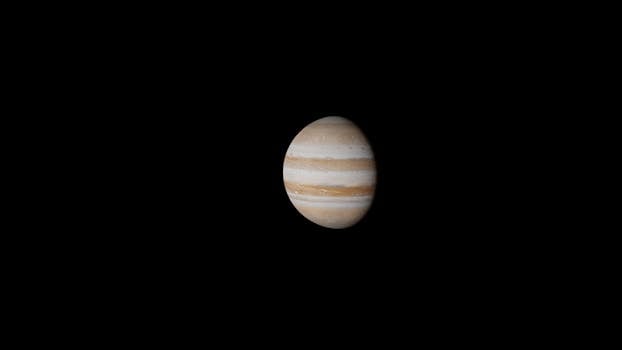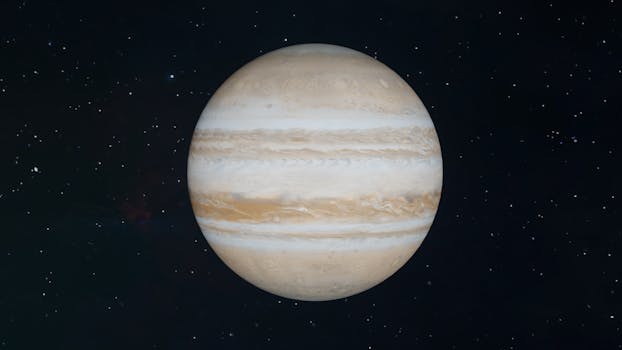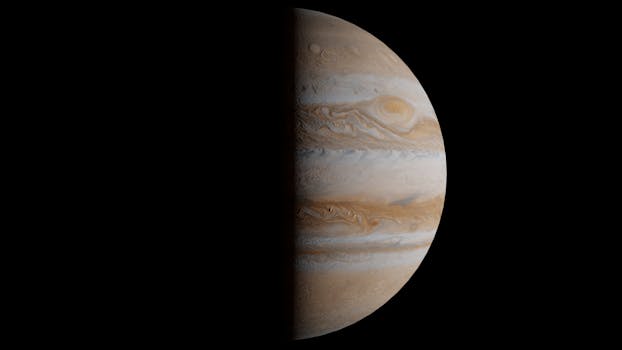
The evolution of our understanding of Jupiter, the largest planet in our solar system, mirrors the advancements in astronomy and technology over the centuries. From ancient observations to cutting-edge space missions, each development has deepened our knowledge of this giant planet.
Ancient and Renaissance Observations
The story of Jupiter's exploration begins with ancient astronomers. Babylonian records from as early as the 7th century BC document Jupiter's movements across the sky. However, a significant leap in our understanding came in 1610 when Galileo Galilei, using his rudimentary telescope, discovered four moons orbiting Jupiter—Io, Europa, Ganymede, and Callisto. This discovery was revolutionary, challenging the Earth-centric view of the universe and catapulting forward the field of astronomy.
.png)
Enhanced Telescopic Discoveries
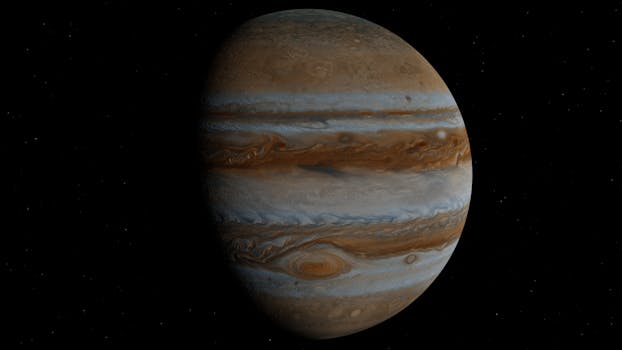
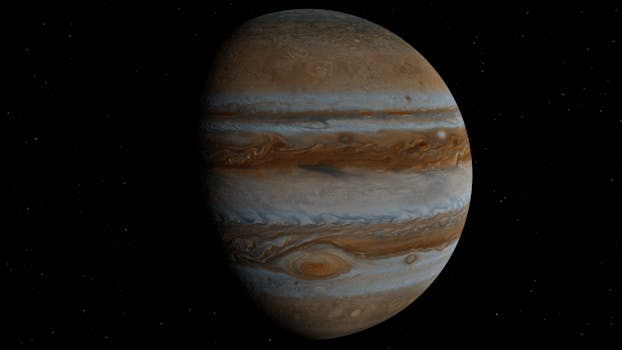
Through the 17th and 18th centuries, improved telescopic designs allowed astronomers to observe Jupiter in greater detail. The planet's characteristic striped bands and the Great Red Spot, a massive storm system, were observed during this period. These features sparked curiosity and debate about the atmospheric conditions on Jupiter.
The Advent of Radio Astronomy
The 20th century introduced radio astronomy, which provided new insights into Jupiter's magnetic field and extensive radiation belts. These discoveries highlighted Jupiter's role in generating powerful electromagnetic phenomena, distinguishing it as more than just a gas giant, but a complex and dynamic planetary system.
The Space Age and Direct Exploration
The launch of NASA's Pioneer 10 in 1972 marked the beginning of direct space exploration of Jupiter. This mission, followed by Pioneer 11, Voyager 1, and Voyager 2, sent back unprecedented images and data, revealing the intense volcanic activity on Io and the potential subsurface oceans on Europa. These findings suggested that Jupiter’s moons could be key locations in the search for extraterrestrial life.
The Galileo and Juno Missions
NASA's Galileo spacecraft, which arrived at Jupiter in 1995, spent eight years in orbit, collecting detailed data that reshaped our understanding of the Jovian system. More recently, the Juno mission, launched in 2016, has been studying Jupiter’s atmosphere, magnetic field, and interior structure. Juno’s insights are crucial for understanding the planet’s formation and evolution, offering clues about the early solar system.
Implications and Future Prospects
The continuous study of Jupiter has profound implications for science. By understanding Jupiter's complex atmospheric dynamics, magnetic field, and geological characteristics, scientists can refine models of planetary formation and behavior. Moreover, Jupiter’s moons are of particular interest in the ongoing search for life, with missions like the upcoming Europa Clipper aimed at exploring these icy worlds more closely.
Conclusion
From ancient astronomers to modern-day space missions, the journey of understanding Jupiter has been a testament to human curiosity and technological progress. Each discovery about Jupiter not only enhances our knowledge of the giant planet but also enriches our understanding of the cosmos. As technology advances, future missions will undoubtedly reveal more about Jupiter, continuing to inspire awe and scientific inquiry.
The exploration of Jupiter is a vivid chapter in the story of human endeavor in space, reflecting our eternal drive to explore and understand the universe beyond our Earthly confines.