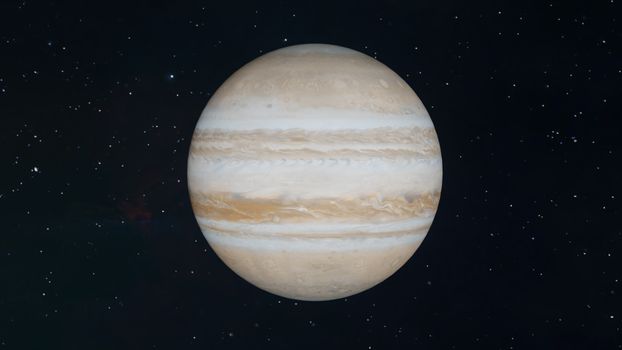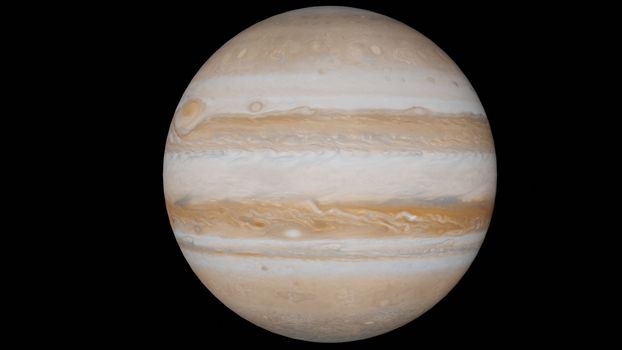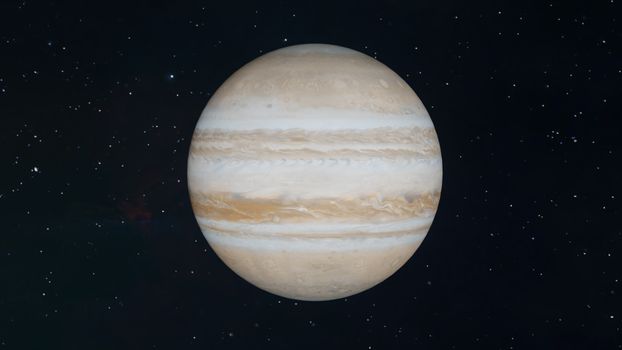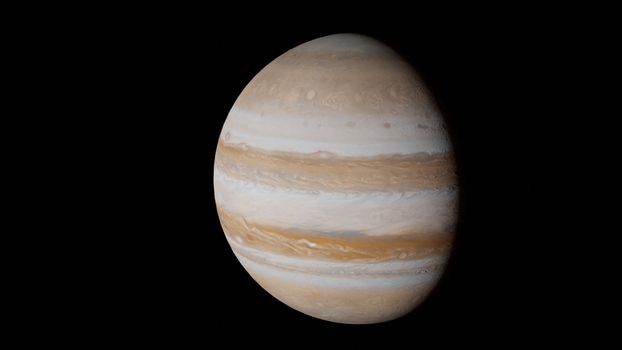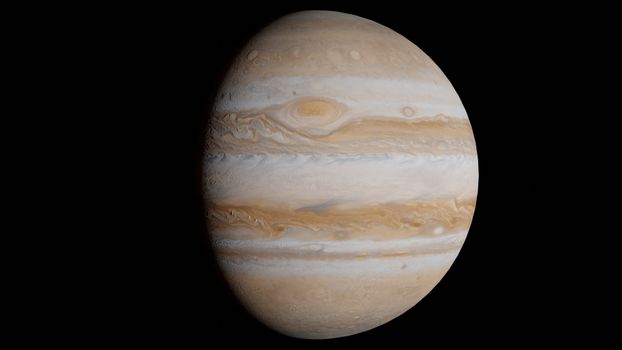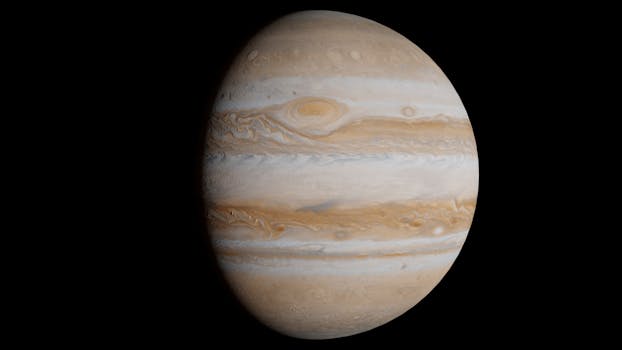
Jupiter is a planet of dazzling spectacle, its swirling bands and gigantic storms painting a canvas unmatched in our solar system. When telescopes focus on Jupiter, we are treated to a kaleidoscope of colors: rusty reds, creamy whites, ochre yellows, and deep browns, all arranged in sinuous belts and whorled ovals. But what do these mesmerizing clouds actually tell us about the largest planet in our solar system? Beneath the beauty lies a story of chemistry, physics, and planetary evolution—one that scientists are only just beginning to unravel. In this article, we’ll dive into the science behind Jupiter’s colorful clouds, exploring what these hues signify about the gas giant’s atmosphere, weather, and dynamic processes.
The Colorful Bands: A Quick Guide to Jupiter's Cloud Layers
Jupiter’s atmosphere isn’t just a single, uniform layer of gas. Instead, it’s stratified into distinct cloud decks, each with its own chemical makeup and color. These differences create the planet’s famous banded appearance—a pattern visible even through small backyard telescopes.
The two main types of bands are called “zones” (lighter in color) and “belts” (darker). The alternating bands encircle Jupiter parallel to its equator and result from powerful jet streams roaring through its atmosphere at speeds up to 400 km/h (250 mph).
.png) - $1 These are generally white or pale and represent areas of rising gas. Here, ammonia ice clouds form at high altitude, reflecting sunlight and giving these bands their bright appearance.
- $1 The darker reddish-brown or tan belts are regions of sinking gas. In these areas, clouds form from deeper, warmer layers, and the chemistry is slightly different, allowing for richer hues.
- $1 These are generally white or pale and represent areas of rising gas. Here, ammonia ice clouds form at high altitude, reflecting sunlight and giving these bands their bright appearance.
- $1 The darker reddish-brown or tan belts are regions of sinking gas. In these areas, clouds form from deeper, warmer layers, and the chemistry is slightly different, allowing for richer hues.
Each band is separated by a jet stream, and together they create the striped appearance that is Jupiter’s most recognizable feature.
The Chemistry Behind Jupiter’s Colors
What causes Jupiter’s clouds to display such a range of colors? The answer lies in atmospheric chemistry and sunlight’s interaction with various compounds.
- $1 The most abundant cloud-forming compound at the upper levels is ammonia (NH₃). Ammonia ice crystals are highly reflective, giving the zones their white or pale color. - $1 Below the ammonia clouds, there’s a layer composed mainly of ammonium hydrosulfide (NH₄SH). This compound can create yellow and brown hues in the belts. - $1 At deeper levels, water (H₂O) clouds may contribute, although they’re hidden beneath the upper layers. - $1 These are still-mysterious chemicals—possibly sulfur compounds or complex organic molecules—responsible for the red, orange, and brown shades, particularly evident in features like the Great Red Spot. Despite decades of study, scientists are still debating exactly what these chromophores are. Some candidates include phosphorus, sulfur, or even reddish hydrocarbons created by ultraviolet radiation from the Sun reacting with Jupiter’s atmospheric gases.In 2021, data from NASA’s Juno spacecraft provided new insights, suggesting that the reddish hues may be due to photochemical reactions occurring at high altitudes, but the exact chemical recipes are still being researched.
Jupiter's Dynamic Weather: What the Colors Reveal
Jupiter’s colors aren’t static—they change over time, offering clues to the planet’s dynamic weather and atmospheric processes. For instance, belts can fade, zones can darken, and features like the Great Red Spot can shift in color and size.
- $1 When we see ovals, swirls, or waves of different colors, we’re often witnessing storms or turbulent upwellings. For example, the Great Red Spot—Jupiter’s most famous storm—has varied in color from deep brick red to pale salmon over the past century. - $1 Some years, entire belts have faded or even vanished from view, only to reappear later. In 2010, amateur astronomers observed the South Equatorial Belt virtually disappear for several months. - $1 White spots and bright flashes can indicate thunderstorms, where water ice and ammonia mix, generating lightning 1,000 times more powerful than anything on Earth.These changes are not random. They reflect shifts in atmospheric chemistry, temperature, and circulation patterns. Scientists track these color variations to better understand Jupiter’s climate, which, despite its lack of a solid surface, is extraordinarily complex.
Comparing Jupiter's Clouds to Other Gas Giants
Jupiter isn’t the only planet with colorful clouds, but it is the most visually dramatic. How do its clouds compare to those of Saturn, Uranus, and Neptune? Here’s a comparison:
| Planet | Main Cloud Compounds | Dominant Colors | Key Features |
|---|---|---|---|
| Jupiter | Ammonia, Ammonium Hydrosulfide, Water | White, Brown, Red, Yellow | Great Red Spot, Banded Structure |
| Saturn | Ammonia, Ammonium Hydrosulfide, Water | Pale Gold, Yellow, Subtle Bands | Hexagon at North Pole, Storms |
| Uranus | Methane, Hydrogen, Helium | Pale Blue-Green | Few Visible Features |
| Neptune | Methane, Hydrogen, Helium | Deep Blue | Dark Spots, High Winds |
Jupiter’s richer palette comes from its thicker, more chemically diverse atmosphere and greater internal heat, driving more vigorous weather and cloud formation than its planetary siblings.
How Space Missions Have Transformed Our View
Our understanding of Jupiter’s clouds has grown exponentially since the first close-up images were beamed back by NASA’s Pioneer and Voyager missions in the 1970s. Since then, spacecraft like Galileo, Cassini (during a flyby), and Juno have revolutionized our knowledge.
- $1 Provided the first detailed color images, revealing the planet’s belts, spots, and turbulent storms in unprecedented detail. - $1 Sent a probe directly into Jupiter’s atmosphere, confirming the presence of ammonia clouds and measuring wind speeds over 600 km/h (370 mph). - $1 Juno’s high-resolution cameras and instruments have mapped Jupiter’s clouds, analyzed their chemistry, and observed their evolution. For example, Juno’s Microwave Radiometer has revealed that the colorful clouds are only the “tip of the iceberg,” extending thousands of kilometers deep.Thanks to these missions, we now know that Jupiter’s clouds are not just surface features but expressions of deep atmospheric processes, with some storms penetrating more than 300 km (186 miles) below the visible cloud tops.
The Deeper Meaning: What Jupiter’s Clouds Tell Us About Planetary Science
The colors and patterns visible in Jupiter’s clouds are more than just eye candy—they are scientific clues to the planet’s history and the processes that shape it.
- $1 By analyzing the colors and spectra of Jupiter’s clouds, scientists can infer the chemical composition of its atmosphere, offering hints about the conditions in the early solar system. - $1 The distribution of compounds like ammonia, water, and methane in Jupiter’s clouds provides evidence for how Jupiter formed and how it has evolved over 4.5 billion years. - $1 Jupiter’s ever-changing bands and spots offer a natural laboratory for studying weather on a grand scale, including jet streams, cyclones, and anticyclones far beyond anything seen on Earth.Understanding Jupiter’s clouds also helps astronomers interpret the atmospheres of exoplanets—giant planets orbiting other stars. Just as Earth’s blue sky reveals the presence of nitrogen and oxygen, Jupiter’s colors are fingerprints of its unique chemistry and dynamics.
Key Takeaways: The Significance of Jupiter’s Colorful Clouds
Glimpsing Jupiter’s colorful clouds is to witness a living planet in constant motion. Each shade and swirl is a marker of deep processes—chemistry, weather, and planetary evolution at work. From the brilliant whites of ammonia ice to the mysterious reds of chromophores, these clouds are windows into the gas giant’s interior and its ancient history.
As our spacecraft continue to orbit and study Jupiter, we can expect even more revelations. The next time you peer at Jupiter through a telescope, remember: you’re not just seeing clouds, but a dynamic story written across a world that’s both familiar and utterly alien.