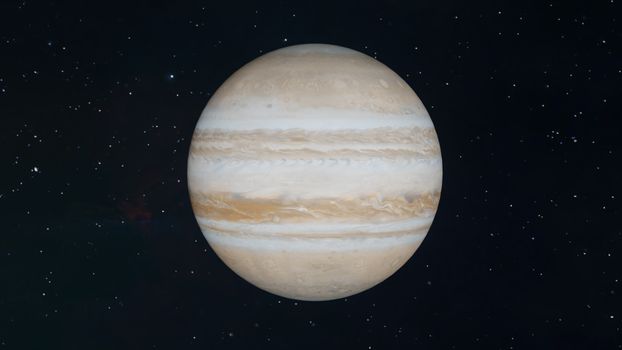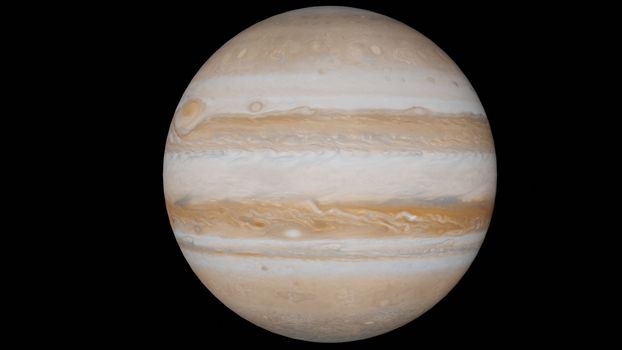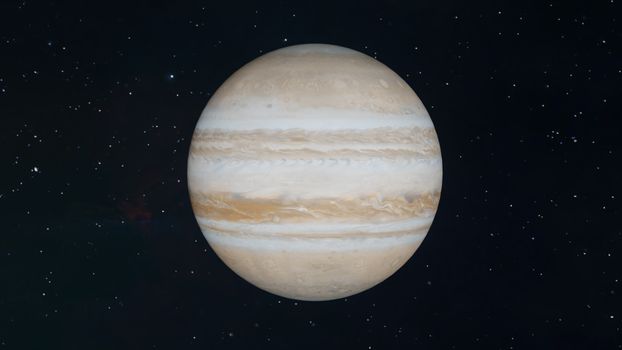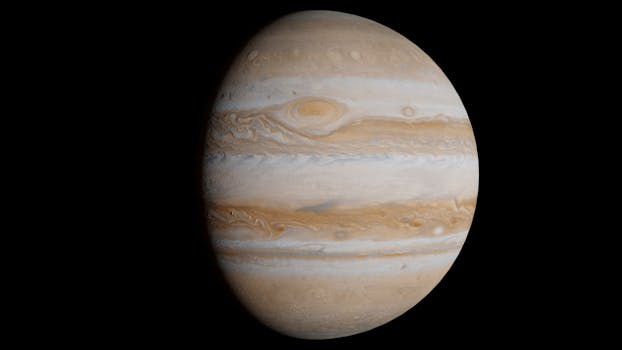
Jupiter is often described as the king of the solar system, a colossal world boasting swirling storms, vibrant bands, and a magnetic field so powerful it could swallow the Earth whole. Among its many atmospheric wonders, one puzzle has long fascinated astronomers and space enthusiasts alike: the mysterious dark spots scattered across Jupiter’s cloud tops. These enigmatic features, some fleeting and others stubbornly persistent, are more than just blemishes on a planetary canvas—they are windows into the planet’s dynamic, ever-changing atmosphere, and they hint at processes that are still not fully understood, even after centuries of observation. So what exactly are these dark spots? Why do they appear, and what can they tell us about Jupiter and, by extension, the broader workings of our solar system?
Understanding Jupiter’s Atmosphere: A World of Extremes
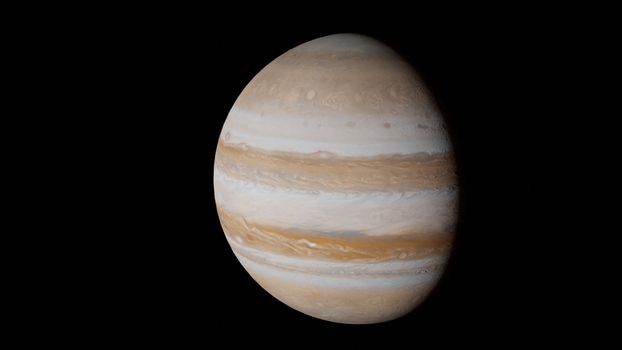
To grasp the mystery behind Jupiter’s dark spots, it’s crucial to first understand the nature of the giant planet’s atmosphere. Jupiter is composed mostly of hydrogen and helium, with trace amounts of methane, ammonia, water vapor, and other compounds. Its atmosphere is layered in colorful bands, alternating between lighter “zones” and darker “belts,” driven by high-speed jet streams that can exceed 400 km/h (about 250 mph).
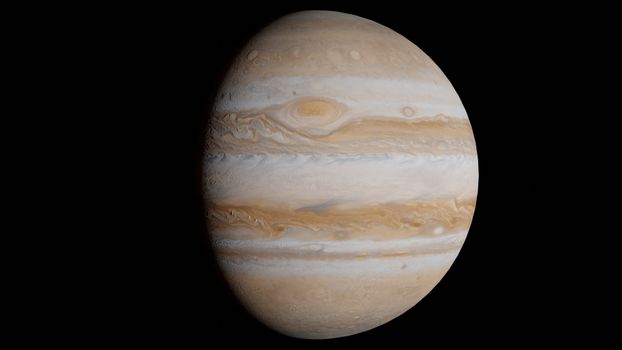
But it’s not the bands themselves that intrigue scientists in this context—it’s the variety of transient and semi-permanent spots and features that appear, evolve, and sometimes vanish without warning. While the Great Red Spot is famously the largest storm in the solar system, dark spots represent a different class of phenomena, each with unique origins and implications.
.png)
What Are the Dark Spots on Jupiter?
Dark spots on Jupiter refer to a range of atmospheric features that appear as darker-than-average patches against the backdrop of the planet’s swirling clouds. Unlike the Great Red Spot, which is a long-lived anticyclonic storm, these dark spots can have several origins:
1. $1 Many dark spots are compact storms or vortices. For example, the “Brown Barges” are elongated, dark patches in Jupiter’s North and South Equatorial Belts. They are thought to be relatively stable cyclonic systems, some lasting for months or even years. 2. $1 Occasionally, dark spots are the aftermath of cosmic collisions. The most famous example is the string of dark scars left on Jupiter in July 1994 by fragments of Comet Shoemaker-Levy 9. These impact scars provided a rare opportunity for scientists to study Jupiter’s atmospheric response to external events. 3. $1 Sometimes, a dark spot is simply the shadow of a moon (like Io, Europa, or Ganymede) crossing the planet’s surface. These are transient, lasting only as long as the moon blocks sunlight. 4. $1 Some dark spots are believed to be regions where material from deeper within Jupiter’s atmosphere wells up, possibly bringing darker substances to the upper cloud decks.While many of these features are fleeting, others—like the Brown Barges—can become semi-permanent fixtures, only to eventually dissipate or morph into new shapes.
The Famous Dark Spots: Notable Examples from Observation
Jupiter has been under scientific scrutiny for centuries, but the advent of space probes and high-resolution telescopes has greatly expanded our knowledge of its dark spots. Here are some of the most notable examples:
- $1 Perhaps the most dramatic episode in the history of Jupiter’s dark spots, this event saw over 20 fragments of a comet slam into the planet’s southern hemisphere. The resulting dark scars were visible for weeks and measured up to 12,000 km (7,500 miles) across—about the diameter of Earth. - $1 These are elongated, brownish spots that appear at mid-latitudes, especially in the North and South Equatorial Belts. The Voyager missions in the late 1970s and early 1980s, as well as later Hubble Space Telescope observations, have tracked these features as they formed, evolved, and sometimes merged or vanished. - $1 Jupiter’s dynamic atmosphere frequently spawns dark vortices—essentially “mini-storms”—that can last from a few days to several months. Some of these have been studied by the Juno spacecraft since its arrival in 2016, providing close-up views of their structure and movement. - $1 As Jupiter’s moons revolve around the planet, their shadows can create temporary dark spots that sweep across the cloud tops. While not atmospheric features, these “eclipse shadows” are a regular and predictable occurrence.Comparing Jupiter’s Dark Spots: Types, Lifespans, and Origins
To better appreciate the diversity of Jupiter’s dark spots, it helps to compare their key characteristics. The table below summarizes some of the main types:
| Type of Dark Spot | Origin | Typical Size | Lifespan | Notable Example |
|---|---|---|---|---|
| Brown Barge | Atmospheric Vortex | 3,000–12,000 km | Months to Years | North Equatorial Belt Barge (2016-2018) |
| Impact Scar | Comet/Asteroid Impact | Up to 12,000 km | Weeks to Months | Shoemaker-Levy 9 (1994) |
| Transient Vortex | Atmospheric Instability | 1,000–5,000 km | Days to Months | Multiple Juno-era Vortices |
| Moon Shadow | Satellite Transit | ~1,000–4,800 km | Minutes to Hours | Io Shadow Transit (frequent) |
This diversity highlights the complexity of Jupiter’s atmosphere and the range of processes—from deep atmospheric circulation to cosmic collisions—that can generate these enigmatic features.
What Causes Jupiter’s Dark Spots to Form and Disappear?
The formation and evolution of dark spots on Jupiter are driven by a combination of internal and external forces. Here’s a closer look at some of the key factors:
1. $1 Jupiter’s powerful jet streams and differential rotation (the equator rotates faster than the poles) create zones of turbulence. In these regions, cyclonic and anticyclonic storms can spin up, sometimes appearing as dark spots if they dredge up material from deeper, darker layers. 2. $1 The color and darkness of a spot can be influenced by the chemical makeup of the gases and aerosols in that region. For example, some dark spots are rich in compounds like ammonium hydrosulfide or complex organic molecules, which absorb sunlight and appear darker to observers. 3. $1 When comets or asteroids slam into Jupiter, the resulting explosion injects dark material into the upper atmosphere. These spots fade over time as winds disperse the debris and atmospheric circulation “heals” the blemish. 4. $1 These are predictable, as the orbits of Jupiter’s moons are well known. Their shadows move swiftly, creating dark spots that are here one hour and gone the next.Interestingly, while some dark spots—like the Brown Barges—can persist for years, most are relatively short-lived. Jupiter’s atmosphere is about 90% hydrogen, which allows for rapid mixing and dispersal, meaning that even large features can fade away within weeks or months.
Why Do Jupiter’s Dark Spots Matter for Science?
Studying Jupiter’s dark spots is not just an exercise in planetary meteorology—it’s a vital window into processes that shape not only Jupiter but gas giants across the universe. Here are a few reasons why these features are scientifically important:
- $1 Dark spots often represent regions where deeper atmospheric material is brought to the surface. By analyzing their spectra, scientists can infer the composition and dynamics of layers that are otherwise hidden. - $1 Events like Shoemaker-Levy 9’s collision with Jupiter have taught us how planetary atmospheres respond to impacts, shedding light on Earth’s own history of cosmic bombardment and its consequences. - $1 Since Jupiter’s atmosphere is more massive and energetic than Earth’s, it serves as a natural laboratory for testing theories of atmospheric turbulence, circulation, and storm formation. - $1 Many exoplanets are gas giants with atmospheres that may behave similarly to Jupiter’s. Understanding its spots and storms can help astronomers interpret observations of distant worlds.The Juno mission, which has been orbiting Jupiter since 2016, is providing a wealth of high-resolution data on the planet’s weather systems, including dark spots. With every new image and measurement, scientists refine their understanding of how these features form, evolve, and dissipate.
Final Reflections: The Ongoing Mystery of Jupiter’s Dark Spots
Despite centuries of observation and decades of space exploration, Jupiter’s dark spots remain an ongoing mystery. They are not static relics but dynamic markers of a world in perpetual motion—evidence of powerful forces operating beneath the swirling clouds. From the fleeting scars of cosmic impacts to the stubborn persistence of atmospheric vortices, these features challenge our understanding of planetary weather and encourage us to look deeper, to ask new questions, and to continue our exploration of the solar system’s largest planet.
As technology advances and missions like Juno continue to send back data, our knowledge of Jupiter’s dark spots will only grow. Perhaps one day, we’ll be able to predict their appearance, trace their origins with certainty, and use them as keys to unlock the secrets of other worlds far beyond our own.