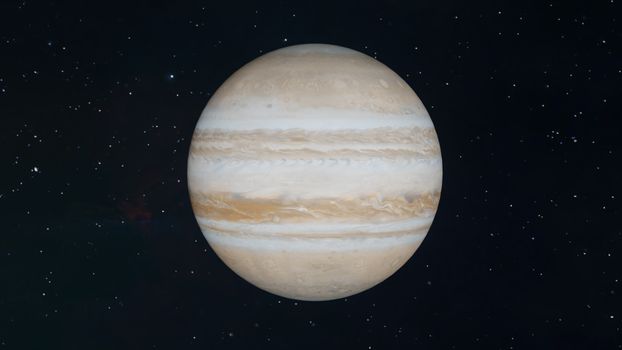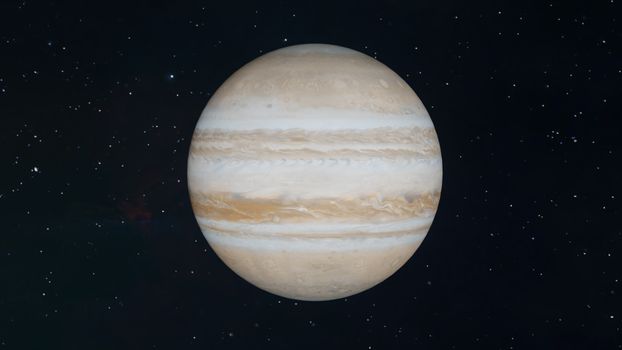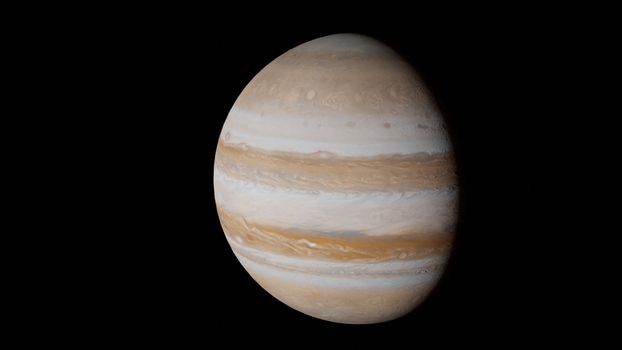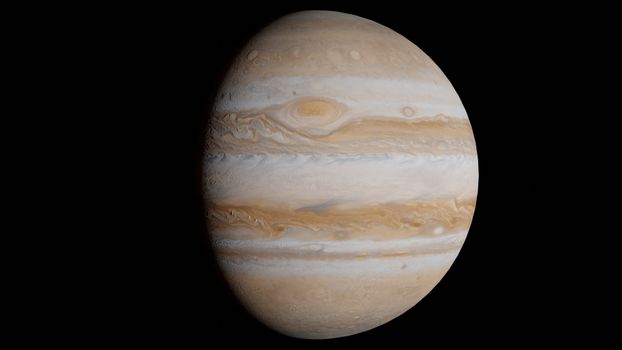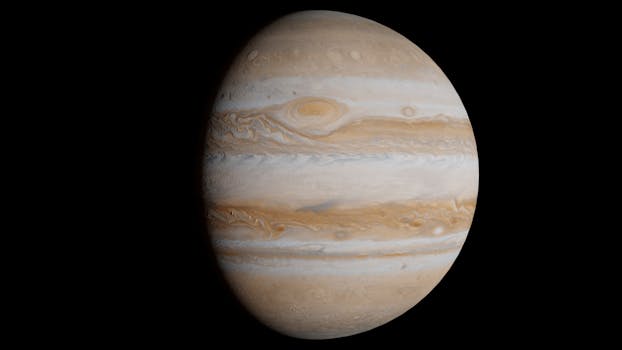
Jupiter, the largest planet in our solar system, is a swirling giant cloaked in clouds hundreds of kilometers thick. For centuries, astronomers have gazed at its storms, bands, and colorful swirls, wondering what secrets are hidden in those mysterious clouds. But what truly lies beneath the surface of Jupiter’s atmosphere? Modern science, aided by cutting-edge spacecraft and telescopic observations, is beginning to unravel the fascinating mysteries concealed within Jupiter’s gaseous shroud. This article takes you on a journey through the layers, chemistry, storms, and enigmas of Jupiter’s clouds, revealing what lies hidden within this planetary giant.
The Layered Mystery: Structure of Jupiter’s Clouds
Jupiter’s visible “surface” isn’t solid ground, but a vast expanse of clouds. These clouds are not uniform; they are structured in distinct layers, each composed of different materials and existing under unique conditions of temperature and pressure.
The uppermost clouds, visible from Earth, are composed primarily of ammonia ice crystals, floating at altitudes where temperatures plummet to -145°C. Below this, at higher pressures and slightly warmer temperatures, lies a second layer of ammonium hydrosulfide (NH4SH) clouds. Deeper still, the clouds transition to water ice and water droplets, forming a layer that is thought to be similar in composition to terrestrial clouds—but under far more extreme conditions.
.png)
The structure of these cloud layers is shaped by Jupiter’s immense mass and gravity, which generates pressures up to 100 times that of Earth’s atmosphere at the cloud tops. Scientists estimate that the total thickness of Jupiter’s cloud deck is roughly 50 to 70 kilometers, but the layers themselves are separated by dramatic variations in both temperature and chemical makeup.
Chemical Surprises: What Makes Jupiter’s Clouds So Colorful?
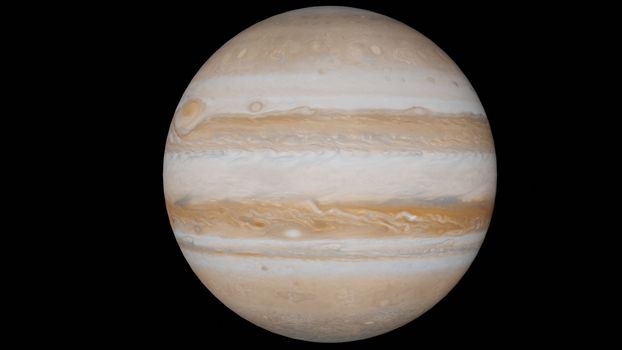
One of Jupiter’s most striking features is its riot of colors—terracotta reds, bright yellows, creamy whites, and deep browns swirl together in ever-shifting patterns. These colors are not a simple result of the cloud materials themselves. Instead, they stem from complex chemical reactions driven by sunlight and Jupiter’s powerful magnetic field.
At the top, the ammonia ice clouds reflect sunlight, giving Jupiter its bright white zones. The darker belts contain compounds resulting from photochemical reactions between sunlight and trace chemicals such as phosphine, sulfur, and hydrocarbons. Scientists believe that the deeper ammonium hydrosulfide clouds may contribute to the yellow and brown hues, while complex organic molecules—sometimes referred to as “chromophores”—are responsible for the planet’s deep reds and oranges.
Spectroscopic studies by spacecraft like Juno and Galileo have detected small amounts of benzene, diacetylene, and other hydrocarbons in Jupiter’s atmosphere. Some of these molecules are produced when ultraviolet light from the sun breaks down methane, ammonia, and water vapor, creating a cascade of reactive compounds. The exact recipe for Jupiter’s colorful clouds remains one of the planet’s most enduring mysteries, with ongoing research aiming to identify the precise compounds responsible.
Immense Storms and Hidden Currents
Jupiter’s clouds are not static—they are the site of some of the most powerful weather phenomena in the solar system. The planet’s rapid rotation (a day lasts just under 10 hours) and internal heat drive jet streams that create parallel bands, alternating in direction and speed.
The most famous storm, the Great Red Spot, is a colossal anticyclonic system larger than the Earth itself. This storm, which has raged for at least 350 years, sits atop the cloud layers and extends dozens of kilometers into the atmosphere. Recent Juno data suggests it may reach depths of up to 300 kilometers, revealing a vertical structure far more complex than previously thought.
Beneath the visible clouds, hidden currents and smaller storms churn relentlessly. Lightning storms, observed by both Voyager and Juno, release ten times more energy than the largest terrestrial thunderstorms. These storms are believed to originate deep within the water cloud layer, where conditions are ripe for the separation of electrical charges.
What Lurks Below: The Unseen Depths of Jupiter’s Atmosphere
While much of what we know about Jupiter comes from observing its upper cloud decks, the true depths of its atmosphere remain elusive. Below the water cloud layer, pressures and temperatures rise dramatically, reaching levels where hydrogen gas begins to behave like a liquid.
At depths of around 1,000 kilometers below the cloud tops, the pressure is so intense (greater than 2 million times Earth’s surface pressure) that hydrogen transitions into a metallic state—a bizarre phase where it conducts electricity like a metal. This region is thought to be the source of Jupiter’s powerful magnetic field, the strongest of any planet in our solar system.
No probe has ever descended all the way to Jupiter’s center, and it’s likely that any spacecraft would be crushed long before reaching these depths. However, gravitational and magnetic measurements by the Juno spacecraft have provided clues about the planet’s internal structure, suggesting that Jupiter may have a fuzzy, partially dissolved core of heavy elements rather than a well-defined solid center.
Comparing Jupiter’s Clouds to Other Planets
To better understand just how unique Jupiter’s clouds are, let’s compare them with the atmospheres of other giant planets in our solar system. Each gas giant has its own distinctive cloud layers, chemistry, and weather patterns.
| Planet | Main Cloud Layers | Dominant Cloud Chemistry | Notable Features |
|---|---|---|---|
| Jupiter | Ammonia, Ammonium Hydrosulfide, Water | Ammonia, Water, Sulfur, Methane | Great Red Spot, Strong Magnetic Field |
| Saturn | Ammonia, Ammonium Hydrosulfide, Water | Ammonia, Water, Methane | Hexagonal Polar Storm, Less Intense Colors |
| Uranus | Methane, Hydrogen Sulfide | Methane, Hydrogen Sulfide | Bluish Tint, Faint Bands, Extreme Tilt |
| Neptune | Methane, Hydrogen Sulfide | Methane, Hydrogen Sulfide | Great Dark Spot, Strong Winds |
This comparison highlights Jupiter’s unique combination of strong banded storms, colorful chemistry, and deep atmospheric layers, setting it apart from its planetary siblings.
Jupiter’s Clouds and the Search for Life
While Jupiter’s clouds are a chemical and physical wonderland, could anything live within them? The idea may sound far-fetched, but scientists have speculated about the possibility of life in Jupiter’s clouds for decades.
In 1976, famed astronomer Carl Sagan and biologist Edwin Salpeter proposed that life could exist in the upper layers of Jupiter’s atmosphere, where temperatures and pressures are less extreme. These hypothetical life forms, sometimes called “floaters,” would drift through the clouds, surviving by metabolizing chemicals in the atmosphere. Recent discoveries of extremophiles on Earth—organisms that thrive in highly acidic, high-pressure, or low-light environments—have kept the door open for this possibility.
However, no direct evidence for life has ever been found on Jupiter. The constant bombardment of radiation, the scarcity of liquid water, and the presence of harsh chemicals make the environment extremely hostile. Still, the study of Jupiter’s clouds helps astrobiologists understand the limits of life and the types of environments that might support it elsewhere in the universe.
Hidden Wonders: What Future Missions May Discover
Despite decades of robotic exploration, Jupiter’s clouds still hold many secrets. NASA’s Juno mission, currently orbiting Jupiter, continues to send back high-resolution data on the planet’s gravity, magnetism, and atmospheric composition. Future missions, such as the European Space Agency’s Jupiter Icy Moons Explorer (JUICE), will focus on Jupiter’s orbiting moons but are also expected to expand our knowledge of the giant planet’s atmosphere through remote sensing technologies.
There are ongoing proposals to send atmospheric probes capable of descending deeper than the Galileo probe, which entered Jupiter’s atmosphere in 1995 and transmitted data for 58 minutes before being destroyed by heat and pressure. Such missions could directly sample cloud chemistry, measure wind speeds at different depths, and even search for complex organic molecules that might hint at prebiotic chemistry.
Astronomers also use ground-based observatories and space telescopes like the James Webb Space Telescope to study Jupiter’s clouds in infrared and ultraviolet light, revealing details invisible to the naked eye.
Final Insights: The Ongoing Mystery of Jupiter’s Hidden Clouds
Jupiter’s clouds are not just beautiful—they are a dynamic laboratory of chemistry, physics, and weather on an unimaginable scale. From the ammonia ice crystals that form its white zones to the mysterious chromophores that give rise to its reds and browns, each layer of Jupiter’s atmosphere tells a story of planetary formation, evolution, and ongoing change.
While we have made remarkable progress in understanding what lies hidden in Jupiter’s clouds, many questions remain. What is the precise mix of chemicals responsible for the planet’s dazzling colors? How deep do its storms go, and what drives their incredible longevity? Could exotic forms of life ever exist in such an extreme environment?
As humanity’s eyes and instruments continue to probe deeper into Jupiter’s clouds, we are reminded that the universe is full of mysteries waiting to be uncovered. Jupiter’s atmosphere stands as a testament to the complexity, beauty, and wonder that lie hidden within the clouds of the cosmos.