The Role of Jupiter in Our Solar System
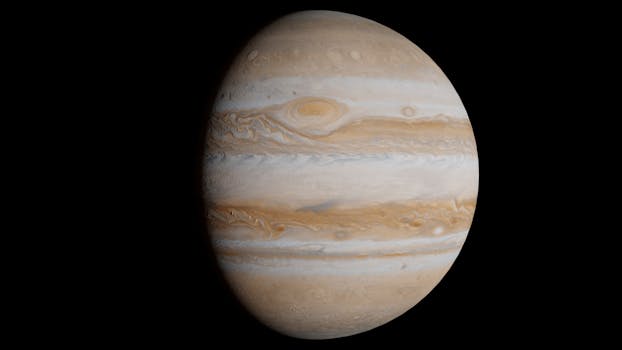
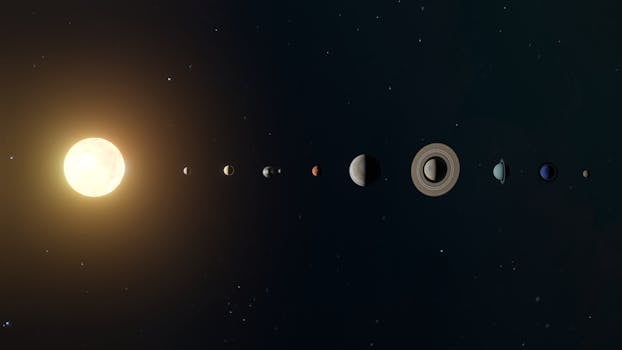
Jupiter, known for being the largest planet in our solar system, significantly influences the surrounding cosmic landscape. This article delves into Jupiter's critical roles, from safeguarding Earth to impacting the formation and stability of other celestial bodies.
Jupiter's Gravitational Influence
.png)
Jupiter's immense mass exerts a strong gravitational pull, which plays a pivotal role in maintaining the balance within our solar system. Its gravity stabilizes the orbits of the planets, minimizing the chances of them colliding with each other. Additionally, Jupiter acts like a cosmic vacuum cleaner; its gravitational force can deflect or capture comets and asteroids that might otherwise pose a threat to Earth. However, it's worth noting that this same gravity can sometimes disrupt the orbits of other bodies, potentially destabilizing otherwise habitable environments.
Regulation of Asteroids
Situated near the asteroid belt, Jupiter also helps control the population of asteroids between Mars and itself. By influencing the trajectories of these space rocks, Jupiter can prevent potential collisions with Earth, thus playing a protective role. Nonetheless, its gravitational pull might occasionally send these objects towards Earth, representing a significant risk.
Impact on Planetary Formation and Migration
The formation and subsequent migration of Jupiter may have had a substantial impact on the layout of our solar system. Some theories suggest that Jupiter once migrated closer to the sun, only to move back to its current position. This journey likely played a crucial role in shaping the formation of other planetary bodies by pulling in material from the solar system's outer reaches. However, this movement could have also disturbed the orbits of existing planets or hindered the development of additional planets.
Practical Examples
The influence of Jupiter is evident in specific celestial events, such as the collision of the comet Shoemaker-Levy 9 in 1994. This impact not only provided insights into Jupiter's atmospheric makeup but also demonstrated its capability to attract and neutralize objects that could endanger Earth.
Conclusion
Jupiter's multifaceted role in our solar system includes both protective benefits and potential threats. Its gravitational force is crucial in shielding Earth from numerous space objects and plays a significant part in the formation and stability of other celestial bodies. Although there are risks associated with its presence, such as the potential redirection of hazardous comets towards Earth, Jupiter's overall influence is considered beneficial. Continued exploration and study of Jupiter will likely enhance our understanding of its essential role in our cosmic neighborhood, helping scientists to better predict and mitigate potential threats to our planet. This deeper knowledge contributes broadly to the field of planetary science and dynamics.