Jupiter’s Role in Space Exploration History: Gateway to Understanding Our Solar System
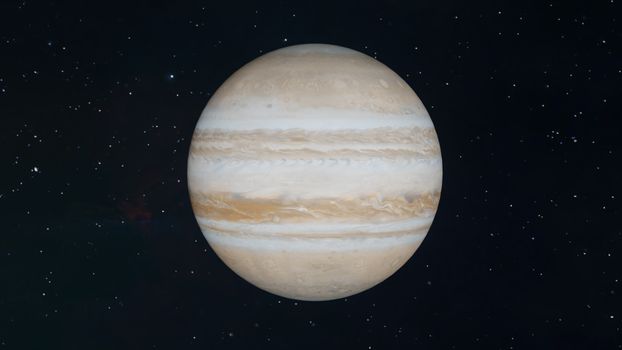
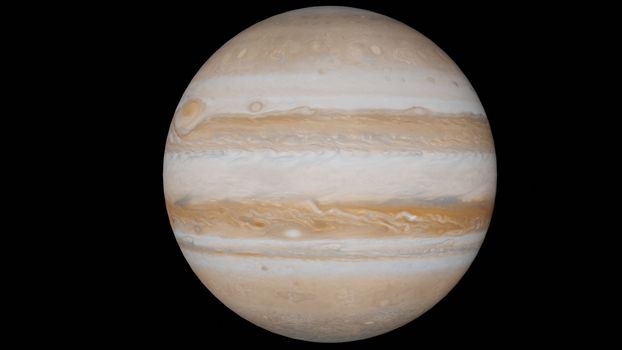
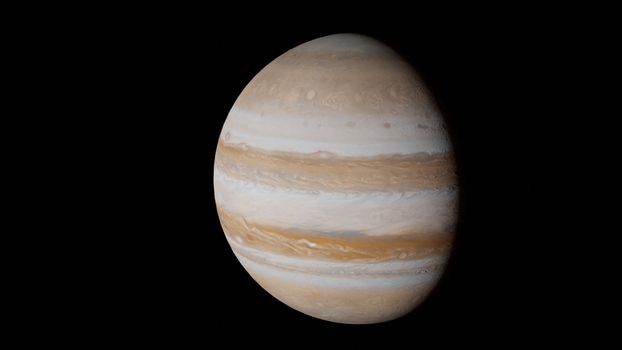
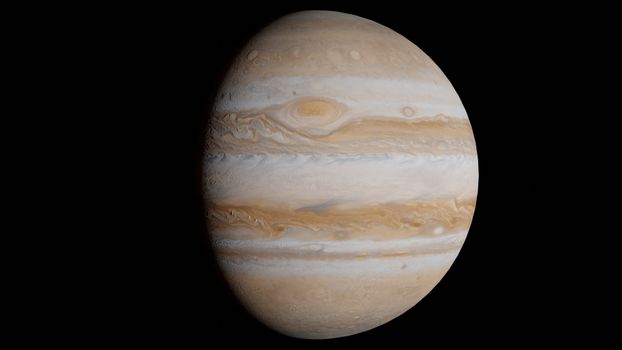
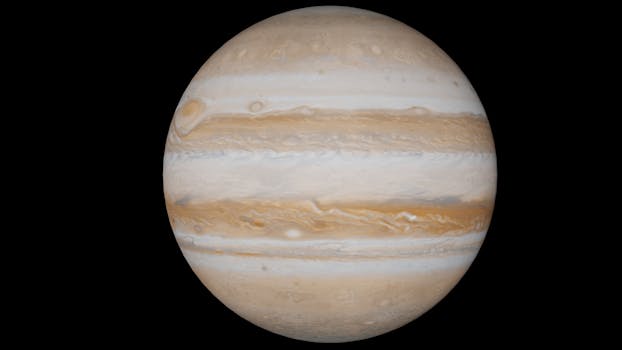
Jupiter, the gas giant that dominates our solar system, has long captured the imagination of scientists and stargazers alike. More than just an awe-inspiring spectacle through a telescope, Jupiter has played a pivotal role in space exploration history. Its massive size, distinctive bands and storms, and retinue of fascinating moons have made it a prime target for probes and planetary science missions. But perhaps most importantly, Jupiter has served as both a laboratory and a gateway—a stepping stone for our understanding of planetary systems and interplanetary travel. In this article, we’ll chart the profound influence Jupiter has had on the trajectory of space exploration, delving into pioneering missions, groundbreaking discoveries, and how the gas giant continues to shape humanity’s cosmic ambitions.
Jupiter as a Gravitational Slingshot: Accelerating Space Exploration
One of Jupiter’s most significant contributions to space exploration is its immense gravitational pull, which engineers and mission planners have leveraged to propel spacecraft deeper into the solar system. This technique, known as a gravity assist or gravitational slingshot, utilizes Jupiter’s gravity to boost a spacecraft’s speed without consuming additional fuel.
The first practical use of Jupiter for a gravity assist occurred during the Pioneer 10 mission in 1973. By flying close to Jupiter, Pioneer 10 gained enough velocity to escape the Sun’s gravitational influence, becoming the first human-made object to travel beyond the asteroid belt and head toward interstellar space. This breakthrough set the stage for future missions, as the energy savings made distant planetary exploration feasible.
.png)
Perhaps the most famous use of Jupiter’s gravitational might was the Voyager program. Both Voyager 1 and Voyager 2 used Jupiter in 1979 to gain the speed necessary to reach and study Saturn, Uranus, and Neptune. Without this maneuver, the Grand Tour of the outer planets would have been impossible within the technological and budgetary constraints of the time.
In more recent years, NASA’s New Horizons mission to Pluto also relied on a Jupiter gravity assist in 2007, increasing its speed by over 14,000 km/h and shaving years off its journey. These examples underscore how Jupiter’s gravitational field has enabled humanity to reach the most distant corners of our solar system.
Pioneering Missions: From Flybys to Orbiters
Jupiter has been the focus of some of the most ambitious and scientifically rewarding space missions. Each mission has not only expanded our knowledge of Jupiter itself but also advanced the technical frontiers of space exploration.
Pioneer 10 and 11 were the trailblazers, sending back the first close-up images of Jupiter and its moons, and revealing the planet’s intense radiation belts. Next came the Voyager 1 and 2 flybys, which in 1979 delivered breathtaking imagery of the Great Red Spot and discovered active volcanism on the moon Io—the first such observation beyond Earth.
The Galileo mission, launched in 1989, marked a new era as the first spacecraft to orbit Jupiter. Galileo spent eight years studying Jupiter and its major moons, dropping a probe into Jupiter’s atmosphere and discovering a possible subsurface ocean on Europa. In 2003, the mission ended with Galileo’s controlled dive into Jupiter, preventing potential contamination of the moons.
More recently, NASA’s Juno spacecraft entered Jupiter’s orbit in 2016. Juno’s mission is to study the planet’s composition, gravity field, magnetic field, and polar magnetosphere. Its highly elliptical orbit has allowed it to avoid much of Jupiter’s intense radiation while returning stunning images and vital scientific data.
The following table summarizes key missions to Jupiter:
| Mission | Year | Type | Key Achievements |
|---|---|---|---|
| Pioneer 10 | 1973 | Flyby | First spacecraft to encounter Jupiter; mapped radiation belts |
| Voyager 1 & 2 | 1979 | Flyby | Discovered volcanic activity on Io; detailed imagery of Jupiter and moons |
| Galileo | 1995-2003 | Orbiter + Probe | First orbiter; atmospheric probe; evidence of subsurface ocean on Europa |
| Juno | 2016-present | Orbiter | Studying atmosphere, gravity, and magnetic fields; polar imaging |
| New Horizons | 2007 (Jupiter flyby) | Flyby (en route to Pluto) | Gravity assist; imaging of Jupiter’s rings and volcanic activity on Io |
Jupiter as a Testbed for Technology and Planetary Science
Missions to Jupiter have often served as proving grounds for new technologies and scientific techniques. The planet’s harsh environment, particularly its intense radiation belts, has forced engineers to devise innovative solutions for spacecraft protection, navigation, and data transmission.
For instance, the Galileo spacecraft was the first to deploy an atmospheric probe into a giant planet. This probe withstood pressures over 20 times Earth’s atmosphere and temperatures exceeding 150°C before succumbing after 58 minutes of descent. The data it returned about Jupiter’s atmospheric composition, pressure, and wind speeds revolutionized planetary science.
Juno, constructed with a titanium vault to shield its electronics, demonstrates the latest advances in radiation-hardening. Its polar orbit allows it to avoid the worst of Jupiter’s radiation while collecting unprecedented data on the planet’s auroras and magnetic field.
Jupiter’s diverse system of moons, particularly Europa, Ganymede, and Io, has also driven the development of remote sensing and imaging instruments capable of penetrating ice, analyzing thin atmospheres, and detecting geological activity from afar. This experience is invaluable as we look toward exploring other icy worlds in the solar system and beyond.
Jupiter’s Moons: Catalysts for Astrobiology and Future Exploration
While Jupiter itself is a forbidding world, its moons have become prime targets in the search for life beyond Earth. The discoveries made by previous missions—such as possible subsurface oceans on Europa and Ganymede, and volcanic activity on Io—have had a profound impact on astrobiology.
The presence of liquid water beneath Europa’s icy crust, first suggested by Galileo data, has spurred a new wave of missions. NASA’s Europa Clipper, set for launch in the 2020s, will conduct detailed reconnaissance of Europa’s surface and subsurface, searching for signs of habitability. Similarly, the European Space Agency’s Jupiter Icy Moons Explorer (JUICE), launching in 2023, will focus on Ganymede, Callisto, and Europa.
These missions are not just about Jupiter—they’re about learning how planetary systems form, evolve, and potentially harbor life. The study of Jupiter’s moons has provided critical insights into how water-rich worlds might be common in the universe, influencing the design of future missions to Saturn’s moons, exoplanets, and beyond.
Jupiter’s Continuing Influence on Space Exploration Strategies
Jupiter’s role in space exploration history is far from over. Its gravitational field, unique environment, and diverse system of moons ensure that it remains central to mission planning and scientific inquiry.
For future deep-space missions, Jupiter provides a crucial waystation. Its gravity will continue to serve as a launchpad for spacecraft headed to the outer solar system. The technological challenges posed by Jupiter’s environment drive innovation in radiation protection, autonomous navigation, and remote scientific analysis.
Moreover, the study of Jupiter and its system provides a model for understanding giant exoplanets and the formation of planetary systems around other stars. As of 2024, astronomers have identified over 5,500 exoplanets, with many classified as Jupiter-like “gas giants.” By understanding our own Jupiter, we gain a lens into the broader processes at work across the galaxy.
Jupiter also looms large in discussions of planetary defense and solar system stability. Its gravitational influence helps shield the inner solar system from comets and asteroids, a fact highlighted by the dramatic impact of Comet Shoemaker-Levy 9 in 1994. That event, observed by Galileo and ground-based telescopes, provided real-world evidence of Jupiter’s protective role and its potential as a laboratory for impact science.
Final Reflections: Jupiter’s Enduring Legacy in Space Exploration
Jupiter’s impact on space exploration history is profound and multi-faceted. As a gravitational slingshot, a technological testbed, a system rich with scientific mysteries, and a model for exoplanet studies, Jupiter has shaped the course of humanity’s journey into the cosmos. The data and inspiration drawn from past missions continue to inform our strategies and ambitions, from planetary protection to the search for life in distant oceans.
Looking ahead, new missions will build on this legacy with more sophisticated tools and daring objectives. Whether it is unraveling the mysteries beneath Europa’s ice, probing Jupiter’s deep atmosphere, or using its gravity to propel humans and robots to new horizons, Jupiter remains at the heart of our quest to understand the universe and our place within it.