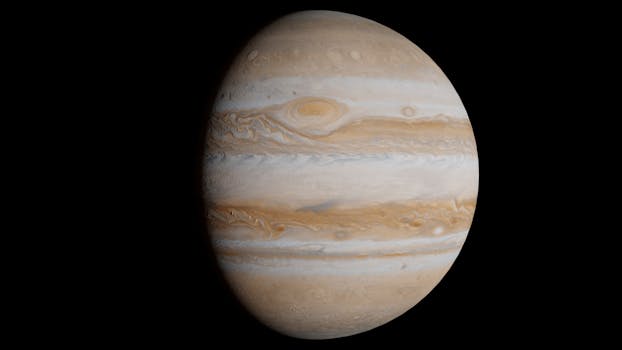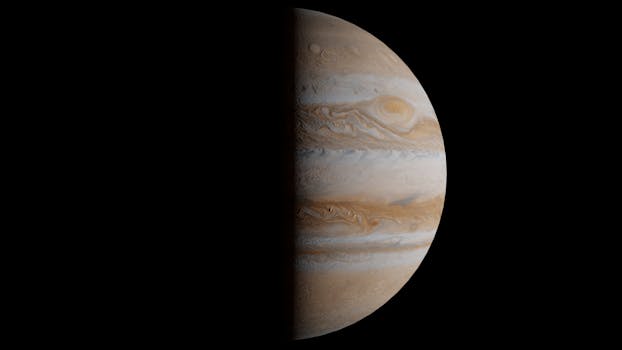
Jupiter, the behemoth of our solar system, not only captures the imagination with its swirling storms and majestic beauty but also plays a critical role in advancing space exploration. As the largest planet, its unique attributes and surrounding celestial bodies provide a wealth of opportunities for scientific breakthroughs and technological advancements.
Gravitational Guardian One of Jupiter’s most significant roles in space exploration is its function as a giant shield. Due to its immense gravitational field, Jupiter captures or deflects many comets and asteroids that might otherwise threaten Earth. This protective mechanism has likely played a crucial role in enabling life to thrive on our planet. Understanding this dynamic helps scientists plan potential defense strategies against future celestial threats, enhancing our long-term security and survival.
Magnetic Marvels Jupiter's magnetosphere, the largest in the solar system, offers a unique natural laboratory for studying cosmic magnetic fields. Extending up to seven million kilometers towards the Sun, it shields the Jovian system from solar winds and cosmic radiation. Research into how Jupiter’s magnetic field interacts with the solar wind provides essential data for protecting astronauts and spacecraft during long-duration interplanetary missions, crucial for future manned missions to Mars and beyond.
.png)
Moons as Celestial Laboratories The Jovian system includes a diverse group of moons, each offering different environments that may mimic conditions on distant exoplanets. Europa, with its subsurface ocean, is a prime target in the search for life beyond Earth. NASA’s Europa Clipper mission aims to probe beneath its icy crust, seeking signs of life and understanding its potential for habitability. Similarly, studying Ganymede and Callisto can yield insights into icy worlds across the galaxy, broadening our understanding of where life might exist.
Insights into Planetary Science Jupiter itself is a massive laboratory for studying gas giant phenomena. NASA’s Juno mission, which has been orbiting Jupiter since 2016, has provided unprecedented data on its atmosphere, gravitational field, and internal structure. These insights help refine our models of how planetary systems form and evolve, offering clues about the early dynamics of our own solar system and those around distant stars.
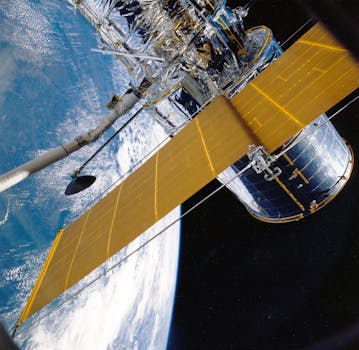
Technological Testbed The challenges posed by Jupiter’s extreme distance from Earth and harsh radiation environment make it an excellent testbed for space technology. Successfully operating missions like Juno in such demanding conditions demonstrates and improves our capabilities in spacecraft design, propulsion, and communication. These technological advancements not only aid further space exploration but also trickle down to improve technologies used on Earth.
Economic and Technological Ripple Effects While missions to Jupiter are complex and costly, they drive significant technological and economic benefits. The development of new space technologies fosters advancements across various industries, including robotics, telecommunications, and healthcare. Moreover, the knowledge gained from studying Jupiter and its moons continues to fill gaps in our understanding of the universe, inspiring future generations of scientists, engineers, and explorers.
In sum, Jupiter’s multifaceted contributions to space exploration are indispensable. From acting as a celestial shield to serving as a proving ground for cutting-edge space technology, Jupiter not only helps safeguard our planet but also propels our quest deeper into the cosmos. As we continue to unlock the secrets of this giant planet, its role in enriching our understanding of the universe cannot be overstated. With each mission, Jupiter reveals more about our cosmic neighborhood, paving the way for the future of space exploration.