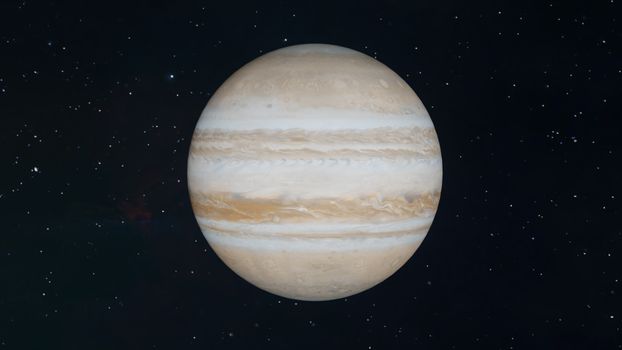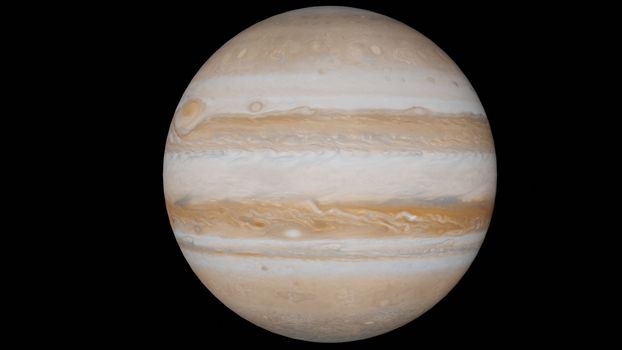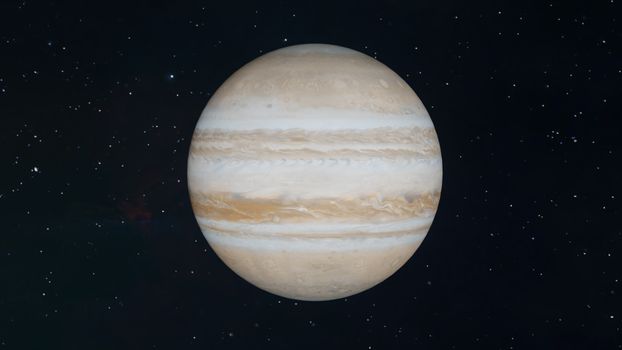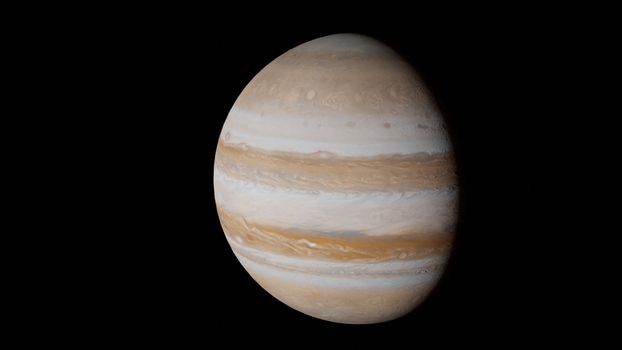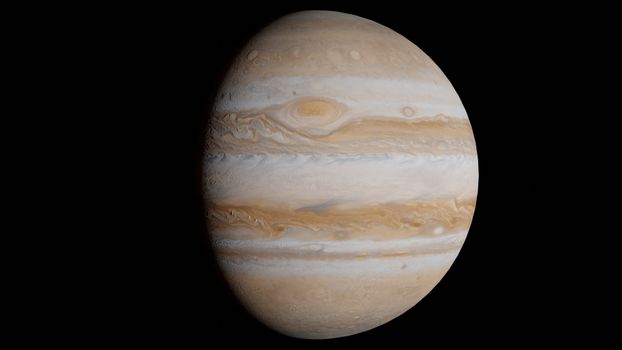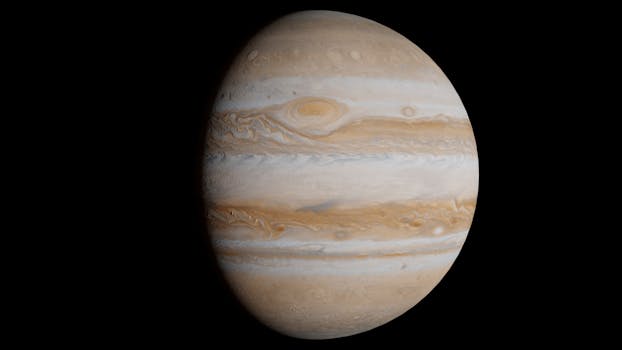
Jupiter’s swirling clouds and colossal storms have mesmerized astronomers for centuries. While the planet’s iconic Great Red Spot and banded appearance are familiar to many, fewer realize that Jupiter, like Earth, experiences seasonal changes—albeit in its own unique and dramatic way. Understanding how Jupiter’s atmosphere changes during different seasons not only unravels the mysteries of the gas giant itself but also offers clues to planetary atmospheres throughout our solar system and beyond.
The Nature of Jupiter’s Seasons: What Sets Them Apart?
Unlike Earth, where seasonal changes are driven by a significant axial tilt of 23.5 degrees, Jupiter’s axis is tilted by just 3.13 degrees. This means that, theoretically, the amount of sunlight hitting Jupiter’s hemispheres remains almost constant throughout its 11.86-year orbit around the Sun. However, the planet’s vast size, rapid rotation, and thick atmosphere introduce complex dynamics that create atmospheric variations resembling seasonal patterns.
Jupiter’s “year” is nearly 12 Earth years, so each Jovian season lasts about three Earth years. Despite the minor axial tilt, astronomical observations and spacecraft missions—such as NASA’s Juno and the Hubble Space Telescope—have revealed that Jupiter does exhibit changes in its atmospheric patterns, cloud colors, and storm activity over these long seasonal cycles.
.png)
Key Fact: One Jovian year equals about 4,333 Earth days, or nearly 12 Earth years.
Atmospheric Composition and Layering: The Foundation for Change
Jupiter’s atmosphere is a vast, layered envelope primarily made of hydrogen (about 90%) and helium (about 10%), with trace amounts of methane, ammonia, water vapor, and other compounds. These ingredients interact to form cloud layers at different altitudes:
- The uppermost layer is composed mostly of ammonia ice crystals, giving Jupiter its pale hues. - Below this lies a layer of ammonium hydrosulfide, responsible for the planet’s deeper, reddish-brown bands. - Deeper still, water clouds exist under immense pressure and temperature.Despite the planet’s minimal axial tilt, the distribution of sunlight and the internal heat flux—Jupiter emits about 1.6 times more energy than it receives from the Sun—drive complex atmospheric motions.
Specific Statistic: Jupiter’s internal heat flux is about 5.4 W/m², compared to Earth’s geothermal flux of just 0.087 W/m².
The combination of sunlight (albeit weak at Jupiter’s distance of 778 million km from the Sun) and internal heat fuels the planet’s weather systems, including its powerful jet streams and iconic belts and zones. These features are not static; they evolve over time, sometimes in ways that loosely correspond with seasonal cycles.
Polar and Equatorial Contrasts: How Latitude Affects Jupiter’s Atmosphere
Jupiter’s seasons may be subtle, but marked differences exist between its polar and equatorial regions. The equator receives slightly more sunlight year-round, while the poles experience more significant variations in atmospheric activity, partly due to the planet’s magnetic field and auroral activity.
- Polar regions are home to unique cyclonic patterns, such as the “polar cyclones” discovered by Juno in 2017. - Equatorial regions display more stable, persistent bands and faster jet streams.Over the course of a Jovian year, shifts in atmospheric circulation can be observed, including:
- Variations in the width and color of the planet’s belts and zones - Changes in the frequency and intensity of atmospheric storms - Fluctuations in cloud heights and composition, especially near the polesThese changes are influenced by both the slight seasonal shift in sunlight and the redistribution of heat from Jupiter’s interior. For instance, studies have shown that the North Equatorial Belt can fade or darken over several years, only to reappear dramatically—sometimes in correlation with Jupiter’s orbital position.
Storm Activity and Seasonal Fluctuations
One of the most visually striking aspects of Jupiter’s atmosphere is its storm systems, ranging from small, short-lived white ovals to the colossal Great Red Spot, which has raged for at least 350 years. While many storms are stable features, some exhibit seasonal behaviors:
1. $1 The Great Red Spot’s size and color intensity have fluctuated over the decades, with some evidence suggesting these changes are partly linked to seasonal variations in cloud chemistry and solar heating. 2. $1 Jupiter’s South Equatorial Belt has been known to “disappear” and then return in dramatic fashion, a process that sometimes aligns with the planet’s orbital position and subtle changes in solar insolation. 3. $1 Juno’s mission revealed stable cyclones at both poles, but their number and arrangement can shift over time, possibly reflecting underlying seasonal processes.Example: In 2010, the South Equatorial Belt vanished from view for several months before reappearing, coinciding with changes in atmospheric upwelling and sunlight exposure.
Cloud Colors and Chemistry: Tracking Seasonal Shifts
Jupiter’s atmospheric bands are defined by their colors, which result from complex chemical reactions and cloud dynamics. These colors are not fixed; they change as atmospheric conditions evolve:
- $1 Rich in compounds like ammonia hydrosulfide, which darken when exposed to ultraviolet light. - $1 Composed mainly of ammonia ice, which reflects more sunlight and appears brighter.Over the course of a Jovian year, the balance between belts and zones can shift, altering the planet’s overall appearance. Ultraviolet light from the Sun, though weak at Jupiter’s distance, still drives photochemical reactions that can vary with seasonal changes in sunlight exposure.
Comparison Table: Key Atmospheric Features by Jovian Season
| Feature | Jovian Summer | Jovian Winter |
|---|---|---|
| Belt Widths | Wider, more prominent | Narrower, sometimes faded |
| Storm Activity | Increased, especially near equator | Fewer large storms |
| Cloud Heights | Higher, more upwelling | Lower, more stable |
| Polar Cyclones | More dynamic arrangements | More stable, less movement |
| Overall Color | More contrast (brighter zones, darker belts) | Slightly muted colors |
While these seasonal differences are subtle compared to those on Earth, they are detectable through long-term observations and spacecraft data.
Long-Term Monitoring: What Space Missions Have Revealed
Much of what we know about Jupiter’s atmospheric seasons comes from decades of dedicated observation. The Pioneer and Voyager flybys in the 1970s, the Galileo orbiter in the 1990s, and most recently, the Juno mission (in orbit since 2016) have provided invaluable data. The Hubble Space Telescope has also been monitoring Jupiter’s atmosphere annually since the 1990s.
Key Discoveries:
- Juno has captured time-lapse images revealing shifting cloud patterns over months and years, showing how belts and zones migrate and change in color. - Hubble’s annual “Jupiter Watch” program has documented the waxing and waning of the Great Red Spot and the periodic fading and revival of belts. - Infrared observations have detected changes in the temperature structure of Jupiter’s upper atmosphere that correspond to seasonal changes in solar heating.Specific Fact: In 2020, Juno observed that Jupiter’s South Tropical Zone had expanded by 2,000 km over just a few months, a possible result of seasonal atmospheric dynamics.
These observations confirm that Jupiter’s atmosphere, while less seasonally variable than Earth’s, is far from static. Minor changes in sunlight and complex internal processes create a dynamic and ever-evolving planet.
Why Studying Jupiter’s Seasonal Changes Matters
Understanding how Jupiter’s atmosphere changes during different seasons is more than an exercise in planetary meteorology—it’s a key to unlocking the processes that govern gas giants everywhere. As astronomers discover more exoplanets (over 5,500 as of 2024, many resembling Jupiter in size and composition), insights from Jupiter help us interpret their climates and potential for habitability.
Additionally, Jupiter’s role as the solar system’s “cosmic laboratory” means that its atmospheric seasons can reveal:
- The interplay between sunlight, internal heat, and atmospheric chemistry - The mechanisms behind giant storms and jet streams - The potential for similar processes on Saturn, Uranus, Neptune, and distant exoplanetsBy tracking Jupiter’s subtle but significant atmospheric changes, scientists gain a window into the broader workings of planetary atmospheres—critical for understanding our own planet’s weather and climate over the long term.