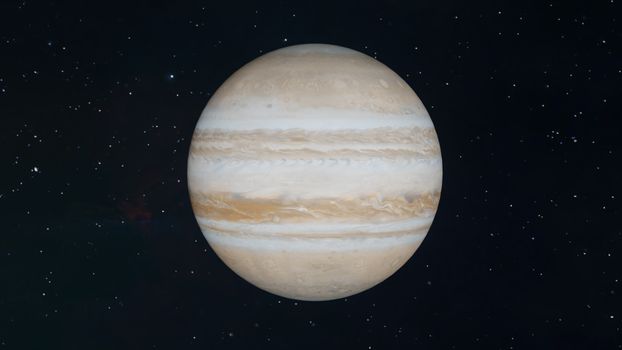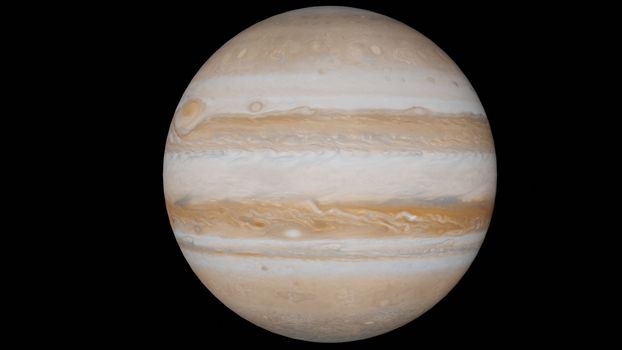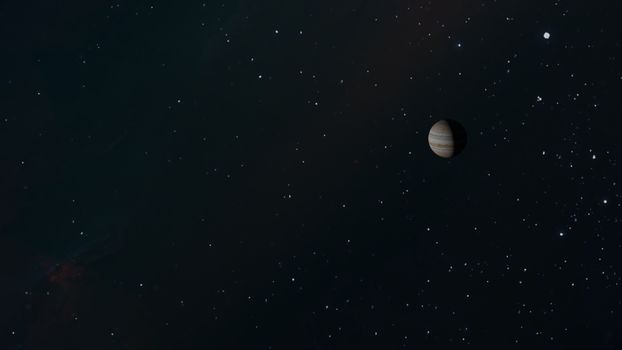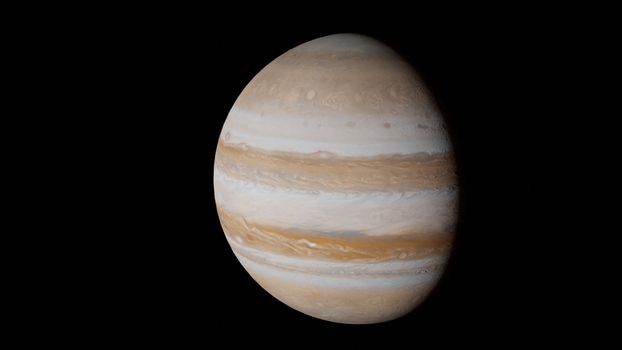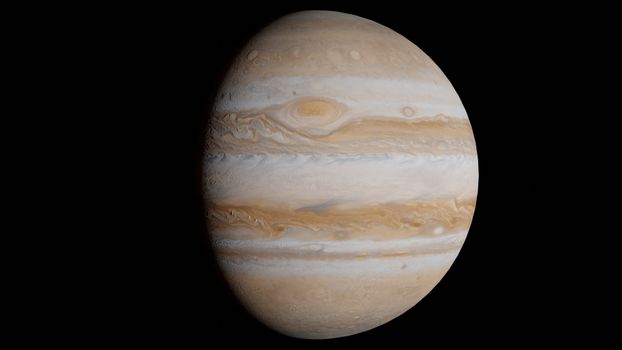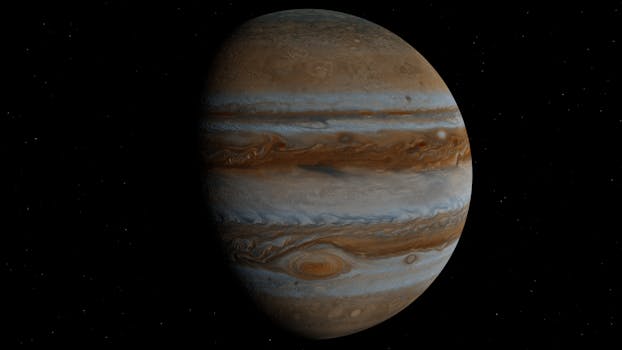
Jupiter, the largest planet in our solar system, has long captivated humanity’s curiosity. Its swirling storms, immense magnetic field, and retinue of diverse moons make it a cosmic laboratory for understanding planetary formation, atmospheric dynamics, and the broader mechanics of our solar neighborhood. But how do we actually study a planet sitting over 588 million kilometers from Earth? The answer lies in decades of ambitious space missions—robotic explorers that have braved the harsh environment of the outer solar system to bring Jupiter’s mysteries into focus. This article chronicles the extraordinary history and achievements of the missions that have probed Jupiter, revealing how each journey has shaped our understanding of the giant planet and set the stage for future exploration.
Setting the Stage: Why Jupiter Beckoned Early Space Explorers
Jupiter’s immense mass—over 318 times that of Earth—makes it a gravitational anchor in our solar system. Its influence extends beyond its own orbits, shaping the paths of asteroids and comets and even shielding inner planets from potential impacts. For early astronomers, Jupiter’s dynamic weather systems, including its iconic Great Red Spot, and its four large Galilean moons (Io, Europa, Ganymede, and Callisto) presented tantalizing targets for scientific inquiry.
By the late 1960s, as humanity developed the capability to send spacecraft beyond the Moon, Jupiter became an obvious next step for planetary science. Its strong magnetic field, complex cloud systems, and diverse satellite system promised insights into planetary evolution and the conditions that might foster life elsewhere. As NASA and other space agencies set their sights on the outer solar system, Jupiter emerged as a gateway—both a destination and a stepping stone for missions venturing further afield.
.png)
Pioneer and Voyager: Humanity’s First Close Encounters with Jupiter
The quest to explore Jupiter began in earnest with NASA’s Pioneer 10 and Pioneer 11 missions. Launched in 1972 and 1973, respectively, these spacecraft were the first to cross the asteroid belt and approach Jupiter, serving as pathfinders for subsequent missions.
Pioneer 10 made its closest approach in December 1973, coming within 132,000 kilometers of the cloud tops. It was the first human-made object to send back close-up images of Jupiter, confirming its intense radiation belts and providing the first direct measurements of its magnetosphere. Pioneer 11 followed in 1974, approaching even closer at 43,000 kilometers, and delivered additional data on Jupiter’s polar regions and moons.
Building on the Pioneers’ success, the Voyager 1 and Voyager 2 spacecraft performed flybys in 1979. These missions revolutionized our understanding of Jupiter, capturing more than 33,000 photographs and discovering volcanic activity on Io—the first such observation beyond Earth. Voyager’s detailed images revealed intricate cloud formations, lightning in the atmosphere, and previously unknown moons.
The Pioneers and Voyagers established the technology and scientific groundwork for more sophisticated missions. They proved that spacecraft could survive Jupiter’s hazardous environment, and their discoveries raised new questions that would drive future exploration.
Galileo: Unveiling Jupiter’s System in Detail
NASA’s Galileo mission, launched in 1989, was the first to orbit Jupiter and remains one of the most ambitious probes sent to the outer planets. After a six-year journey, Galileo arrived at Jupiter in December 1995. During its eight-year mission, Galileo completed 35 orbits of the planet, making detailed observations of its atmosphere, rings, and moons.
Galileo’s achievements were groundbreaking in several ways:
- It deployed a probe into Jupiter’s atmosphere, directly measuring temperature, pressure, and chemical composition for the first time. The probe survived for 58 minutes before succumbing to the planet’s crushing pressure and heat. - Galileo discovered evidence of liquid water beneath the icy surfaces of Europa, Ganymede, and Callisto, profoundly influencing the search for extraterrestrial life. - The spacecraft monitored Io’s volcanic eruptions and revealed the intricate structure of Jupiter’s faint ring system. - Galileo’s instruments detected ammonia clouds, lightning storms larger than those on Earth, and the complex interactions between Jupiter’s magnetosphere and its moons.Tragically, Galileo’s high-gain antenna failed to fully deploy, limiting the volume of data sent back. Nevertheless, the mission returned more than 14,000 images and 30 gigabytes of scientific data. In 2003, Galileo was deliberately plunged into Jupiter’s atmosphere to avoid contaminating potentially habitable moons, ending its mission in a blaze of scientific glory.
The Modern Era: Juno and International Collaborations
After Galileo, Jupiter exploration entered a new phase with the NASA Juno mission, launched in 2011 and arriving in July 2016. Unlike its predecessors, Juno was designed to study Jupiter’s interior structure, gravitational field, and magnetosphere with unprecedented precision. Its highly elliptical polar orbit allows it to pass through regions of minimal radiation, preserving its instruments for a longer mission duration.
Key achievements of Juno so far include:
- Mapping Jupiter’s gravitational and magnetic fields, revealing unexpected complexity in the planet’s core and deep atmospheric flows. - Capturing stunning images of Jupiter’s polar cyclones, some stretching over 1,400 kilometers in diameter. - Measuring the abundance of water and ammonia in the deep atmosphere, testing theories of planetary formation.Beyond Juno, international missions are increasingly part of Jupiter exploration. The European Space Agency’s Jupiter Icy Moons Explorer (JUICE), launched in 2023, will arrive at Jupiter in 2031. JUICE is focused on Ganymede, Callisto, and Europa, aiming to study their potential subsurface oceans and habitability. Meanwhile, NASA’s Europa Clipper, scheduled for launch in 2024, will conduct detailed reconnaissance of Europa’s ice shell and underlying ocean, seeking signs of life.
These missions represent a new era of collaboration and technological advancement, leveraging decades of experience to address some of the most profound questions in planetary science.
Comparing Jupiter Space Missions: Milestones and Achievements
To appreciate the trajectory of Jupiter exploration, it’s helpful to compare the major missions by their launch dates, objectives, and key discoveries. The table below summarizes the most significant missions to date.
| Mission | Launch Year | Type | Key Achievements |
|---|---|---|---|
| Pioneer 10 | 1972 | Flyby | First close-up images; measured radiation belts and magnetosphere |
| Pioneer 11 | 1973 | Flyby | Studied polar regions; observed moons; closer approach than Pioneer 10 |
| Voyager 1 | 1977 | Flyby | Discovered volcanic activity on Io; detailed atmospheric and moon images |
| Voyager 2 | 1977 | Flyby | Confirmed and expanded Voyager 1 findings; discovered new moons |
| Galileo | 1989 | Orbiter & Probe | First probe into Jupiter’s atmosphere; evidence for subsurface oceans on moons |
| Juno | 2011 | Orbiter | Mapped gravity and magnetic fields; studied polar cyclones; interior structure |
| JUICE | 2023 | Orbiter (en route) | Will study icy moons and their habitability (arrival 2031) |
| Europa Clipper | 2024 | Orbiter (planned) | Will conduct detailed reconnaissance of Europa’s ice shell and ocean |
This table illustrates not only the progression of technology but also the shifting focus from broad planetary surveys to targeted investigations of habitability and planetary evolution.
Jupiter’s Lessons: Scientific Impact and Future Directions
The knowledge gained from probing Jupiter has transformed planetary science and broadened our perspective of the solar system. Some of the most impactful discoveries include:
- Volcanic activity on Io: Voyager revealed hundreds of active volcanoes, making Io the most volcanically active body in the solar system. - Subsurface oceans: Galileo’s evidence for oceans beneath the icy surfaces of Europa, Ganymede, and Callisto has made these moons prime targets in the search for extraterrestrial life. - Planetary magnetospheres: Pioneers and Voyagers mapped Jupiter’s vast magnetic field, which is 20,000 times stronger than Earth's and extends millions of kilometers into space. - Atmospheric dynamics: Juno’s data has challenged old models of Jupiter’s interior, indicating a diluted, possibly "fuzzy" core rather than a sharp boundary.Looking forward, future missions will delve deeper into Jupiter’s mysteries. JUICE and Europa Clipper are poised to unlock the secrets of the icy moons, while continued Juno observations will refine our understanding of the planet’s internal structure and weather systems. The dream of sending landers or even submarines to explore Europa’s ocean is no longer the stuff of pure science fiction, but a tangible goal for the coming decades.
Reflections on Probing Jupiter: The Legacy and the Road Ahead
Decades of space missions have transformed Jupiter from a remote point of light into a dynamic world brimming with scientific intrigue. Each probe—whether a brief flyby, a hardy orbiter, or a specialized atmospheric entry vehicle—has added a vital piece to the puzzle. From the pioneering journeys of the 1970s to today’s sophisticated orbiters, the chronicle of Jupiter exploration is a testament to human ingenuity and curiosity.
As new missions prepare to probe deeper into Jupiter’s system—and possibly its subsurface oceans—the pace of discovery is bound to accelerate. The next generation of spacecraft will build on the legacy of the past, continuing the quest to understand not just Jupiter, but the broader story of our solar system’s formation, evolution, and potential for life.