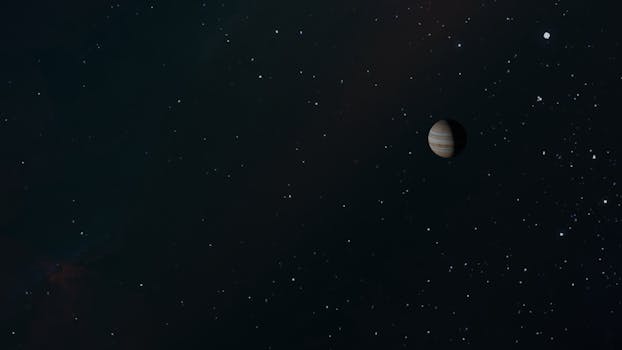
The Fascinating Sights of Jupiter's Auroras: Nature’s Dazzling Cosmic Lightshow
When we think of auroras, the mind often drifts to Earth's own northern and southern lights—ethereal displays that have mesmerized humans for millennia. Yet, far beyond our planet, Jupiter hosts the most powerful and spectacular auroras in the solar system. These immense lightshows, invisible to the naked eye from Earth, shimmer and dance at Jupiter’s poles, driven by forces both familiar and alien. As spacecraft and telescopes have unlocked new secrets, Jupiter’s auroras have emerged as an astonishing window into the planet’s volatile magnetosphere, the Sun’s influence, and the cosmic interplay that shapes the largest planet in our solar system.
Jupiter’s Auroras: More Than Just Pretty Lights
Auroras on Jupiter are not merely atmospheric ornaments; they are energetic phenomena generated by intricate interactions between the planet’s magnetic field, solar wind, and its moons—especially volcanic Io. These lights form primarily near Jupiter’s poles, glowing in ultraviolet (UV), infrared, and even X-ray wavelengths, making them far brighter and more complex than those on Earth.
What sets Jupiter’s auroras apart is their immense scale and intensity. In fact, Jupiter’s auroras are hundreds of times more energetic than Earth's. According to NASA, the energy powering Jupiter’s auroras is about 100 terawatts—roughly equivalent to the total energy consumption of all humankind over several days. These displays are constant, not just sporadic, and can be observed both day and night.
.png)
Unlike Earth’s auroras, which are primarily triggered by solar wind particles colliding with the atmosphere, Jupiter’s are heavily influenced by the planet’s rapid rotation (a day lasts just under 10 hours) and the volcanic activity of its moon Io. This combination creates a unique, dynamic, and ever-changing auroral spectacle.
The Science Behind Jupiter’s Auroral Power
At the heart of Jupiter’s auroral activity lies its colossal magnetic field—the strongest of any planet in the solar system. Jupiter’s magnetic field is 20,000 times stronger than Earth’s and extends millions of kilometers into space. This field traps charged particles from the solar wind, as well as particles ejected from Io’s volcanoes, creating a vast, swirling magnetosphere.
When these charged particles spiral along magnetic field lines and slam into Jupiter’s upper atmosphere at speeds exceeding 400 kilometers per second, they excite atmospheric hydrogen molecules. As the hydrogen returns to its normal state, it emits light, producing the auroras. Unlike Earth, where oxygen and nitrogen dominate auroral colors, Jupiter’s hydrogen-rich atmosphere means its auroras mostly glow in ultraviolet and infrared—wavelengths invisible to the human eye but stunning in spacecraft imagery.
Io, the most volcanically active body in the solar system, plays a starring role. Its eruptions spew over a ton of material into space every second. These particles, ionized and trapped by Jupiter’s magnetic field, feed the planet’s auroras, especially the unique “Io footprint”—a glowing spot that traces Io’s path across Jupiter’s sky.
How Jupiter’s Auroras Compare to Earth’s Northern Lights
The auroras of Jupiter and Earth share a basic mechanism—charged particles striking the upper atmosphere—but diverge dramatically in their sources, scale, and appearance. Here’s a comparison to put their differences in perspective:
| Feature | Jupiter’s Auroras | Earth’s Auroras |
|---|---|---|
| Main Energy Source | Planetary rotation, Io’s volcanoes, solar wind | Solar wind |
| Magnetic Field Strength | 20,000x Earth’s | 1x (baseline) |
| Dominant Wavelengths | Ultraviolet, infrared, X-ray | Visible light (green, red, purple) |
| Typical Power Output | ~100 terawatts | ~1 gigawatt |
| Duration | Continuous, day and night | Intermittent, mostly at night |
| Moons’ Influence | Strong (especially Io) | None |
For example, while Earth’s most brilliant auroras can be seen from as far south as Scotland or the northern United States, Jupiter’s auroras span regions thousands of kilometers across, dwarfing our own world’s displays. Earth’s auroras change with solar storms, but Jupiter’s remain persistent, shaped by its own powerful dynamics.
Juno Mission: Unveiling Jupiter’s Auroral Mysteries
Much of what we know about Jupiter’s auroras comes from NASA’s Juno spacecraft, which has orbited the planet since 2016. Juno is equipped with specialized instruments to study the auroras in unprecedented detail, including the Ultraviolet Imaging Spectrograph (UVS) and the Jovian Infrared Auroral Mapper (JIRAM).
Juno’s close flybys—sometimes skimming just 4,200 kilometers above the cloud tops—have captured breathtaking images and crucial data. Among Juno’s discoveries:
- $1 Using the Chandra X-ray Observatory and Juno’s instruments, scientists observed Jupiter’s auroras pulsing every 27 minutes, a phenomenon not fully understood. - $1 The auroras heat Jupiter’s upper atmosphere to temperatures of over 700 degrees Celsius—far hotter than models predicted. - $1 Juno revealed intricate patterns and filaments within the auroras, showing they are far more dynamic than previously thought.Juno’s findings have revolutionized our understanding of planetary auroras and highlighted how different processes can create similar cosmic spectacles.
The Role of Io and Jupiter’s Other Moons
Io, Jupiter’s innermost large moon, continuously shapes the auroral landscape. Its volcanoes pump out 1,000 kilograms of sulfur and oxygen ions every second, forming a plasma torus around Jupiter. This material, energized by Jupiter’s rotation, creates unique auroral footprints—not just for Io, but also for Europa and Ganymede.
These “moon footprints” are visible as bright spots and trailing arcs within the auroral ovals. The interaction between Io and Jupiter generates immense electric currents, up to 5 million amperes—enough to power a small city. Each moon’s unique orbit and composition adds its own fingerprint, making Jupiter’s auroras a cosmic tapestry woven by the entire Jovian system.
What We Can Learn from Jupiter’s Auroras
Jupiter’s auroras are more than just a beautiful curiosity. They provide a natural laboratory for studying magnetic fields, plasma physics, and planetary atmospheres under extreme conditions. Scientists use Jupiter’s auroras to:
- Probe the structure and dynamics of Jupiter’s magnetosphere, which is larger than the Sun itself. - Understand the interaction between planetary magnetic fields and their moons—a process relevant to exoplanets and their satellites. - Study how energy is transferred from the solar wind to planetary atmospheres. - Gain insight into space weather processes that can affect spacecraft and even life on Earth.By comparing Jupiter’s auroras with those of other planets (including Saturn and exoplanets), researchers are piecing together universal rules about how planets and their environments respond to the cosmos.
Future Missions and the Continuing Mystery
The story of Jupiter’s auroras is far from complete. Future missions, such as the European Space Agency’s Jupiter Icy Moons Explorer (JUICE) and NASA’s Europa Clipper, will carry new instruments to peer into Jupiter’s magnetosphere and observe its auroras from fresh perspectives. Advances in telescope technology, including the James Webb Space Telescope, are already providing sharper images and spectra of Jupiter’s glowing poles.
Despite these advances, many mysteries remain unsolved. Scientists are still puzzled by the exact mechanisms driving the most energetic auroral emissions and the connection between auroras and Jupiter’s deep interior. Each new discovery only deepens the sense of wonder, reminding us that even the largest planet in our solar system has secrets left to reveal.
Jupiter’s Auroras: An Awe-Inspiring Cosmic Phenomenon
Jupiter’s auroras are not only the solar system’s most spectacular lightshows, they are also vital clues to the workings of magnetic fields, planetary atmospheres, and cosmic interactions that shape our universe. From their immense power to their intricate connection with Jupiter’s moons, these auroras offer a glimpse of natural forces operating on truly grand scales.
As our spacecraft and telescopes continue to unlock their mysteries, Jupiter’s auroras stand as a testament to both the beauty and complexity of the cosmos. They remind us that even in the cold, dark reaches of space, nature’s creativity knows no bounds.