Jupiter's Unique Role in Earth's Meteor Showers: A Cosmic Connection
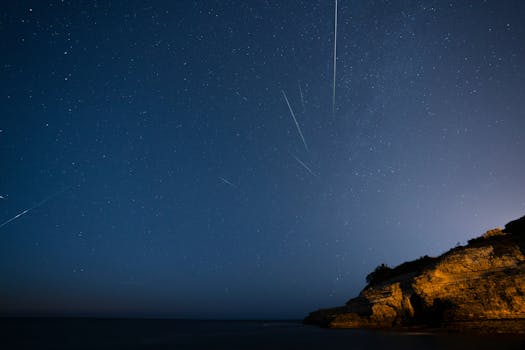
Every August, stargazers gather under dark skies to witness the Perseid meteor shower, marveling at streaks of light as tiny space rocks burn up in Earth's atmosphere. Yet, few realize that these stunning displays are not just a product of comet dust and Earth's orbit, but owe much to the gravitational influence of the solar system’s true giant—Jupiter. Far from being a distant onlooker, Jupiter plays an essential and complex role in shaping the meteor showers we enjoy on Earth. Understanding this connection reveals not only the dynamics of our cosmic neighborhood but also the subtle ways in which the mighty gas giant influences our planet’s night sky.
The Origins of Meteor Showers: Comets, Asteroids, and Planetary Gravity
Meteor showers occur when Earth passes through streams of debris left behind by comets or, occasionally, asteroids. These tiny fragments, often no larger than grains of sand, ignite as they plummet through the atmosphere, creating visible streaks. However, the process that delivers these particles into Earth-crossing orbits is far from straightforward.
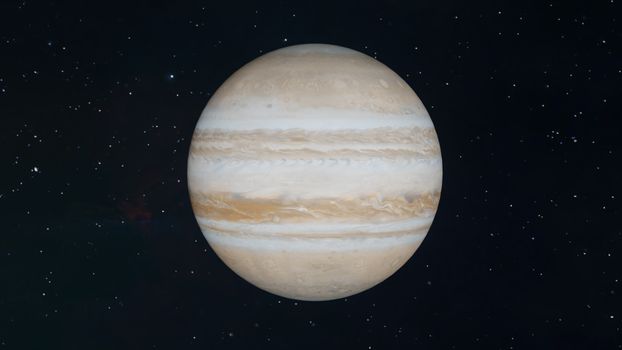
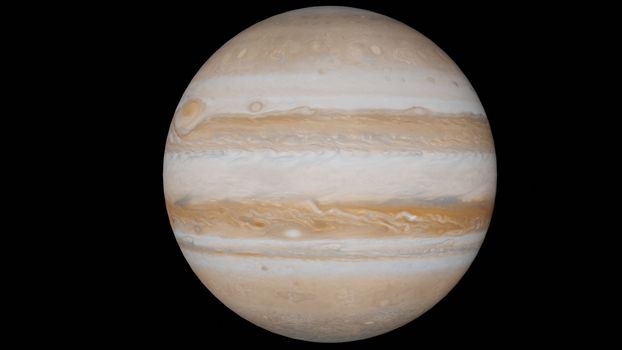
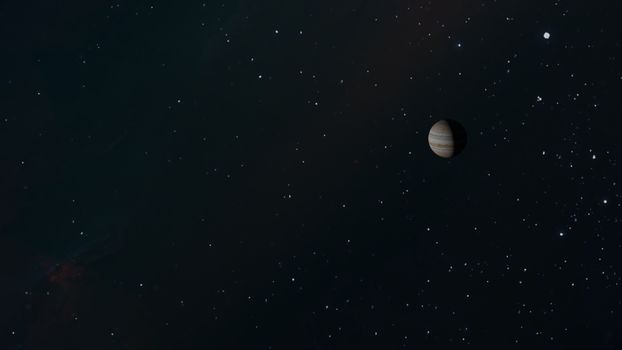
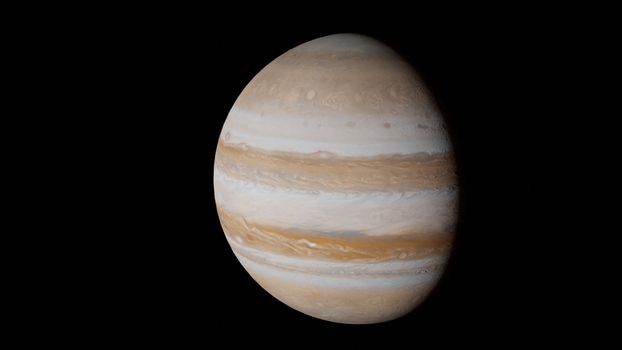
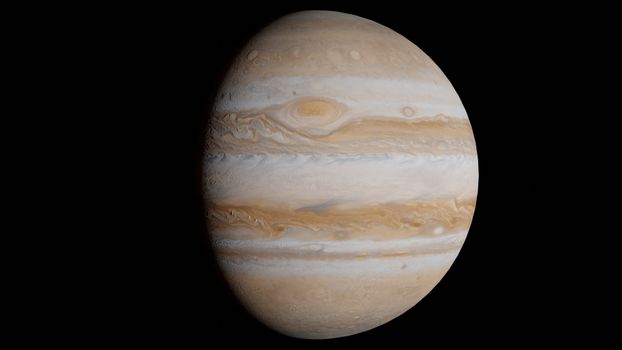
Jupiter, with a mass over 300 times that of Earth and a powerful gravitational field, acts as a cosmic sculptor. It influences the orbits of countless comets and asteroids, sometimes pulling them into new trajectories or ejecting them from the solar system altogether. Without Jupiter’s intervention, many of the meteor streams that intersect Earth’s orbit—and thereby produce our meteor showers—might never have formed or would have dissipated long ago.
.png)
One striking example is the Perseid meteor shower, which originates from the debris of comet 109P/Swift-Tuttle. Jupiter’s gravity perturbs the orbit of this comet, periodically nudging its debris stream into a path that intersects with Earth. This gravitational shepherding ensures that the Perseids remain a regular and reliable meteor shower, year after year.
Jupiter as the Solar System’s “Cosmic Gatekeeper”
Jupiter’s immense gravitational pull makes it the dominant force among the planets in our solar system. Astronomers often refer to Jupiter as the “cosmic gatekeeper”—it both protects and exposes Earth to interplanetary debris. This dual role is a consequence of how Jupiter interacts with comets and asteroids:
1. Deflection: Jupiter’s gravity can act as a shield, deflecting or capturing comets and asteroids that might otherwise threaten Earth. In fact, studies suggest that Jupiter intercepts or ejects over 90% of long-period comets that enter the inner solar system. 2. Injection: Conversely, Jupiter’s gravitational nudges can also redirect objects from the outer solar system into Earth-crossing orbits, increasing the supply of meteoroids that create meteor showers.This balancing act means that while Jupiter reduces the likelihood of catastrophic impacts, it also keeps our meteor showers lively and frequent. The diversity and predictability of meteor showers arise directly from this complex gravitational interplay.
How Jupiter Shapes the Major Meteor Showers
Let’s examine how Jupiter’s influence is visible in some of the most prominent meteor showers:
| Meteor Shower | Parent Body | Jupiter's Influence | Peak Activity (per hour) |
|---|---|---|---|
| Perseids | Comet 109P/Swift-Tuttle | Orbital period and debris stream shaped by Jupiter’s gravity | 50–100 |
| Leonids | Comet 55P/Tempel-Tuttle | Jupiter’s perturbations cause periodic meteor storms | 15–1000 (in storm years) |
| Quadrantids | Asteroid 2003 EH1 | Debris stream stabilized by Jupiter’s resonance | 60–120 |
| Geminids | Asteroid 3200 Phaethon | Less direct, but Jupiter maintains asteroid belt dynamics | 120–160 |
The Leonid meteor shower is particularly notable for its periodic meteor storms, which occur roughly every 33 years. This periodicity is directly linked to Jupiter’s gravitational perturbations, which cluster cometary debris along Earth’s orbit at regular intervals.
Orbital Resonances: The Invisible Hand Guiding Meteoroid Streams
A critical mechanism by which Jupiter shapes meteor showers is through orbital resonances. An orbital resonance occurs when two orbiting bodies exert a regular, periodic gravitational influence on each other, often because their orbital periods are simple ratios (like 1:2 or 2:3).
Jupiter’s powerful gravity locks many comets, asteroids, and their debris streams into these resonances. For instance, the debris stream of the Quadrantid meteor shower is maintained by a resonance with Jupiter, which keeps the stream concentrated and aligned with Earth’s orbit. Without this effect, the stream would disperse, and the Quadrantids would fade away.
Resonances also explain why some meteor showers are highly predictable, while others can vary dramatically from year to year. As Jupiter’s own orbit changes slightly over centuries, it shifts the timing and intensity of certain meteor showers on Earth. This invisible gravitational hand ensures a dynamic and ever-changing meteor display.
Jupiter’s Role in Meteor Shower Evolution and Longevity
Meteor showers are not permanent features—they rely on a continuous supply of debris and favorable orbital alignments. Here again, Jupiter plays a decisive role.
- Preservation: By corralling cometary debris through resonances and periodic gravitational nudges, Jupiter preserves and replenishes the streams responsible for our most celebrated meteor showers. - Dispersion: Conversely, when a comet’s orbit drifts too close to Jupiter, the planet can scatter the debris, causing the corresponding meteor shower to weaken or disappear over centuries.For example, the Taurid meteor stream, associated with Comet Encke, is thought to have been stretched and split by repeated encounters with Jupiter. As a result, the Taurids now deliver a broad, prolonged meteor shower in late October and early November—a direct outcome of Jupiter’s gravitational tinkering.
Jupiter’s Indirect Effects: Shaping Earth’s Meteoroid Environment
Beyond its direct influence on specific meteor showers, Jupiter has shaped the overall environment of meteoroids and comets in the inner solar system. Here are three key facts:
1. Jupiter is responsible for the current structure of the asteroid belt. Its gravity prevents the formation of a planet between Mars and Jupiter, leaving behind a belt of debris that periodically sends meteoroids Earth’s way. 2. Over the last 500 million years, Jupiter has likely ejected more than 90% of the comets that once threatened Earth with large impacts, according to computer simulations conducted by planetary scientists. 3. The frequency and intensity of meteor showers have changed over Earth’s history as Jupiter’s orbit and the distribution of debris in the solar system have evolved. Some ancient meteor showers have vanished, while new ones have arisen due to Jupiter’s ongoing gravitational influence.These broad-scale effects underscore that every shooting star we see is part of a grand narrative shaped by the largest planet in our solar system.
Why Jupiter’s Influence on Meteor Showers Matters for Earth
Understanding Jupiter’s unique role in meteor showers isn’t just a matter of scientific curiosity. It has practical implications for planetary defense, space exploration, and even our appreciation of the night sky.
- Planetary Defense: By tracking how Jupiter influences the orbits of comets and asteroids, scientists can better predict potential impact threats to Earth. - Space Exploration: Meteor showers can pose hazards to spacecraft. Knowing their origins and timing, thanks to studies of Jupiter’s gravitational effects, helps protect satellites and astronauts. - Cultural Connection: Meteor showers have inspired myths, art, and scientific discovery for millennia. Realizing that these events are orchestrated in part by a distant giant deepens our sense of wonder.As astronomers continue to study Jupiter’s gravitational reach, new insights will emerge about the history and future of Earth’s meteor showers. Ultimately, every meteor that lights up our sky is a reminder of the cosmic ballet choreographed by Jupiter’s unseen hand.