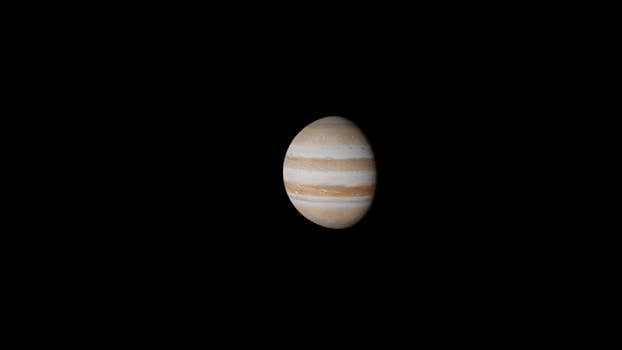
Puzzle Pieces in the Clouds: How Scientists Study Jupiter's Storms
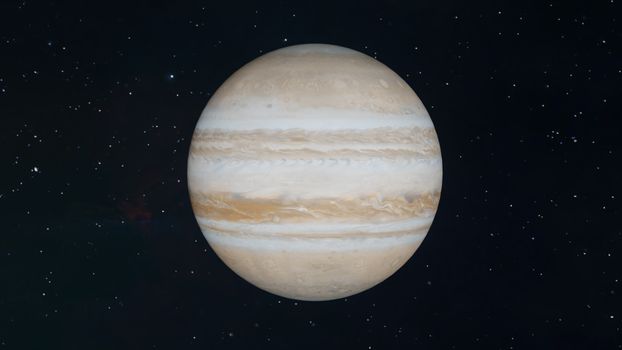
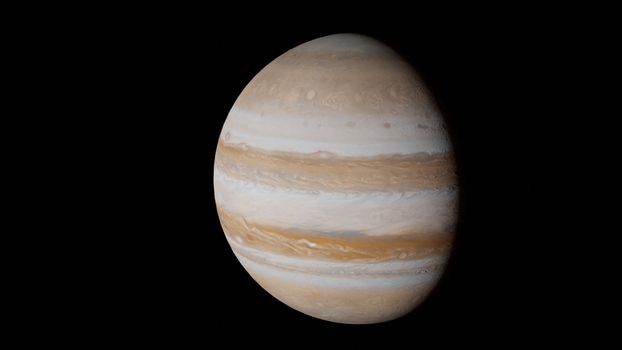
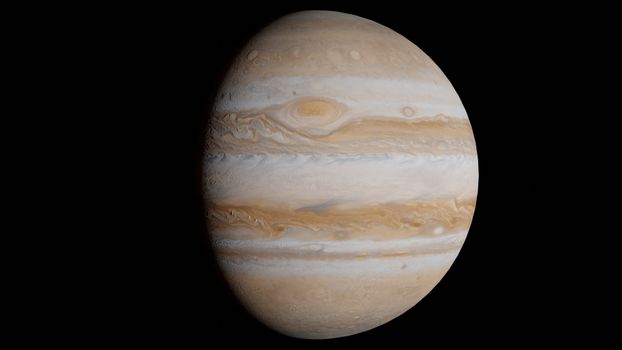
Jupiter’s swirling storms are among the most captivating sights in our solar system, but understanding them is far from simple. For centuries, these colossal tempests have challenged scientists with their scale, longevity, and mysterious origins. While much attention is given to the Great Red Spot, the real intrigue lies in how researchers decode the secrets of Jupiter’s stormy atmosphere. This article takes you behind the scenes, revealing the advanced techniques, missions, and discoveries that are helping us piece together the puzzles of Jupiter’s storms—and what these findings might mean for science far beyond the gas giant.
The Challenge: Observing Storms on a Distant Giant
Jupiter sits almost 780 million kilometers from Earth, making direct observation a daunting task. Its storms, some larger than our entire planet, churn in an atmosphere of hydrogen, helium, ammonia, and water vapor. Unlike Earth, there are no solid surfaces or continents to anchor weather patterns, so storms can persist for decades or even centuries.
To study these monstrous weather systems, scientists rely on a combination of space telescopes, robotic spacecraft, and ground-based observations. The Hubble Space Telescope, for example, has been monitoring Jupiter’s cloud tops in detail since 1994, providing crucial time-lapse data on storm evolution. Meanwhile, Earth-based astronomers use adaptive optics to correct for atmospheric distortion, capturing increasingly sharp images of Jupiter’s dynamic weather.
.png)
Spacecraft Missions: Juno and Beyond
Robotic missions have revolutionized our understanding of Jupiter’s storms. NASA’s Juno spacecraft, which entered Jupiter’s orbit in 2016, was designed specifically to probe beneath the planet’s turbulent cloud tops. Juno’s orbit brings it within 4,200 kilometers of Jupiter’s cloud tops every 53 days, allowing its suite of science instruments to perform high-resolution scans.
Juno’s Microwave Radiometer (MWR) has revealed that some storms plunge at least 50 kilometers below the visible clouds—deeper than previously assumed—while infrared cameras have mapped out hidden heat sources fueling these tempests. In 2021, Juno discovered clusters of smaller cyclones encircling the planet’s poles, challenging long-held theories and showing that Jupiter’s atmospheric dynamics are even more complex than imagined.
Decoding Storm Structure: Tools and Techniques
How do scientists “see” inside a storm on a planet hundreds of millions of kilometers away? They use a blend of remote sensing techniques:
- $1 These technologies penetrate thick cloud layers, revealing the vertical structure and heat distribution within storms. For example, Juno’s JIRAM (Jovian Infrared Auroral Mapper) has tracked heat signatures of both the Great Red Spot and newly forming cyclones. - $1 By analyzing the wavelengths of light reflected and emitted by Jupiter’s clouds, scientists determine their chemical composition. This has confirmed that ammonia ice forms the uppermost layer of most storms. - $1 As spacecraft send radio signals through Jupiter’s atmosphere, changes in signal strength and delay reveal the density, temperature, and movement of storm clouds at different depths.These methods have uncovered dramatic facts: the Great Red Spot’s roots extend at least 300 kilometers deep, and storms at the poles cluster in geometric patterns, such as the famous “pentagon” of cyclones at the planet’s north pole.
Jupiter’s Storms in Motion: Time-Lapse Revelations
One of the most powerful tools in storm research is time-lapse imaging. By comparing high-resolution images taken weeks, months, or years apart, scientists can track how storms evolve, merge, or dissipate. For example:
- The Great Red Spot has shrunk by over 2,000 kilometers in width since 1979, as documented by Voyager, Hubble, and Juno missions. - A series of smaller storms called “barges” have been observed forming, merging, and fading away over just a few years, especially in Jupiter’s South Temperate Belt. - In 2000, three small white ovals merged to form Oval BA, sometimes called "Red Spot Junior," which later changed color and increased in intensity.Time-lapse studies have also revealed that Jupiter’s storms often interact with powerful zonal jet streams, causing them to stretch, split, or even spawn new weather systems.
What Makes Jupiter’s Storms Unique? A Comparison Table
| Feature | Jupiter’s Storms | Earth’s Storms |
|---|---|---|
| Atmospheric Depth (km) | Up to 300+ | ~15 (troposphere) |
| Storm Duration | Years to centuries | Hours to weeks |
| Typical Wind Speeds (km/h) | 432 - 650 | 120 - 250 (hurricanes) |
| Primary Energy Source | Internal heat | Solar energy |
| Storm Size | Up to 16,350 km wide (Great Red Spot) | Few hundred km (hurricanes) |
As the table shows, the storms of Jupiter not only dwarf those on Earth in size and duration but are also powered by different processes, mainly the heat slowly radiating from the planet’s interior rather than sunlight.
Storm Genetics: Why Jupiter Breeds Long-Lived Tempests
What allows some Jovian storms to persist for centuries? The answer lies in a combination of factors: - $1 Jupiter spins on its axis once every 9.9 hours, creating strong Coriolis forces that organize storms and prevent them from dissipating quickly. - $1 Unlike Earth, Jupiter’s storms don’t encounter landmasses that disrupt their structure, allowing them to maintain strength far longer. - $1 These alternating east-west winds, reaching up to 650 km/h, act as barriers, corralling storms into stable belts and zones. - $1 Jupiter emits about 1.6 times more energy than it receives from the Sun, providing a continuous power source for storm formation and maintenance.Recent computer models, informed by Juno’s data, suggest that vertical convection—hot gas rising and cool gas sinking—helps “anchor” the Great Red Spot and similar storms deep within the planet’s atmosphere.
Unlocking Clues for Exoplanet Weather and Earth Science
Jupiter’s storms are not just an astronomical curiosity—they offer a natural laboratory for understanding weather on other planets, including distant exoplanets. By decoding Jupiter’s atmospheric dynamics, researchers can: - Improve models of gas giant atmospheres, which are crucial for interpreting data from over 5,000 known exoplanets. - Test hypotheses about storm formation, jet stream behavior, and energy transfer in atmospheres with no solid surfaces. - Apply insights to Earth science, especially regarding how large-scale atmospheric waves and jet streams influence weather and climate.For example, the discovery that Jupiter’s storms can be stabilized by deep atmospheric processes has led scientists to revisit how Earth’s jet streams might interact with cyclones and influence extreme weather events.
Final Thoughts: The Ongoing Quest to Unravel Jupiter’s Storm Mysteries
Decoding the puzzles of Jupiter’s storms remains one of planetary science’s most exciting frontiers. With every new mission, instrument, and analysis, scientists edge closer to understanding how these vast tempests form, evolve, and persist. Far from being mere curiosities, Jupiter’s storms are cosmic laboratories helping us refine our understanding of weather, climate, and the dynamic processes that shape planets both near and far.