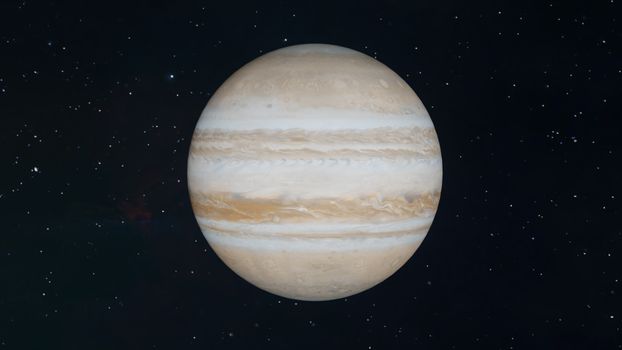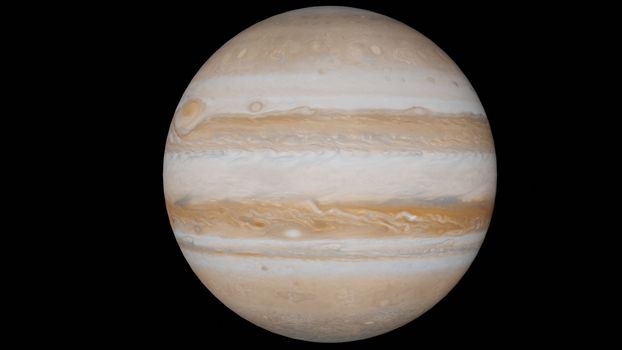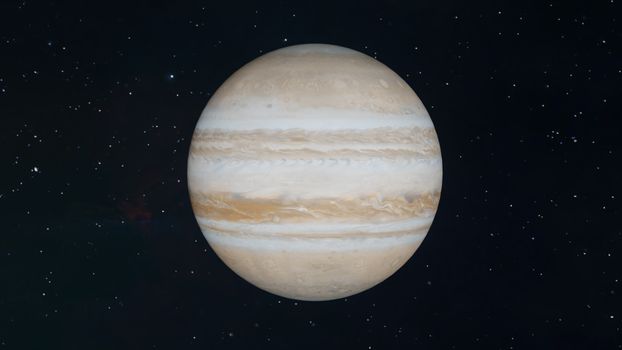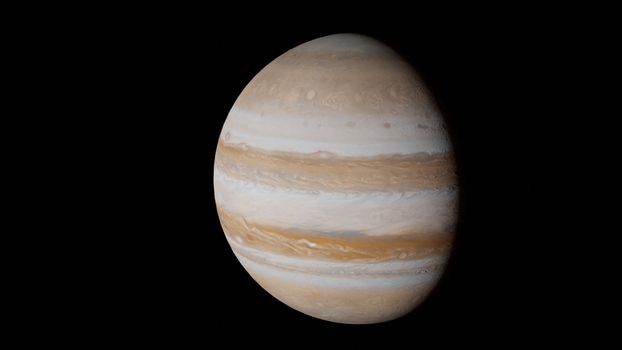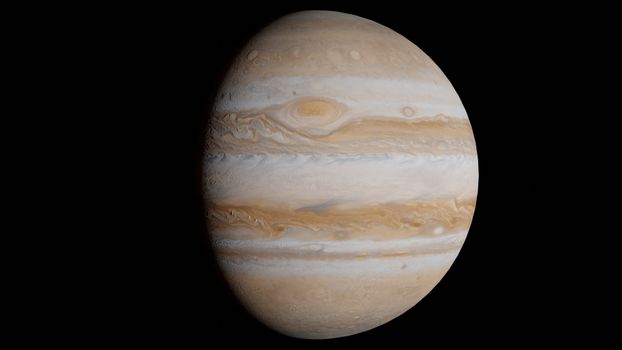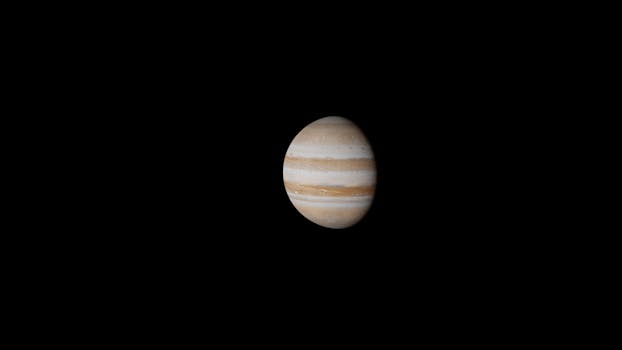
Jupiter is often hailed as the king of the planets, and for good reason. With a mass more than 317 times that of Earth and a gravitational pull that dominates much of the solar system, Jupiter’s influence stretches far beyond its immediate neighborhood. But did you know that Jupiter’s gravitational might extends all the way to the distant, icy outskirts of our solar system, impacting the mysterious Kuiper Belt? This vast region, populated with dwarf planets, comets, and icy debris, is shaped not only by its own dynamics but also by the subtle yet significant tug of Jupiter’s gravity. In this article, we’ll explore the remarkable ways Jupiter’s gravity affects objects in the Kuiper Belt, revealing insights into solar system evolution, cosmic dynamics, and even the origins of comets that visit the inner planets.
Understanding the Kuiper Belt: Our Solar System’s Distant Frontier
The Kuiper Belt is a vast, doughnut-shaped region that begins just beyond Neptune’s orbit, roughly 30 astronomical units (AU) from the Sun, and stretches outward to about 50 AU. To put that in perspective, one AU is the average distance from the Earth to the Sun—about 150 million kilometers. This means the Kuiper Belt begins nearly 4.5 billion kilometers away from us and extends for billions more.
Within this cold, dark realm lie countless icy bodies, including Pluto, Eris, Haumea, and Makemake—some of the most famous dwarf planets. Estimates suggest there may be more than 100,000 Kuiper Belt Objects (KBOs) larger than 100 kilometers in diameter, with millions more smaller bodies. These remnants from the formation of the solar system are relics of a primordial era, preserving clues about planetary evolution, chemical composition, and even the delivery of water and organics to the inner solar system.
.png)
Yet, despite their distance from the Sun, these bodies are not isolated. The gravitational fields of the giant planets—especially Jupiter—reach across the vast gulf of the solar system, subtly shaping the orbits, distribution, and even the fate of many KBOs.
Jupiter’s Gravitational Reach: How Far Does It Extend?
Jupiter’s gravity is the most powerful of any planet in our solar system. Its mass is 2.5 times that of all the other planets combined, granting it a gravitational field with immense influence.
But how can a planet over 700 million kilometers away affect objects in the Kuiper Belt, which lies at least 4.5 billion kilometers from the Sun? The answer lies in the cumulative and long-range nature of gravitational forces. While Jupiter’s direct gravitational force weakens with distance, its effect is felt through a phenomenon known as orbital resonance, as well as through the migration of planetary orbits in the early solar system.
For example, Jupiter’s so-called Hill sphere—the region in which it dominates the gravitational attraction of satellites—extends to about 53 million kilometers. This is tiny compared to the distance to the Kuiper Belt. However, Jupiter’s indirect gravitational influence through orbital resonances and gravitational interactions with other giant planets (like Saturn, Uranus, and Neptune) helps shape the architecture of the entire outer solar system.
Orbital Resonances: The Invisible Hand of Jupiter
One of the most significant ways Jupiter shapes the Kuiper Belt is through orbital resonances. An orbital resonance occurs when two orbiting bodies exert regular, periodic gravitational influences on each other due to their orbital periods being related by a ratio of small whole numbers.
A classic example is the 2:3 resonance between Neptune and Pluto: for every two orbits Pluto completes, Neptune completes three, ensuring their paths never cross. While Neptune is the primary architect of this resonance, Jupiter’s gravity plays an essential role in establishing and maintaining the overall resonance structure of the outer solar system.
In the Kuiper Belt, many objects are found in resonance with Neptune, but the underlying stability of these resonances depends on the gravitational perturbations from Jupiter. Studies show that Jupiter’s influence can enhance or destabilize these resonant populations. For example, some KBOs are in “mean-motion resonances” that are only stable because Jupiter’s gravity acts as a moderator, counteracting the destabilizing effects of other planets.
Another key example is the presence of “scattered disk” objects—KBOs with highly eccentric and inclined orbits. Many of these bodies likely reached their current positions due to gravitational encounters that originated with Jupiter but were mediated by Neptune and Uranus.
Jupiter’s Role in the Migration and Sculpting of the Kuiper Belt
The current structure of the Kuiper Belt is not simply a frozen relic from the solar system’s birth. Evidence suggests that the giant planets have migrated substantially since their formation. According to the widely accepted “Nice Model,” Jupiter and Saturn once moved closer together, while Neptune and Uranus migrated outward toward the Kuiper Belt.
Jupiter’s inward migration, followed by a reversal due to Saturn’s influence, caused massive gravitational disturbances. These events scattered countless planetesimals—many of which became KBOs—outward, while others were ejected from the solar system entirely or sent plunging inward to become comets.
This planetary dance led to the current distribution of KBOs and also explains the existence of so-called “hot” and “cold” populations within the Kuiper Belt. The “cold” classical KBOs have relatively circular, flat orbits, while the “hot” population has higher inclinations and eccentricities, a direct result of gravitational scattering events in which Jupiter played a pivotal role.
Jupiter as the Comet Gatekeeper: Impact on Short-Period Comets
Jupiter’s influence on the Kuiper Belt isn’t just historical—it continues today. Many short-period comets, which return to the inner solar system in less than 200 years, are believed to originate from the Kuiper Belt or its related region, the scattered disk. These icy wanderers are nudged onto sun-approaching paths by the gravitational interactions of the giant planets, especially Neptune and Uranus.
However, once these comets move inward, Jupiter acts as a powerful gatekeeper. Its gravity can capture, deflect, or eject comets, altering their orbits dramatically. In some cases, Jupiter’s influence shortens their orbital periods, transforming them into what astronomers call “Jupiter-family comets.” In fact, over 85% of all short-period comets observed to date are classified as Jupiter-family comets, characterized by their orbits being strongly influenced by the gas giant.
The table below compares the key characteristics of different comet families in relation to Jupiter’s gravitational influence:
| Comet Family | Origin Region | Orbital Period (Years) | Jupiter's Influence |
|---|---|---|---|
| Jupiter-family Comets | Kuiper Belt/Scattered Disk | Less than 20 | Very Strong |
| Halley-type Comets | Kuiper Belt/Scattered Disk | 20 – 200 | Moderate |
| Long-period Comets | Oort Cloud | Over 200 | Minimal |
Jupiter’s gravitational pull thus acts as a cosmic traffic controller, influencing the influx of icy bodies into the inner solar system, and, by extension, the potential for cometary impacts on planets—including Earth.
Shaping the Edges: Gaps, Clumps, and the Kuiper Cliff
Perhaps one of the most intriguing features of the Kuiper Belt is the so-called “Kuiper Cliff.” Beyond about 50 AU from the Sun, the number of observed KBOs drops off sharply. While part of this may be due to observational limitations, simulations suggest that Jupiter’s early migration may have contributed to this abrupt boundary. During the planetary migration phase, Jupiter’s gravity helped scatter KBOs, preventing stable orbits beyond certain distances and contributing to the formation of the Kuiper Cliff.
Additionally, the interplay of Jupiter’s gravity with Neptune’s results in gaps and clumps within the Kuiper Belt—regions where few or many objects are found, depending on the stability of their orbits. These patterns are reminiscent of the Kirkwood Gaps found in the asteroid belt, which are also caused by Jupiter’s resonances.
Modern surveys, such as those conducted by the Hubble Space Telescope and ground-based observatories, have identified over 2,000 confirmed KBOs, with more being discovered every year. Their spatial distribution offers a living record of Jupiter’s long-range gravitational sculpting.
Final Thoughts: Why Jupiter’s Gravitational Influence on the Kuiper Belt Matters
The Kuiper Belt is more than just a distant region of icy rocks—it is a dynamic, evolving system shaped in no small part by the gravitational reach of Jupiter. From the migration and placement of KBOs to the supply of comets and the sculpting of gaps and boundaries, Jupiter’s unseen hand has left a profound imprint on the outer solar system.
Understanding these interactions is not only crucial for planetary science but also for piecing together the story of our own planet’s history. After all, many of the comets that deliver water and organic molecules to Earth may have started their journey in the Kuiper Belt, set in motion by Jupiter’s gravity billions of years ago.
As our observatories and spacecraft continue to probe the fringes of the solar system, we will undoubtedly uncover more about how Jupiter’s gravity continues to shape the Kuiper Belt—and perhaps even discover new worlds that owe their very existence to the mighty king of the planets.