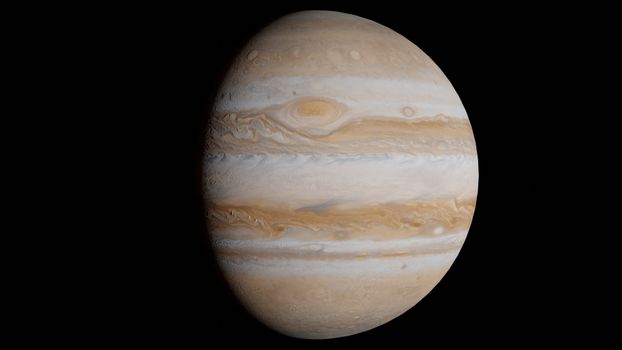
Jupiter, the largest planet in our solar system, captivates astronomers and the public alike with its swirling storms, vibrant bands, and enigmatic weather patterns. Unlike Earth’s relatively stable climate, Jupiter’s meteorological phenomena are a spectacle of extremes—giant cyclones, powerful jet streams, and lightning storms that dwarf anything we experience on our home planet. Exploring these alien weather systems not only reveals the profound differences between the two planets but also deepens our understanding of atmospheric science across our solar system. In this article, we delve into the dramatic meteorological phenomena on Jupiter, examine how they differ from those on Earth, and uncover what these differences reveal about planetary atmospheres.
Understanding Jupiter’s Meteorological Powerhouse
Jupiter’s weather is a product of its immense size, rapid rotation, and unique atmospheric composition. Spanning more than 143,000 kilometers in diameter—11 times wider than Earth—Jupiter’s atmosphere is made up primarily of hydrogen (about 90%) and helium (about 10%), with trace amounts of methane, ammonia, and water vapor. This composition, combined with the planet’s lack of a solid surface, creates a dynamic environment where weather forms and evolves on massive scales.
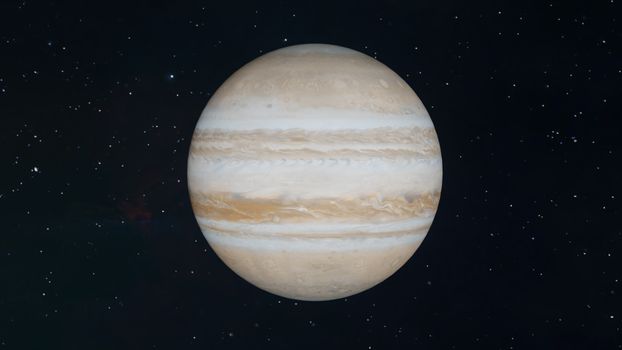
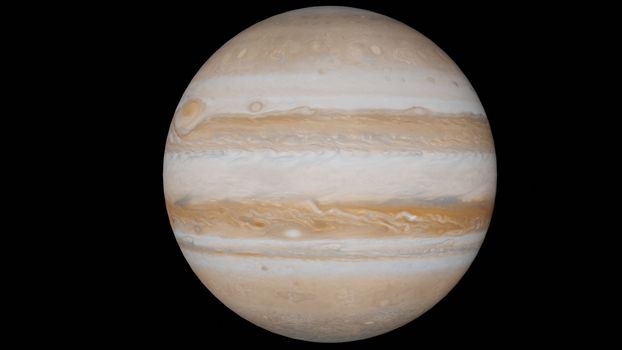
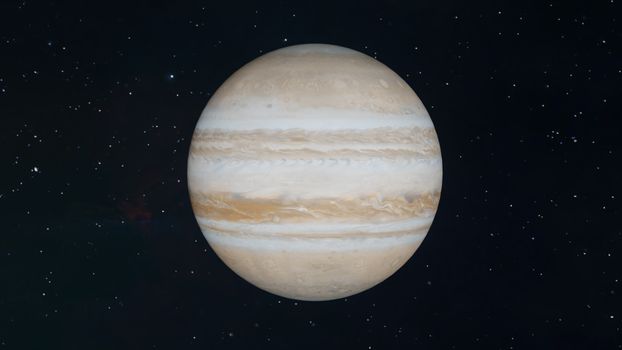
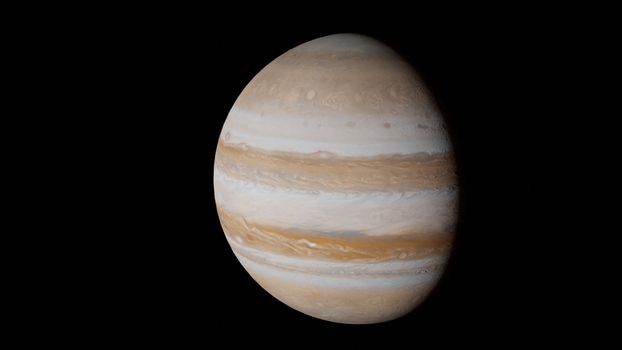
One of the most striking features of Jupiter’s atmosphere is its visible banding. These alternating light and dark stripes, known as zones and belts, represent powerful jet streams that can reach speeds of up to 400 kilometers per hour (about 250 miles per hour). These jet streams are far stronger and more numerous than those on Earth, contributing to Jupiter’s vibrant and ever-changing weather.
.png)
The Giant Storms: From the Great Red Spot to White Ovals
Jupiter is famous for its colossal storms—most notably, the Great Red Spot. This anticyclonic storm, which has raged for at least 350 years, is twice as wide as Earth and boasts wind speeds exceeding 430 kilometers per hour (267 miles per hour). The Great Red Spot is a high-pressure system, and its iconic red hue is still a subject of scientific debate, possibly caused by chemical reactions involving sulfur or phosphorus compounds.
But the Great Red Spot is just one of many storms. Jupiter’s atmosphere is dotted with smaller, yet still formidable, cyclones and anticyclones. For example, the planet’s “white ovals” are long-lasting storm systems that can persist for decades. NASA’s Juno spacecraft has revealed clusters of cyclones near Jupiter’s poles, each one as wide as Texas, rotating in tightly packed patterns. In contrast, Earth’s largest storms—such as hurricanes—are limited in size by the planet’s smaller scale and the presence of landmasses that disrupt their energy supply.
Lightning, Auroras, and Energy: Jupiter’s Extreme Weather
Jupiter’s storms are supercharged with energy. The planet experiences some of the most powerful lightning in the solar system, with flashes up to three times stronger than the most intense lightning strikes on Earth. NASA’s Juno mission has detected these massive bursts, particularly in the planet’s polar regions, where lightning activity is most frequent. In contrast, Earth’s lightning is most common near the equator and is closely tied to the water cycle and heating from the Sun.
Auroras, or northern and southern lights, are another dazzling phenomenon on Jupiter. While Earth’s auroras are fueled by solar wind colliding with our magnetic field, Jupiter’s auroras are much more intense and are primarily driven by its own powerful magnetic field—20,000 times stronger than Earth’s—and the volcanic activity of its moon Io. Jupiter’s auroras can be hundreds of times brighter than those on Earth, spanning thousands of kilometers across the poles.
Jupiter’s internal heat is another crucial factor. The planet radiates 1.6 times more energy into space than it receives from the Sun, thanks to residual heat left over from its formation and ongoing slow gravitational contraction. This internal energy drives much of Jupiter’s weather, in stark contrast to Earth’s climate, which is primarily powered by sunlight.
Atmospheric Layers and Cloud Chemistry: A Tale of Two Worlds
Jupiter and Earth have fundamentally different atmospheric structures and cloud compositions. Earth’s atmosphere is structured in layers—troposphere, stratosphere, mesosphere, and so on—each with distinct temperature and pressure profiles. Weather on Earth occurs mostly in the troposphere, which extends up to about 12 kilometers above the surface.
On Jupiter, the lack of a solid surface means the atmosphere gradually transitions from gas to liquid under tremendous pressure. Its cloud layers are composed of exotic chemicals: the uppermost clouds are made of ammonia crystals, while deeper layers contain ammonium hydrosulfide and water ice. These clouds form striking patterns and colors, from creamy whites to deep reds and browns.
The temperatures on Jupiter’s cloud tops average around -145°C (-230°F), far colder than anywhere on Earth. Yet, beneath these frigid clouds, pressures and temperatures increase rapidly, reaching thousands of degrees Celsius deep within the planet.
Comparing Jupiter and Earth: Weather Phenomena at a Glance
To better illustrate the incredible differences between meteorological phenomena on Jupiter and Earth, here is a comparative overview:
| Feature | Jupiter | Earth |
|---|---|---|
| Diameter | 143,000 km | 12,742 km |
| Atmospheric Composition | 90% H2, 10% He, traces of CH4, NH3, H2O | 78% N2, 21% O2, traces of CO2, H2O, Ar |
| Largest Storm | Great Red Spot (up to 16,350 km wide) | Hurricane Patricia (1,150 km diameter) |
| Typical Jet Stream Speed | Up to 400 km/h | Up to 160 km/h |
| Lightning Strength | Up to 1.6 billion joules per flash | Up to 500 million joules per flash |
| Source of Atmospheric Energy | Internal heat (1.6 times solar input) | Solar radiation |
| Auroras | Extremely bright, driven by magnetic field and Io | Moderate, driven by solar wind |
| Atmospheric Pressure at Cloud Tops | ~1 bar (similar to Earth’s surface) | 1 bar (at sea level) |
Weather Lifecycles: Duration and Evolution of Storms
One of the most fascinating differences between Jupiter and Earth is the longevity and evolution of storms. On Earth, hurricanes and cyclones typically last from several days to a couple of weeks before dissipating, largely due to friction with land or cooler waters. The average lifespan of a major storm on Earth rarely exceeds a month.
In contrast, Jupiter’s storms can rage for years, decades, or even centuries. The Great Red Spot has persisted for at least 350 years, as documented by telescopic observations since the 17th century. The lack of a solid surface and the sheer scale of Jupiter’s atmosphere allow these storms to endure, interacting with surrounding jet streams and other atmospheric features in complex ways. Smaller storms, such as white ovals and polar cyclones, also display remarkable stability, sometimes merging or splitting in dynamic displays unseen on Earth.
What Jupiter’s Meteorology Teaches Us About Planetary Atmospheres
Studying Jupiter’s meteorological phenomena provides critical insights into the workings of planetary atmospheres beyond our own. Jupiter acts as a natural laboratory for scientists seeking to understand the behavior of gases, heat, and weather under extreme conditions.
For example, the discovery of ammonia and water clouds, as well as the detection of deep lightning, confirms that complex weather chemistry can occur even on planets with no solid surface. Jupiter’s persistent jet streams and giant storms challenge our models of atmospheric dynamics, showing that rapid rotation and internal heat can create stable, long-lived weather patterns.
Moreover, Jupiter’s atmosphere serves as an analog for exoplanets—giant planets orbiting other stars. Many of the lessons learned from Jupiter, such as the impact of internal heat and the role of magnetic fields in shaping auroras, can be applied to studying the climates of distant worlds.
Final Thoughts on Jupiter’s Meteorological Phenomena Versus Earth’s
Jupiter’s meteorological phenomena are a realm of extremes, with storms, jet streams, and lightning on scales that defy comparison with Earth. Driven by internal heat, rapid rotation, and a unique atmospheric composition, Jupiter’s weather systems offer a window into the complexity and diversity of planetary climates. While Earth’s weather is shaped by sunlight, water, and land, Jupiter’s is a dance of gases, energy, and magnetism—reminding us that the universe is filled with worlds both familiar and astonishingly alien.
By continuing to observe and study Jupiter’s meteorology, we not only unravel the mysteries of our solar system’s giant but also gain perspective on the forces that shape worlds across the cosmos.