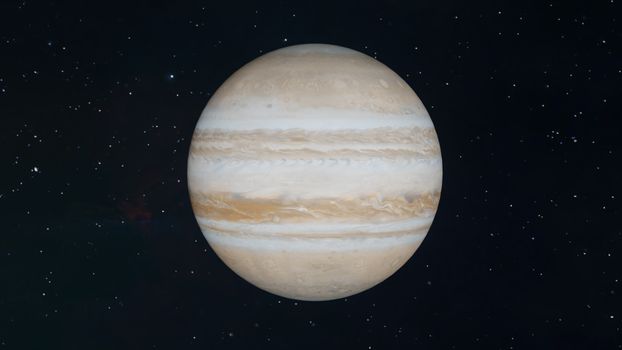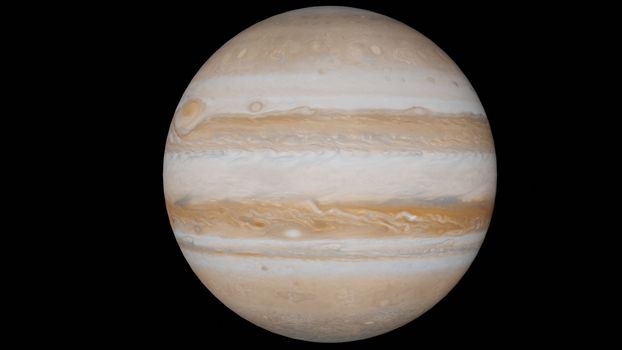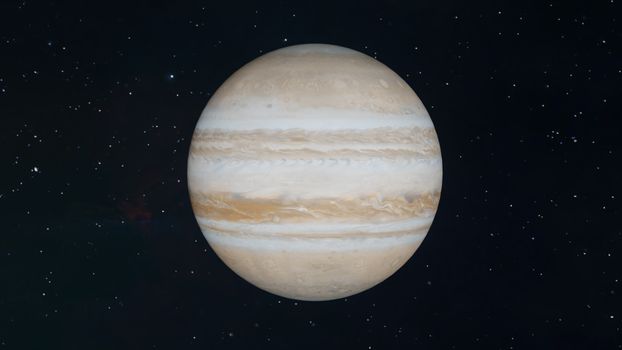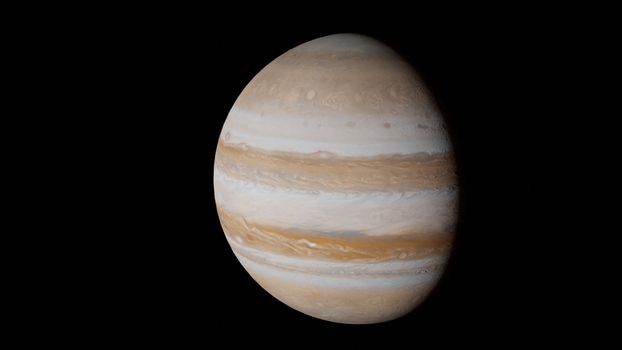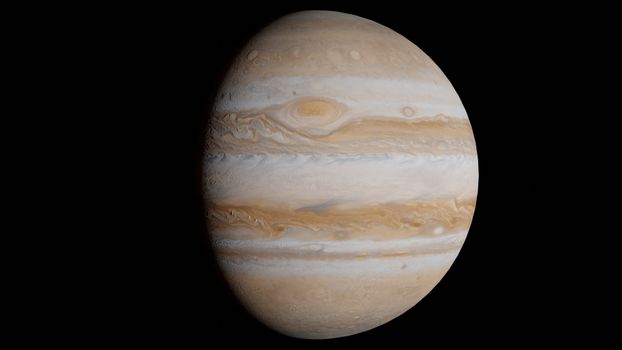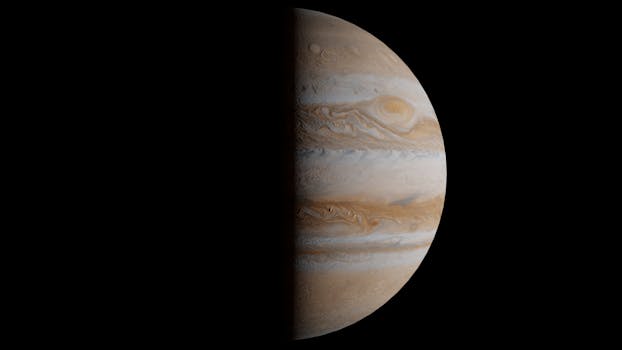
Jupiter, the largest planet in our solar system, is a world of extremes. Its swirling bands, powerful storms, and immense size make it stand apart from all the other planets. But what truly defines Jupiter’s environment is something you can’t see directly: the staggering changes in atmospheric pressure as you venture deeper into its vast, gaseous layers. Understanding how atmospheric pressure changes with depth on Jupiter not only reveals the planet’s dynamic nature, but also provides unique insights into gas giant formation, planetary science, and even the potential for future exploration.
Understanding Atmospheric Pressure on Jupiter
Atmospheric pressure is the force exerted by the weight of the atmosphere above a given point. On Earth, we measure this as 1 bar at sea level, which is about the pressure you feel standing on the beach. Jupiter, however, is a gas giant with no solid surface, and its atmosphere is thousands of kilometers deep, composed mostly of hydrogen and helium. Because of its enormous mass—over 318 times that of Earth—Jupiter’s gravity compresses its atmosphere to astonishing pressures as you go deeper.
At the very top of Jupiter’s atmosphere, the pressure is effectively zero, similar to outer space. As you descend, pressure increases rapidly, reaching Earth-like levels at a depth that scientists define as “1 bar”—the so-called reference level for planetary atmospheres. But that’s just the beginning. Descend further, and the pressure rises exponentially, crushing anything that dares to go deeper.
.png)
How Pressure Changes with Depth on Jupiter
Unlike planets with solid surfaces, Jupiter’s atmosphere does not have a well-defined bottom. Instead, the atmosphere simply gets denser and hotter the deeper you go, transitioning gradually from gas to liquid and possibly even to metallic hydrogen near the core.
The increase in pressure with depth on Jupiter is much steeper than on Earth. For example:
- At the cloud tops (0 bar), the pressure is negligible. - Descending to 1 bar, about 70 km below the visible cloud tops, you encounter pressure equal to Earth's surface. - At 10 bars, roughly 200 km deep, the pressure is 10 times that of Earth’s atmosphere. - By 1,000 bars, the pressure is 1,000 times Earth’s and temperatures reach over 1,600°C (2,900°F). - Pressures of over 2 million bars may be found near the planet’s core, where hydrogen is believed to become metallic.This means that every additional kilometer you descend brings a dramatic increase in pressure—far greater than the rate observed on Earth.
Comparing Jupiter’s Atmospheric Pressure to Other Planets
To appreciate how extreme Jupiter’s atmospheric pressure is, it helps to compare it with other planets in our solar system. The following table offers a snapshot of atmospheric pressures at various depths or altitudes on major planets.
| Planet | Surface or Reference Pressure (bars) | Pressure at 100 km Depth (bars) | Maximum Estimated Pressure (bars) |
|---|---|---|---|
| Earth | 1 (at sea level) | ~1.1 | 1 (at surface); increases in solid earth, not atmosphere |
| Venus | 92 | ~92 (surface is at 0 km) | 92 (surface); solid planet |
| Mars | 0.006 | ~0.006 | 0.006 (surface); solid planet |
| Jupiter | 1 (at ~70 km below cloud tops) | ~10 (at ~200 km) | >2,000,000 (near core) |
| Saturn | 1 (at ~60 km below cloud tops) | ~7 (at ~120 km) | ~1,000,000 (near core) |
As the table shows, Jupiter’s pressures are off the charts compared to other planets. While Venus is famous for its crushing surface pressure (92 bars), Jupiter’s pressures quickly surpass this at depths not far below its cloud tops.
The Science Behind Pressure Increase: Why Jupiter Is So Extreme
The reason Jupiter’s atmospheric pressure climbs so rapidly is a combination of its immense gravity and its vast, continuous layers of gas. Unlike Earth, where pressure is limited by the thinness of the atmosphere and the presence of a solid surface, Jupiter’s gases are compressed without a hard stop.
The planet’s gravity—2.5 times stronger than Earth’s—pulls its atmospheric gases inward, compressing them more and more with depth. This process is described by the hydrostatic equation, which relates pressure increase to the weight of the overlying atmosphere. On Jupiter, with its thick envelope of light gases, this equation leads to a dramatic rise in pressure.
Additionally, as hydrogen and helium are compressed, they behave differently from the gases we experience on Earth. At high enough pressures (over about 1.4 million bars), hydrogen is thought to become metallic, conducting electricity and possibly contributing to Jupiter’s powerful magnetic field. This transition is unique to gas giants and does not occur naturally on Earth.
Layers of Jupiter’s Atmosphere and Pressure Milestones
Jupiter’s atmosphere is layered, not only by composition but also by pressure and temperature. Scientists divide it into several key regions, each with distinctive characteristics:
- $1 This is where we see Jupiter’s famous cloud bands and storms, including the Great Red Spot. Temperatures hover around -145°C (-230°F). - $1 Here, ammonia clouds give way to deeper water clouds. The pressure and temperature increase rapidly, with temperatures rising above freezing. - $1 Water clouds disappear, and the hydrogen-helium mix becomes supercritical—a state where the distinction between gas and liquid blurs. - $1 At these depths, hydrogen atoms are pressed so tightly that they behave like metal, allowing electrons to flow freely.Each pressure milestone marks a drastic change not just in the physical state of the atmosphere, but also in its chemistry, temperature, and even its ability to conduct electricity.
Probing Jupiter’s Depths: What Spacecraft Have Taught Us
Humans have never sent a probe deep into Jupiter’s atmosphere, but missions like NASA’s Galileo and Juno have given us important clues. The Galileo probe, released in 1995, survived for just under an hour after plunging into Jupiter’s atmosphere, succumbing to pressures of about 22 bars (over 300 psi) and temperatures exceeding 150°C (302°F). At that point, the probe was only about 150 km below the cloud tops—a tiny fraction of the way toward Jupiter’s core.
The Juno spacecraft, orbiting Jupiter since 2016, uses remote sensing to infer conditions deeper in the atmosphere. By measuring gravitational and magnetic fields, and observing how radio waves travel through the planet, scientists can estimate pressure and temperature profiles down to thousands of kilometers. These findings suggest that Jupiter has a diffuse or “fuzzy” core enveloped by layers of metallic hydrogen, where pressures soar above 2 million bars.
Atmospheric Pressure and the Possibility of Exploration
The incredible increase in atmospheric pressure with depth is one of the main reasons why exploring Jupiter’s interior is so challenging. No current materials or technologies can withstand the millions of bars of pressure found deep inside Jupiter. Even robust spacecraft like the Galileo probe were destroyed long before reaching the most extreme depths.
Future exploration might rely on new approaches, such as remote sensing, advanced robotics, or even theoretical models based on laboratory experiments with hydrogen under high pressures. Understanding these pressures is crucial not only for planetary science but also for designing missions to other gas giants and for probing the mysteries of exoplanets outside our solar system.
Final Thoughts on Atmospheric Pressure and Jupiter’s Depths
Atmospheric pressure on Jupiter is a study in extremes. From near-vacuum at the outer edge to millions of bars near the core, Jupiter’s pressure gradient is unmatched by any other planet in our solar system. This immense range shapes everything about the planet—from the formation of its cloud bands to the behavior of hydrogen deep inside, and from its magnetic field to its potential for exploration.
As our technology advances and our curiosity grows, unlocking the secrets of Jupiter’s pressure profile will remain a frontier of planetary science. Each new discovery brings us closer to understanding not just Jupiter, but the very processes that shape worlds across the universe.