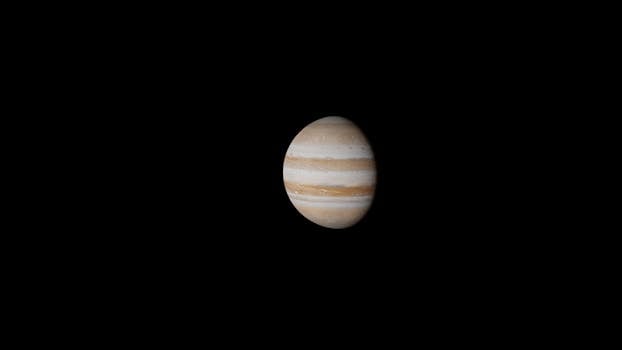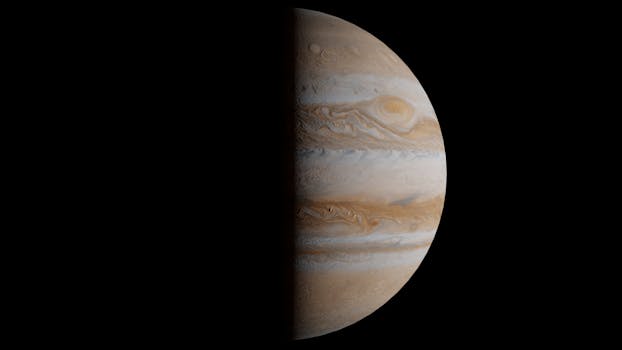
The formation of Jupiter, the largest planet in our solar system, continues to captivate the scientific community. Enshrouded in swirling clouds of mystery, Jupiter's origins are key to deciphering the broader narrative of our solar system's formation and the development of other planetary systems beyond our own. This article delves into the prevailing theories and hypotheses that attempt to unravel the enigmatic birth of this gas giant.
Composition and Initial Considerations Jupiter is predominantly composed of hydrogen and helium, the most plentiful elements in the cosmos. This composition strongly indicates that Jupiter was formed from the remnants of the solar nebula—the vast cloud of gas and dust that also gave birth to the Sun. This initial clue sets the stage for the two main theories regarding Jupiter's formation: the core accretion model and the disk instability model.
Core Accretion Model The core accretion model is widely accepted for explaining the formation of gas giants. It posits that Jupiter's birth began with the gradual coalescence of ice and rock particles within the solar nebula. These particles adhered to one another, amassing into a larger core through a process known as accretion. When this core attained a critical mass—about 10 to 20 times that of Earth—it exerted a substantial gravitational pull, drawing in the surrounding hydrogen and helium gas. The accretion of this gas rapidly inflated Jupiter to its enormous size, with the entire process taking a few million years.
.png)
Disk Instability Model Offering a contrasting perspective, the disk instability model suggests a more rapid formation process. According to this theory, the solar nebula experienced instabilities that caused it to break down into denser pockets of material. These pockets quickly collapsed under their own gravitational force, forming Jupiter-sized gas clumps that subsequently evolved into gas giant planets. This model implies that Jupiter could have formed within a mere thousand years—a significantly shorter timeframe compared to the core accretion model.
Comparative Analysis Both formation theories present compelling arguments but also face specific challenges. The core accretion model aligns well with the presence of rocky cores in gas giants and is further supported by the composition of meteorites found in our solar system. However, it does not adequately explain the formation of gas giants in colder, more distant regions from their stars, where gas accretion should be inefficient. Conversely, the disk instability model can justify the quick formation of gas giants in these remote areas but fails to account for the observed rocky cores.
The Role of Migration Adding another layer of complexity is the potential migration of Jupiter after its formation. Some theories propose that Jupiter may have originally formed closer to or further from the Sun than its present location. Its movement across the solar system, influenced by gravitational interactions with other planetary bodies or remnants of the solar nebula, likely had profound effects on the architectural development of our planetary neighborhood.
Insights from Exoplanetary Studies The ongoing discovery and study of exoplanets—planets orbiting stars beyond our Sun—also enrich our understanding of gas giant formation. Observations of "hot Jupiters," gas giants that orbit remarkably close to their stars, suggest that migratory behaviors observed in our solar system might be common across the universe. These findings help refine existing theories about planetary system evolution and the dynamic processes influencing gas giant formation and migration.
Looking Forward The quest to fully understand Jupiter's formation is an active and evolving field of research. Both the core accretion and disk instability models provide valuable frameworks, yet each has its limitations. As we enhance our technological capabilities and expand our knowledge through the study of exoplanets and other celestial phenomena, we edge closer to solving the mysteries of Jupiter's origins. This endeavor not only advances our comprehension of our own solar system but also illuminates the complex processes shaping other planetary systems throughout the galaxy.