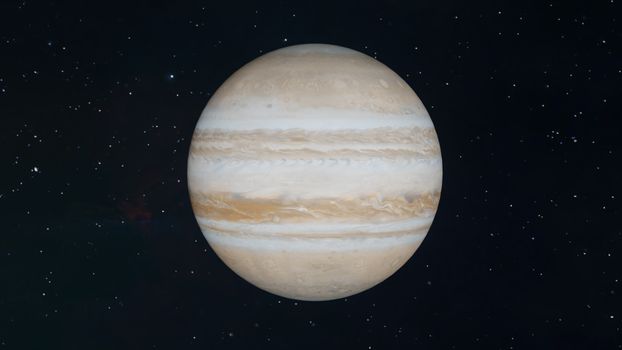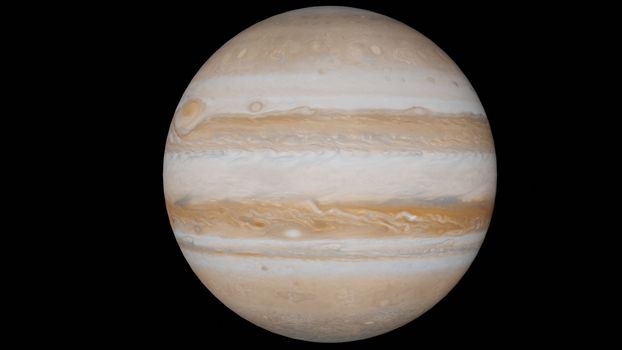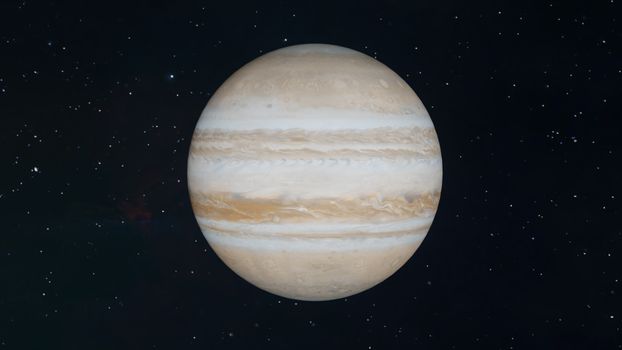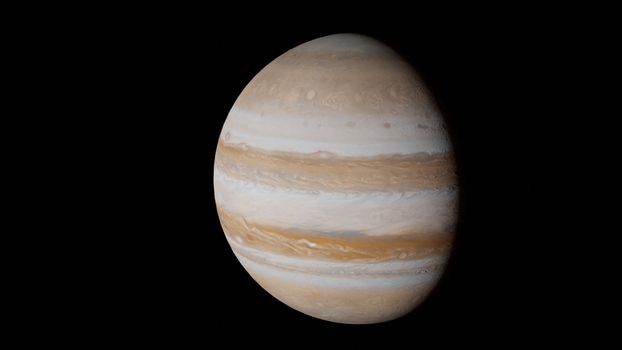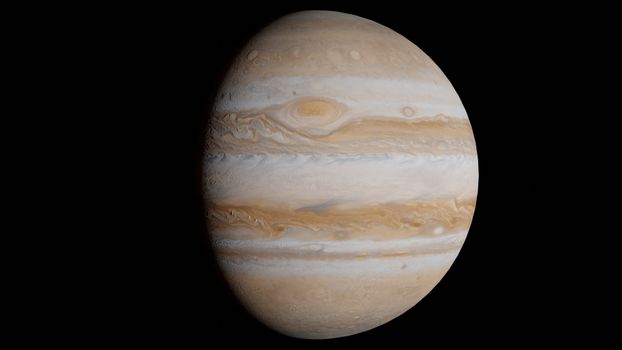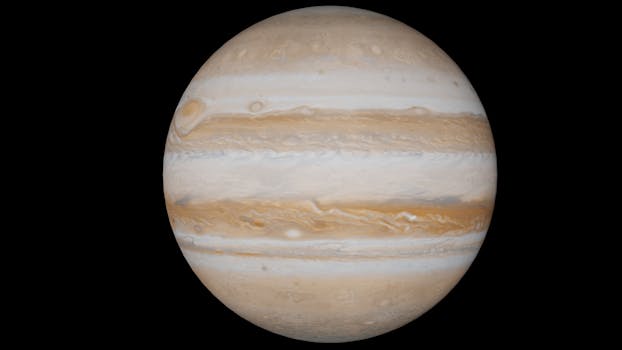
Jupiter stands as the Solar System’s largest planet, a colossal gas giant whose swirling clouds and intense storms have captivated astronomers for centuries. Yet beneath its striking bands and iconic Great Red Spot lies a chemical complexity scientists are only beginning to fully unravel. Over the past decade, a combination of space missions, advances in spectroscopy, and new computational models have dramatically updated our picture of Jupiter’s atmospheric composition. These latest insights are not only rewriting textbooks but also deepening our understanding of planetary formation, weather dynamics, and the potential for similar worlds beyond our solar system.
Unveiling Jupiter’s Atmosphere: The Role of Modern Technology
Jupiter’s immense distance from Earth and its thick veil of clouds have long challenged efforts to analyze its atmosphere. Early observations, limited by ground-based telescopes, could only resolve the most basic details. The real revolution began with spacecraft: NASA’s Galileo probe (1995), which dropped an atmospheric entry probe, and the Juno mission (launched 2011, orbiting since 2016) have provided unprecedented detail.
Juno’s suite of instruments, including the Microwave Radiometer (MWR) and the Jovian Infrared Auroral Mapper (JIRAM), have probed deep beneath the cloud tops, measuring temperature, ammonia, water, and more. Meanwhile, ground-based observatories like ALMA in Chile have contributed high-resolution spectra in previously inaccessible wavelengths.
.png)
These advances have revealed that Jupiter’s atmosphere is far from uniform, with dramatic variation in chemical abundances from the cloud tops down to depths of hundreds of kilometers. New computational models now integrate these data, helping explain Jupiter’s weather, colors, and even its formation history.
The Dominant Ingredients: Hydrogen, Helium, and More
At its core, Jupiter is a hydrogen-helium world. Approximately 89% of its atmosphere by volume is molecular hydrogen (H₂), with helium (He) making up about 10%. These proportions are remarkably similar to the primordial composition of the Sun, suggesting Jupiter formed early in solar system history from the same nebular material.
But the details are nuanced. Juno’s recent gravity measurements indicate that helium is not distributed evenly. Helium is depleted in the upper atmosphere (about 0.234 by mass, compared to 0.274 in the Sun), likely due to a slow “rain out” of helium droplets deeper into the planet, a process also observed in Saturn.
Beyond hydrogen and helium, trace components play outsized roles in Jupiter’s meteorology and colors. These include ammonia (NH₃), methane (CH₄), water vapor (H₂O), hydrogen sulfide (H₂S), and various hydrocarbons. Ammonia, for example, is now known to vary dramatically by latitude and depth, forming complex patterns that drive Jupiter’s distinctive weather belts.
Water on Jupiter: Surprising Abundance and Distribution
For decades, the amount of water in Jupiter’s atmosphere was a major mystery. The Galileo probe’s descent in 1995 found surprisingly little water, but it later became clear the probe had entered an unusually dry region.
Juno’s MWR, capable of peering hundreds of kilometers below the cloud tops, has radically changed the picture. Data published in 2020 and 2021 show that water constitutes about 0.25% of Jupiter’s atmosphere by mass near the equator—about three times the solar abundance of oxygen. The water is not evenly distributed; there are “wet” and “dry” regions, likely tied to deep atmospheric circulation, storms, and even ancient impacts.
This high oxygen content has implications for Jupiter’s origin, suggesting it formed from icy planetesimals rich in water, rather than from gas alone. Understanding Jupiter’s water content also helps refine models of gas giant formation in other planetary systems.
Complex Chemistry: Ammonia, Methane, and Sulfur Compounds
Ammonia is another key player in Jupiter’s atmospheric drama. Juno’s microwave observations have mapped ammonia concentrations at different depths, revealing immense plumes rising from the deep interior and sinking “dry” zones. These upwellings fuel powerful storms and contribute to the formation of ammonia ice clouds, which appear as white zones in Jupiter’s bands.
Methane, while less variable, is present at about 0.3% by volume—more than in Saturn or Uranus. Methane contributes to Jupiter’s weak greenhouse effect and is involved in photochemical reactions that produce complex hydrocarbons, some of which tint the planet’s clouds red and brown.
Sulfur chemistry is also vital. Spectroscopic data show hydrogen sulfide (H₂S) is present in the deeper atmosphere. When it reacts with ammonia, it forms ammonium hydrosulfide (NH₄SH), a key cloud-forming compound thought to be responsible for Jupiter’s brownish colors.
Comparing Jupiter’s Atmosphere to Other Gas Giants
How does Jupiter’s atmosphere compare to its fellow giants Saturn, Uranus, and Neptune? While all four are hydrogen-helium worlds, their chemical “fingerprints” differ in telling ways. Ammonia and water are more abundant and visible in Jupiter, while methane dominates the blue-green colors of Uranus and Neptune.
Here is a comparison table illustrating some of the key differences:
| Gas Giant | Hydrogen (%) | Helium (%) | Ammonia (NH₃) | Methane (CH₄) | Water (H₂O) |
|---|---|---|---|---|---|
| Jupiter | ~89 | ~10 | Variable, high in plumes | ~0.3% | ~0.25% by mass (equator) |
| Saturn | ~96 | ~3 | Present, less variable | ~0.45% | Lower, less well measured |
| Uranus | ~83 | ~15 | Trace | ~2% | Unknown, very low |
| Neptune | ~80 | ~19 | Trace | ~2% | Unknown, very low |
This diversity reflects differences in formation history, distance from the Sun, and the abundance of ices and rocky material available to each planet during its formation.
Trace Gases and Unexpected Discoveries
Juno and ground-based telescopes have revealed a menagerie of trace gases and exotic chemistry in Jupiter’s atmosphere, some of which were unexpected. For example:
- Phosphine (PH₃): Detected at parts-per-billion levels, phosphine is a “marker” of turbulent mixing from deeper layers, since it cannot survive long in the upper atmosphere. - Noble Gases: Galileo probe measured argon, krypton, and xenon at 2-3 times solar abundance—clues to the materials that built Jupiter. - Complex Hydrocarbons: Ultraviolet sunlight triggers reactions in methane, producing compounds like ethane, acetylene, and benzene that influence the colors and haze layers. - Water Ice and Ammonia Snow: High-resolution imaging has revealed layers of water ice clouds and even ammonia “snow” falling at the tops of major storms.Intriguingly, Juno’s instruments have also found evidence for lightning-generated compounds such as hydrogen cyanide (HCN), showing that Jupiter’s thunderstorms are chemically active and may even produce prebiotic molecules.
What Jupiter’s Atmosphere Tells Us About Solar System History
Every new insight into Jupiter’s atmosphere feeds into a larger story: how the Solar System formed and evolved. The high abundance of water and noble gases suggests Jupiter accumulated icy planetesimals from the outer protoplanetary disk, while its depletion of helium points to interior processes still ongoing today.
These findings help solve puzzles about why our Solar System is arranged the way it is, and why Jupiter’s formation may have protected Earth from excessive comet bombardment by sweeping up debris. They also inform the search for “Jupiter-like” exoplanets in other star systems, where atmospheric composition is a vital clue to potential habitability.
Furthermore, studying Jupiter’s complex chemistry—especially the interplay of water, ammonia, and sulfur—lays the groundwork for understanding atmospheres on a variety of worlds, from brown dwarfs to super-Earths.
Final Thoughts: The Evolving Picture of Jupiter’s Atmospheric Composition
The last decade has transformed our understanding of Jupiter’s atmosphere from a simple hydrogen-helium envelope to a dynamic, multi-layered system rich in chemistry and structure. With Juno’s mission extended through at least 2025, and new telescopes like the James Webb Space Telescope (JWST) adding their eyes, the coming years promise even deeper insights.
Already, these findings are challenging old ideas and pointing toward new questions: How does Jupiter’s atmospheric chemistry influence its deep interior and magnetic field? Are there surprises yet to be found in its turbulent clouds? And what can Jupiter teach us about planets orbiting distant stars?
As technology continues to advance, one thing is clear: Jupiter’s atmosphere remains a cosmic laboratory, revealing secrets not just about itself, but about planets everywhere.