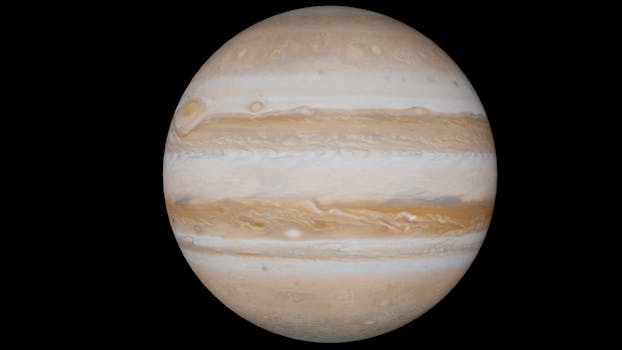
Jupiter, the largest planet in our solar system, has always fascinated astronomers and space enthusiasts alike. Its massive size and swirling gas clouds are visible even from Earth. However, the most intriguing aspects of Jupiter are perhaps its poles—the north and south poles. Unlike Earth, which has relatively mild polar weather patterns, Jupiter's poles are host to some of the most extreme weather conditions in the solar system.
Understanding Jupiter's Poles
Jupiter's poles are unlike those of any other planet in our solar system. They are characterized by their large, persistent cyclonic storms, which are similar in appearance to the planet's famous Great Red Spot. These storms are much larger than Earth's hurricanes and can last for many years.
.png)
The poles are also unique in their appearance. While the rest of Jupiter is covered in colorful bands of clouds, the poles are mottled with swirling cyclones and dark, open regions. This difference in appearance is due to the different atmospheric conditions at the poles compared to the equatorial region.
Exploring the Poles: Missions and Observations
Several missions have provided us with detailed information about Jupiter's poles. The most notable of these is NASA's Juno spacecraft, which has been orbiting Jupiter since 2016. Juno's unique polar orbit has allowed it to capture unprecedented views of the poles, revealing the intricate details of the cyclonic storms and the atmospheric dynamics.
Another significant source of information has been the Hubble Space Telescope, which has observed Jupiter for over two decades. Hubble's high-resolution images have helped scientists understand the atmospheric conditions and changes over time at Jupiter's poles.
Advantages and Disadvantages of Current Approaches
The use of spacecraft like Juno has several advantages. It provides direct, in-situ observations of the poles, which are crucial for understanding the atmospheric dynamics and composition. However, these missions are costly and require extensive planning and time to yield results.
On the other hand, observations from telescopes like Hubble offer a more cost-effective way to study Jupiter's poles. They can observe the planet over long periods, providing valuable data on atmospheric changes. However, these observations are limited to what can be seen from outside the planet's atmosphere.
Practical Examples of Polar Phenomena
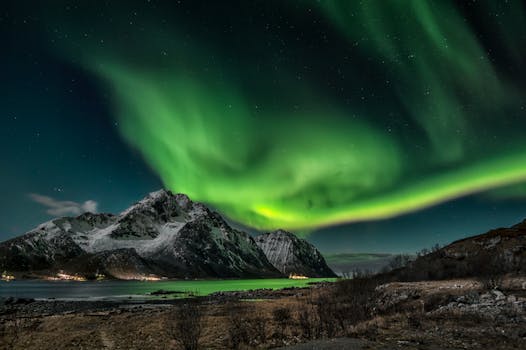
One of the most striking examples of polar phenomena on Jupiter is the presence of auroras. Jupiter's auroras are hundreds of times more powerful than Earth's and are caused by the interaction of the solar wind with the planet's magnetic field. These auroras are not only spectacular to observe but also provide key insights into the planet's magnetic environment and its interaction with the solar wind.
Conclusion and Call to Action
Jupiter's north and south poles offer a unique window into the dynamic processes that govern the largest planet in our solar system. The extreme conditions and massive cyclonic storms provide challenges to our understanding of planetary atmospheres. Continued observation and exploration of Jupiter's poles are essential to unravel these mysteries.
For those intrigued by the mysteries of our solar system, following the updates from missions like Juno and observations from telescopes such as Hubble can provide ongoing insights into these distant worlds. Engaging with space agencies' websites and relevant online platforms can enhance understanding and appreciation of these fascinating celestial phenomena.