Deciphering the Dichotomy: Jupiter's Northern and Southern Lights
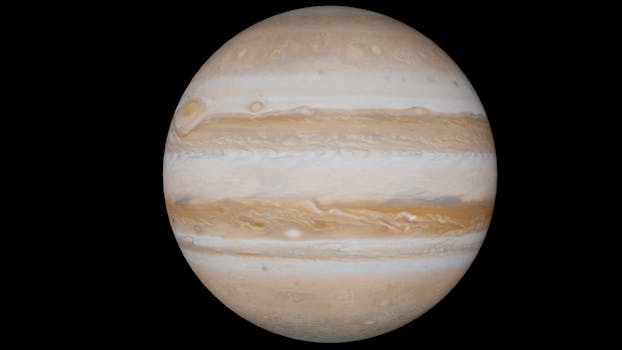
Jupiter, the largest planet in our solar system, is a swirling giant of gas and storms. But perhaps even more captivating than its iconic Great Red Spot are its dazzling auroras—spectacular displays of light dancing around its poles. Unlike Earth’s auroras, which already delight skywatchers, Jupiter’s northern and southern lights are in a class of their own: massive, powerful, and, most intriguingly, distinct from one another. Scientists have long been captivated by the differences between Jupiter’s northern and southern auroras, seeking to decipher what drives their unique behaviors and why they aren’t mirror images. In this article, we’ll explore this fascinating dichotomy, delving into the science, the discoveries, and what these glowing lights reveal about Jupiter’s extraordinary environment.
The Nature of Auroras: Jupiter vs. Earth
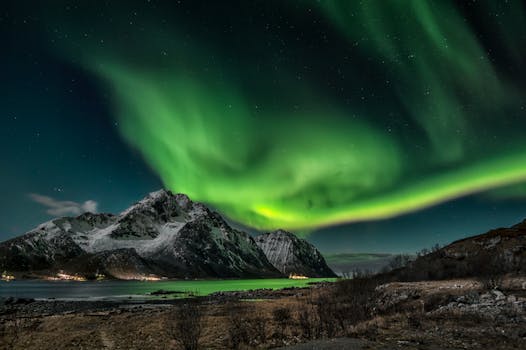
On Earth, auroras—known as the Northern and Southern Lights—are created when charged particles from the Sun interact with our planet’s magnetic field and atmosphere. These particles funnel toward the magnetic poles, exciting atmospheric gases and producing shimmering curtains of green, red, and purple. Jupiter’s auroras, however, are a different beast.
Jupiter’s magnetic field is about 20,000 times stronger than Earth’s, and its magnetosphere is the largest structure in the solar system, stretching up to 7 million kilometers toward the Sun and almost reaching Saturn’s orbit on the night side. Jupiter’s main auroral ovals are permanent features, visible even when solar wind activity is low, and are primarily powered by the planet’s rapid 10-hour rotation and by its volcanic moon Io, which spews a ton (literally) of ionized material into Jupiter’s magnetosphere every second.
.png)
Unlike Earth, where auroras are brief and sporadic, Jupiter’s auroras are persistent and powerful, emitting hundreds of gigawatts of ultraviolet energy—enough to power all of human civilization many times over.
North vs. South: The Auroral Dichotomy
At first glance, one might expect Jupiter’s northern and southern auroras to be mirror images—a result of the planet’s symmetrical magnetic field. However, observations from the Hubble Space Telescope, the Juno spacecraft, and ground-based telescopes have revealed a surprising reality: Jupiter’s auroras are strikingly asymmetrical.
Key differences include:
1. $1: The northern aurora is generally more stable and structured, showing a consistent oval shape. The southern aurora, in contrast, is more dynamic and irregular, often displaying sudden flares and bright spots. 2. $1: The main auroral oval in the north is offset from the planet’s rotational pole by about 10 degrees, while the southern oval is closer to its pole. This offset affects how incoming charged particles spiral into the atmosphere. 3. $1: Studies have shown the southern aurora can be up to 50% brighter than its northern counterpart during certain periods, especially when influenced by solar wind events. 4. $1: The southern aurora appears more sensitive to variations in the solar wind, while the northern aurora is more dominated by Jupiter’s internal processes, such as its rotation and Io’s volcanic activity.To illustrate these differences, here’s a comparative overview:
| Feature | Northern Aurora | Southern Aurora |
|---|---|---|
| Stability | More stable, consistent oval | More dynamic, irregular shape |
| Location (Pole Offset) | ~10° from rotational pole | Near rotational pole |
| Typical Brightness | Lower, more constant | Can be up to 50% brighter |
| Response to Solar Wind | Less sensitive | More sensitive |
| Main Energy Source | Jupiter’s rotation, Io’s plasma | Jupiter’s rotation, solar wind |
Magnetic Field Mysteries: Why Aren’t They Alike?
A key factor driving the dichotomy between Jupiter’s auroras is the planet’s magnetic field. While early models assumed Jupiter’s field was a simple dipole (like a bar magnet), more recent data from the Juno spacecraft reveal a field with unexpected complexities.
Juno’s magnetometer has mapped out regions of the field that are lopsided and twisted. In the north, the field lines are more spread out and the field is weaker, leading to a more diffuse and stable aurora. In the south, field lines are packed closer together and the magnetic field is stronger, funneling particles into a smaller area but with more intensity—hence the brighter, more variable auroras.
Additionally, the interaction between the magnetic field and Io’s plasma torus—a donut-shaped ring of charged particles from the moon Io—differs between the hemispheres. In the north, the torus appears to stabilize the aurora, while in the south, its influence is less pronounced, making the southern lights more susceptible to external factors like the solar wind.
The Role of Io: Jupiter’s Volcanic Powerhouse
Io, the innermost of Jupiter’s Galilean moons, is the most volcanically active body in the solar system, erupting over 400 active volcanoes at any given time. These eruptions inject more than 1,000 kilograms of ionized sulfur and oxygen into Jupiter’s magnetosphere every second, forming the so-called Io plasma torus.
This torus acts as a conveyor belt, feeding energy into Jupiter’s magnetic field and powering the main auroral ovals. However, the effect of Io’s plasma is not distributed equally between the north and south poles.
Research published in 2017 using data from Juno and Hubble found that the northern aurora’s main oval is tightly linked to Io’s orbit, displaying periodic brightenings each time Io’s plasma torus rotates past. The southern aurora, meanwhile, is less synchronized with Io’s orbit, suggesting different magnetic field geometries and plasma interactions at play.
Juno’s Revelations: Unraveling the Asymmetry
NASA’s Juno spacecraft, which arrived at Jupiter in 2016, has been pivotal in revealing the dichotomy of Jupiter’s auroras. Juno carries a suite of instruments capable of observing auroras in ultraviolet, infrared, and visible light, as well as measuring the planet’s magnetic and electric fields.
Some of Juno’s discoveries include:
- $1: In 2017, Juno detected periodic X-ray flares in the northern aurora every 11 minutes. The southern aurora’s X-rays, however, appeared erratic and lacked a regular period. - $1: Juno data indicates that the northern aurora is powered mainly by Jupiter’s rapid rotation (about 45,000 km/h at the equator) and the internal dynamics of the planet’s magnetosphere, while the southern aurora shows more pronounced bursts when high-speed solar wind streams hit Jupiter. - $1: Infrared observations revealed that the auroras penetrate up to hundreds of kilometers into the upper atmosphere, heating it to over 700°C (1,300°F)—significantly hotter than surrounding regions.These findings underscore just how complex and asymmetric Jupiter’s polar light shows are, and why understanding them is crucial for unlocking the planet’s broader mysteries.
What Jupiter’s Auroras Reveal About the Planet
The dichotomy of Jupiter’s auroras is more than just a scientific curiosity—it’s a window into the planet’s deep workings. By studying these polar lights, scientists are able to:
- $1: The differences in auroral behavior provide clues about the underlying structure of the magnetic field, which in turn informs models of Jupiter’s interior and core. - $1: Jupiter’s auroras are a testbed for space weather phenomena, offering insights that help predict solar wind impacts across the solar system. - $1: Many giant exoplanets likely have strong magnetic fields and auroras. Understanding Jupiter helps astronomers interpret observations of other worlds. - $1: The intense energy of Jupiter’s auroras drives complex chemical reactions in the upper atmosphere, producing new molecules and affecting the planet’s overall climate.In essence, deciphering the dichotomy of Jupiter’s auroras helps us piece together the puzzle of not just Jupiter, but the fundamental processes shaping many worlds.
Conclusion: The Ongoing Quest to Understand Jupiter’s Polar Lights
Jupiter’s auroras are among the most powerful and enigmatic phenomena in the solar system. Far from being simple mirror images, the planet’s northern and southern lights are distinctly different—shaped by a magnetic field that is anything but symmetrical, driven by a volcanic moon, and fueled both by Jupiter’s own immense energies and the influence of the Sun.
Thanks to ongoing missions like Juno and advances in telescope technology, we are closer than ever to unraveling the secrets of these cosmic light shows. Every new discovery not only deepens our understanding of Jupiter, but also illuminates the broader workings of planetary magnetospheres, space weather, and the dynamic dance between planets and their stars.
As we continue to decipher Jupiter’s auroral dichotomy, we are reminded that even in our own solar system, the universe has mysteries yet to be solved, and wonders yet to be fully appreciated.