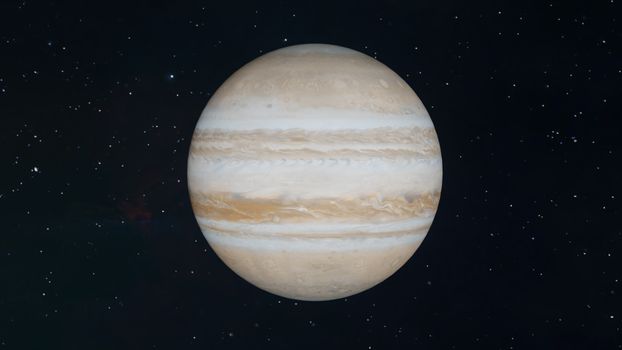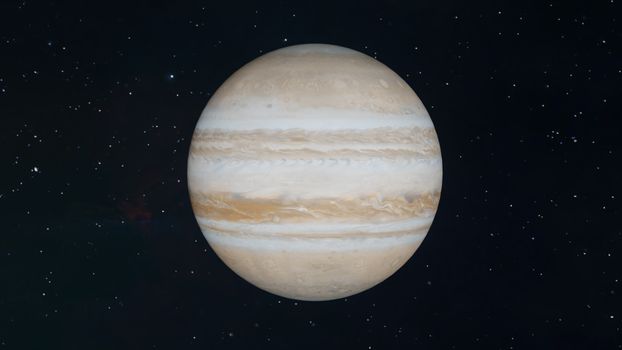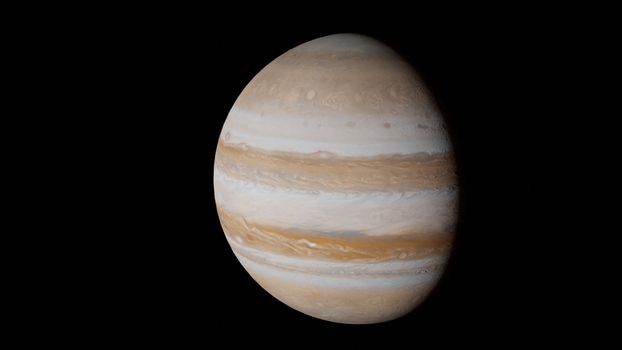
Jupiter, the king of the planets, commands attention not just for its immense size but for the violent, mesmerizing storms that swirl across its banded atmosphere. These tempests, some larger than Earth itself, rage with a ferocity and persistence unlike anything found on our own planet. From the iconic Great Red Spot to lesser-known, rapidly evolving vortices, the storms of Jupiter provide scientists with invaluable insights into planetary weather systems, atmospheric chemistry, and the dynamics of gas giants. In this article, we delve deep into the great storms of Jupiter: their origins, mechanics, evolution, and what they reveal about the most dynamic planet in our solar system.
The Legacy of the Great Red Spot: Jupiter’s Most Famous Storm
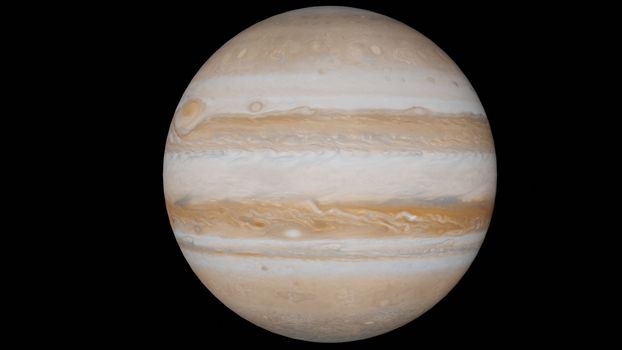
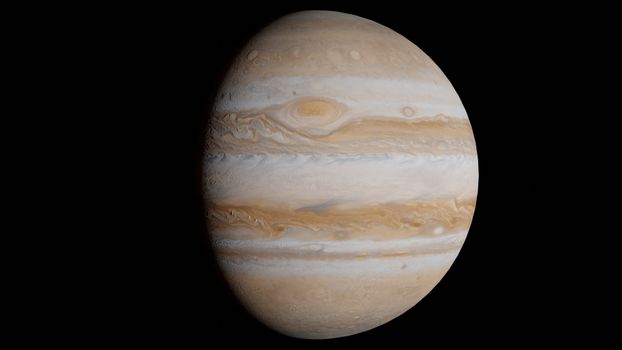
No discussion of Jupiter's storms can begin without the Great Red Spot (GRS), the enormous, crimson-hued oval that has captured the imagination of astronomers for centuries. First observed as early as 1665 by Giovanni Cassini, this anticyclonic storm has persisted for at least 350 years—making it the most enduring storm in the solar system.
The GRS is truly gigantic. As of 2024, the storm measures around 16,000 kilometers (10,000 miles) across—large enough to fit Earth inside with room to spare. At its peak size in the late 19th century, estimates suggest it was over 40,000 kilometers (25,000 miles) wide. Winds within the Great Red Spot can reach speeds exceeding 430 km/h (270 mph), far surpassing the most violent hurricanes on Earth.
.png)
But the Great Red Spot is changing. Over the past century, it has been shrinking and becoming more circular. Modern observations from spacecraft like Juno and Hubble have shown that its color, size, and even its internal dynamics are in flux. Scientists believe that the GRS’s persistence is due to Jupiter’s lack of solid surface, reducing friction that would otherwise slow it down, as well as the constant feeding of smaller storms and atmospheric flows.
Storm Mechanics: What Drives Jupiter’s Turbulent Weather?
Jupiter’s storms are powered by a unique set of conditions that differ radically from those on Earth. The planet is composed primarily of hydrogen and helium, with trace amounts of ammonia, methane, and water vapor. This composition, combined with Jupiter’s rapid rotation—one day lasts just under 10 hours—creates extraordinary atmospheric dynamics.
The planet’s powerful internal heat engine is a key factor. Jupiter emits about 1.6 times more energy than it receives from the Sun, due to residual heat left over from its formation. This internal heat rises through the deep atmosphere, driving convection and fueling storms. Additionally, Jupiter’s rapid spin causes its atmosphere to divide into multiple bands, each moving at different speeds and directions. The boundaries between these bands, known as jet streams, are hotspots for storm formation, as massive vortices can be spun up by shear forces.
Unlike Earth’s water-based storms, Jupiter’s tempests often involve ammonia and other exotic chemicals. Lightning has been detected in Jupiter’s clouds—sometimes thousands of times more powerful than terrestrial lightning—indicating vigorous vertical mixing and intense storm cells.
Jupiter’s Dynamic Storm Types: Beyond the Great Red Spot
While the Great Red Spot is Jupiter’s most famous storm, the planet hosts a diverse array of tempests, each with distinct characteristics:
1. White Ovals: First appearing in the 1930s, these large, pale, oval-shaped storms are anticyclones, like the GRS, but smaller in scale. Some have persisted for decades, merging and splitting in complex dances. 2. Brown Barges: These dark, elongated features are found in Jupiter’s northern and southern equatorial belts. They are thought to be regions of relatively clear air, exposing deeper, warmer layers, and are often precursors to larger storm systems. 3. Thunderstorms and Convective Plumes: Jupiter’s atmosphere frequently erupts with clusters of thunderstorms, visible as bright flashes and towering cloud plumes. Some of these can reach heights of over 100 kilometers (62 miles) above Jupiter’s cloud tops. 4. Oval BA (“Red Spot Junior”): Discovered in 2000 after three white ovals merged, Oval BA turned reddish in 2006 and now rivals the GRS in color and structure, though it is about half its size.The table below compares some of Jupiter’s major storm systems and their properties:
| Storm Name | Type | Approx. Size (km) | Windspeed (km/h) | Lifespan |
|---|---|---|---|---|
| Great Red Spot | Anticyclonic Oval | 16,000 | 430 | 350+ years |
| Oval BA | Anticyclonic Oval | 8,000 | 400 | 20+ years |
| White Ovals | Anticyclonic Oval | 4,000–12,000 | 300–400 | Decades |
| Brown Barges | Low-Pressure Systems | 3,000–7,000 | 200–300 | Years |
| Convective Storms | Thunderstorms | ~1,000 | Up to 600 | Days–Weeks |
Spacecraft Perspectives: Unlocking Storm Secrets
Our understanding of Jupiter’s storms has been revolutionized by a fleet of spacecraft sent to observe the giant planet. The Pioneer and Voyager missions in the 1970s provided the first close-up images of Jupiter’s turbulent atmosphere, but it was the Galileo orbiter (1995-2003) and the Juno mission (arriving in 2016) that revealed the true complexity of its storms.
Juno, in particular, has transformed our knowledge. By orbiting closer to Jupiter than any previous mission, Juno’s suite of instruments has peered deep into the clouds using microwave, infrared, and visible-light sensors. Juno data showed that the Great Red Spot extends at least 300 kilometers (186 miles) below the cloud tops—much deeper than previously thought. Juno also discovered that cyclones cluster around both poles in striking geometric patterns, with the north pole hosting nine cyclones and the south pole six, arranged almost like petals around a central vortex.
Jupiter’s storms are not static. Juno has observed the GRS flaking off pieces of itself, while new, unexpected storm systems have appeared and vanished within months. Each mission, including Hubble’s regular monitoring from Earth orbit, adds new layers to the story of Jupiter’s atmospheric drama.
How Jupiter’s Storms Compare With Earth’s Hurricanes
The scale and power of Jupiter’s storms dwarf anything found on Earth. While both planets experience atmospheric vortices, the underlying physics and outcomes are dramatically different.
Earth’s largest hurricanes (or typhoons) rarely exceed 1,500 kilometers (900 miles) in diameter and last a few days to a few weeks. Peak wind speeds in the strongest storms are around 300 km/h (185 mph). In contrast, Jupiter’s storms can be tens of thousands of kilometers wide and endure for centuries. The absence of a solid surface means there is little friction to slow storms down, and Jupiter’s immense atmospheric depth allows for much taller and more persistent systems.
Another key difference lies in the energy source. Earth’s hurricanes are fueled by the evaporation of ocean water, which releases latent heat. Jupiter’s storms, by contrast, are powered primarily by internal heat and the planet’s rapid rotation, with only a minor contribution from sunlight.
Implications: What Jupiter’s Storms Teach Us About Planetary Science
Studying Jupiter’s storms is about more than understanding one planet—it offers a window into atmospheric processes across the universe. The persistence, scale, and complexity of these storms challenge our models of fluid dynamics and weather. Insights gained from Jupiter help refine our knowledge of gas giant planets, both in our solar system and beyond.
For example, the study of exoplanets—planets orbiting other stars—often reveals gas giants similar to Jupiter. Observing how storms behave on Jupiter informs predictions about weather on these distant worlds. Additionally, the chemistry of Jupiter’s storms sheds light on the planet’s formation and evolution, providing clues to the early history of our solar system.
Jupiter’s storms also offer parallels to atmospheric phenomena on Saturn, Neptune, and even the gas giants discovered elsewhere in the galaxy. By comparing these systems, scientists can better understand how different compositions, temperatures, and rotational speeds affect planetary weather on a grand scale.
Final Reflections: The Ever-Changing Face of Jupiter’s Storms
Jupiter’s storms are a testament to the power and complexity of planetary atmospheres. From the ancient, iconic Great Red Spot to the fleeting thunderstorms that flash and fade across its cloud tops, Jupiter’s tempests provide an endless source of fascination and scientific discovery. As new missions like the European Space Agency’s JUICE (Jupiter Icy Moons Explorer) prepare to journey to the Jovian system, our understanding of these storms will only deepen. Each new image and data point adds to the dynamic portrait of a planet where storms are not just weather—they are defining features of a world forever in motion.