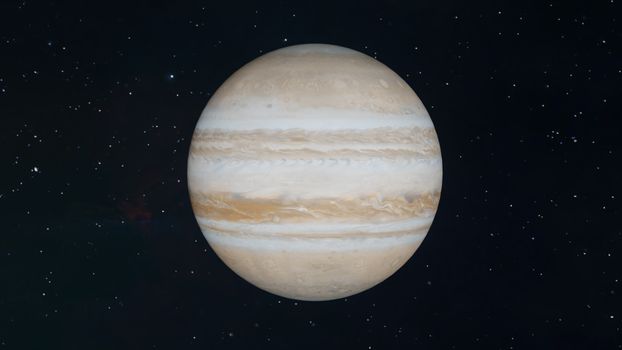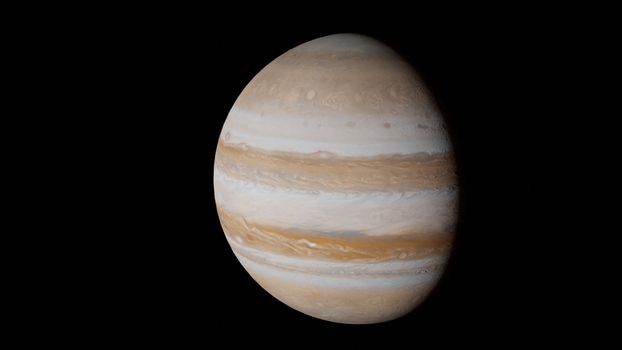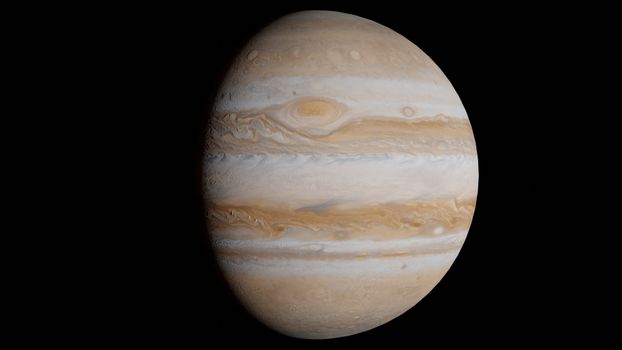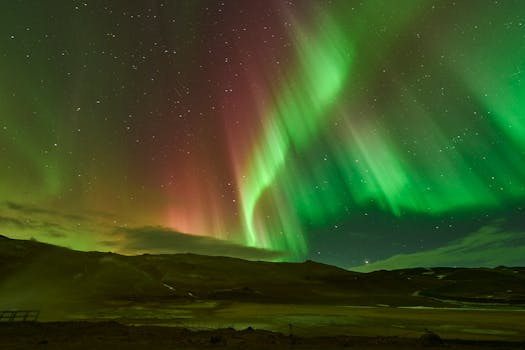
Jupiter’s dazzling auroras are the most powerful light shows in the solar system, but beneath their beauty lies a puzzle that has intrigued scientists for decades: why do Jupiter’s northern and southern lights behave so differently? This dichotomy—marked differences in appearance, timing, and underlying physics—offers a window into the planet’s turbulent magnetic environment and the dynamic interplay between Jupiter, its moons, and the solar wind. In this article, we’ll unravel the mystery of Jupiter’s auroral dichotomy, exploring what makes its northern and southern lights unique, how researchers study them, and what these differences reveal about the gas giant and its place in our solar system.
The Science Behind Jupiter’s Auroras
Auroras, known on Earth as the northern and southern lights, occur when charged particles collide with a planet’s atmosphere, causing atoms to emit light. On Jupiter, these auroras are far more intense than those on Earth. This is largely due to Jupiter’s magnetic field, which is the strongest of any planet in the solar system—about 20,000 times more powerful than Earth’s.
Unlike Earth’s auroras, which are primarily driven by the solar wind, Jupiter’s are fueled mainly by its own rotation and its volcanic moon Io. Io hurls more than a ton of sulfur dioxide into space every second, creating a plasma torus that interacts with Jupiter’s magnetic field. As these charged particles spiral along magnetic field lines into Jupiter’s poles, they slam into the upper atmosphere, generating auroral ovals that can be thousands of kilometers wide.
.png)
Jupiter’s auroras are visible in ultraviolet (UV), infrared (IR), and even X-ray wavelengths, with emissions reaching up to 100 terawatts—enough energy to power all of Earth’s cities many times over. Yet, despite their grandeur, the most intriguing aspect is not their size or brightness, but how their behaviors defy symmetry between the northern and southern hemispheres.
Northern vs. Southern Lights: Unveiling the Dichotomy
When scientists first observed Jupiter’s auroras using the Hubble Space Telescope and spacecraft like Juno, they expected the northern and southern lights to mirror each other. After all, the planet’s magnetic field is broadly similar at both poles. However, observations have consistently shown striking differences in their shape, timing, and intensity.
For example, the northern aurora often appears as a stable, well-defined oval, while the southern aurora exhibits a more chaotic and fragmented structure. At times, bursts of X-ray flares in the north occur every 27 minutes, while the south may pulse with a different rhythm—or not at all.
What causes these differences? One clue lies in the tilt of Jupiter’s magnetic field. Unlike Earth, where the magnetic field is only slightly offset from the planet’s rotational axis, Jupiter’s magnetic dipole is tilted by about 10 degrees relative to its spin. Moreover, the magnetic field itself is lopsided, with the strongest magnetic “hot spot” located in the northern hemisphere. This asymmetry means that charged particles are funneled into the two poles differently, generating distinct auroral patterns.
Comparative Overview: Northern vs. Southern Auroras
To better visualize the dichotomy, here’s a comparative table of key features observed in Jupiter’s northern and southern auroras:
| Feature | Northern Aurora | Southern Aurora |
|---|---|---|
| Shape | Stable, oval-shaped | Fragmented, variable |
| Brightness | Generally brighter, more intense | Dimmer, with occasional bright spots |
| Pulsation Timing | Regular (e.g., 27-min X-ray bursts) | Irregular or different periodicities |
| Magnetic Field Strength | Stronger at pole | Weaker and more offset |
| Influence of Moons | Strongly affected by Io’s plasma torus | Less direct influence from Io |
These differences are not just academic—they challenge our understanding of planetary magnetospheres and the fundamental processes that drive auroras throughout the solar system.
The Role of Jupiter’s Moons and Magnetosphere
A major factor in the dichotomy is the relationship between Jupiter’s moons, especially Io, and the planet’s magnetic environment. Io’s volcanic eruptions feed vast amounts of plasma into Jupiter’s magnetosphere, creating a “flux tube” of charged particles that connects directly to the planet’s magnetic field.
Interestingly, this flux tube primarily affects the northern aurora. Observations show that when Io passes through certain regions of Jupiter’s magnetic field, the northern aurora responds with a bright spot or a moving footprint, while the southern aurora’s response is less pronounced or absent. This difference may be due to the orientation of the magnetic field and the geometry of the flux tube, which is more favorably aligned with the north.
Furthermore, Jupiter’s rapid rotation—one day on Jupiter lasts just under 10 hours—generates powerful currents known as the “magnetodisk,” which can distort the magnetic field and influence how plasma is funneled toward each pole. These complex interactions help explain why the northern and southern auroras can behave so differently, even though they are created by similar physical processes.
Cutting-Edge Observations: Juno and Hubble’s Revelations
The mystery of Jupiter’s auroral dichotomy has come into sharper focus thanks to coordinated observations from NASA’s Juno spacecraft and the Hubble Space Telescope. Juno, which arrived at Jupiter in 2016, carries a suite of instruments designed to probe the planet’s magnetic field, auroras, and atmosphere in unprecedented detail.
One of Juno’s most significant findings is the discovery that the energy and timing of X-ray bursts in the northern and southern auroras are often completely uncorrelated. In a 2017 study, researchers found that the northern aurora pulsed every 27 minutes, while the southern aurora’s pulses were irregular and sometimes missing altogether. This “out of sync” behavior suggests that external factors, such as changes in the solar wind or instability within Jupiter’s magnetosphere, can affect each pole independently.
Additionally, Hubble’s ultraviolet imaging has revealed that the auroral ovals can expand, contract, and even produce spiral shapes, further highlighting the dynamic and asymmetric nature of Jupiter’s polar light shows. These high-resolution observations are helping scientists build 3D models of Jupiter’s magnetic field, offering new insights into the mechanisms behind the auroral dichotomy.
What Jupiter’s Auroral Dichotomy Tells Us About Planetary Science
Studying the differences between Jupiter’s northern and southern auroras is more than just an exercise in planetary aesthetics. It has profound implications for our understanding of how magnetic fields, atmospheres, and external forces interact on giant planets.
For example, the asymmetric behavior of Jupiter’s auroras provides clues about the internal structure of its magnetic field. Unlike Earth’s relatively simple dipole, Jupiter’s field is complex and may even contain “magnetic patches” or regions of reversed polarity, especially in the southern hemisphere. This has led scientists to reconsider models of how planetary dynamos (the processes that generate magnetic fields) operate in gas giants.
Moreover, the study of Jupiter’s auroras offers a natural laboratory for understanding exoplanets—giant worlds orbiting other stars. Many of these exoplanets are thought to have strong magnetic fields and close-in moons, suggesting that auroral dichotomies may be common throughout the galaxy. By deciphering the puzzle of Jupiter’s lights, we gain valuable insights into the workings of planetary systems far beyond our own.
Final Reflections: Deciphering Jupiter’s Auroral Puzzle
The dichotomy between Jupiter’s northern and southern lights is one of the most fascinating mysteries in planetary science. Far from being mirror images, these auroras are shaped by a complex interplay of magnetic fields, moon-driven plasma flows, and solar influences. Thanks to cutting-edge missions like Juno and powerful telescopes like Hubble, researchers are beginning to unravel the underlying physics that makes each pole unique.
As we continue to study Jupiter’s auroras, we are not only learning about the planet itself but also expanding our understanding of how magnetic environments work across the cosmos. Jupiter’s lights remind us that even in the most familiar corners of our solar system, nature still holds remarkable secrets waiting to be discovered.