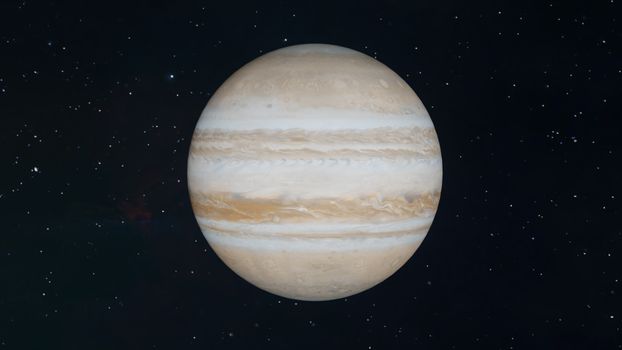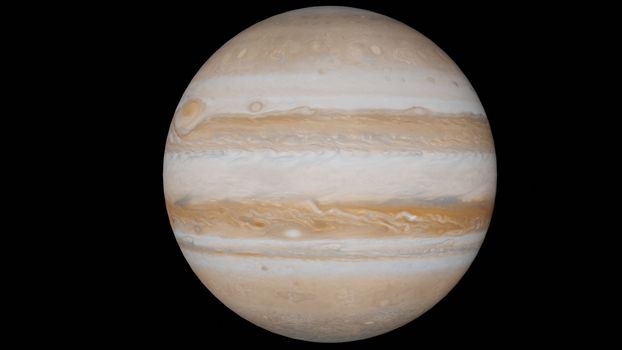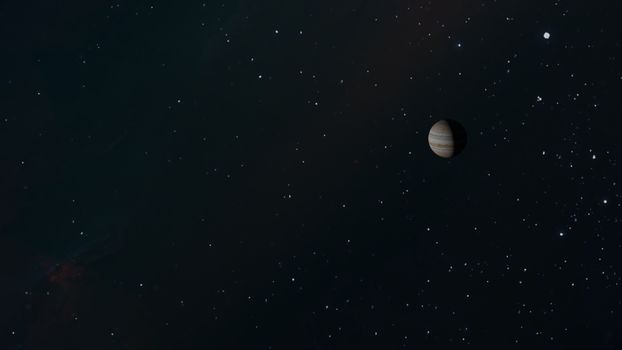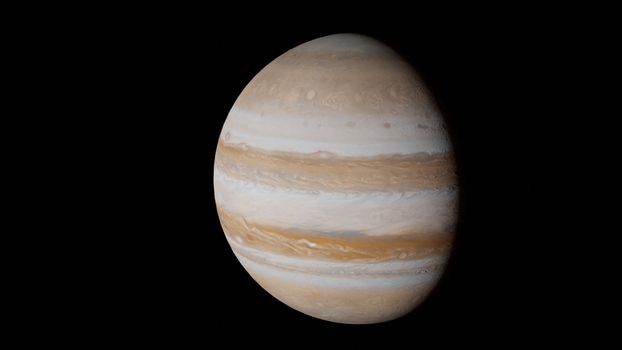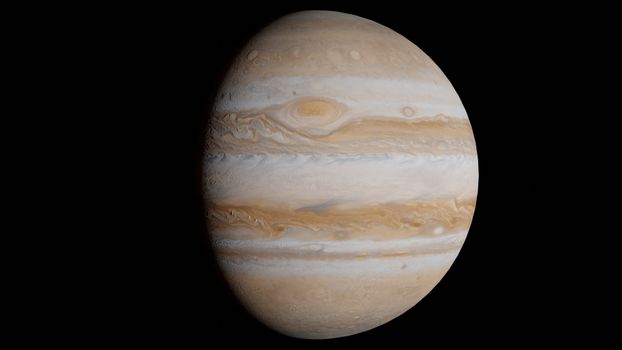
Jupiter, the largest planet in our solar system, is well-known for its colossal storms, powerful magnetosphere, and its four Galilean moons: Io, Europa, Ganymede, and Callisto. These moons, discovered by Galileo Galilei in 1610, have captivated astronomers for centuries and have been the focus of countless studies and space missions. However, Jupiter’s gravitational pull commands a far more extensive entourage. As of 2024, astronomers have confirmed at least 95 moons orbiting the gas giant, many of which remain obscure to all but the most dedicated planetary scientists. These lesser known moons, often small and irregular, are critical to understanding the history and dynamism of the Jovian system. This article takes you on a detailed exploration of Jupiter’s lesser known moons—those beyond the Galilean giants—and reveals their significance, mysteries, and the insights they offer into planetary science.
The Expanding Family: Discovering Jupiter’s Hidden Moons
While Io, Europa, Ganymede, and Callisto steal the spotlight, Jupiter’s fainter moons have a fascinating discovery story. Before the 20th century, only the four Galilean moons were known. The fifth moon, Amalthea, was not spotted until 1892 by Edward Emerson Barnard. The pace of discovery accelerated dramatically with advances in telescope technology and digital imaging. By the turn of the 21st century, astronomers began to uncover dozens of previously undetected moons—most of them tiny, irregularly shaped bodies, some less than a kilometer across.
The current tally of confirmed Jovian moons stands at 95 (as of June 2024). Of these, over 60 are considered “irregular moons,” distinguished by their distant, eccentric, and often retrograde orbits. The discovery process frequently involves painstaking analysis of faint, moving dots among the stars in deep-sky images, followed by years of tracking to confirm a stable orbit. In 2018 alone, astronomers announced the discovery of 12 new moons, including a tiny oddball called Valetudo, which orbits in the opposite direction to most other irregular moons.
.png)
Classification: Regular vs. Irregular Moons
To make sense of Jupiter’s vast moon population, astronomers classify them into two main categories: regular and irregular moons.
Regular moons, such as the Galilean moons and smaller inner moons like Amalthea and Thebe, have nearly circular orbits that lie close to Jupiter’s equatorial plane. They are believed to have formed alongside Jupiter from the primordial disk of gas and dust that surrounded the young planet.
In contrast, the irregular moons are typically much smaller and have highly elliptical, inclined, or even retrograde orbits. Most of these moons are likely captured asteroids or Kuiper Belt objects that were snared by Jupiter’s immense gravity long after the planet formed. Many travel at great distances from the planet—some over 30 million kilometers away.
Here is a comparative overview of the two main classes:
| Feature | Regular Moons | Irregular Moons |
|---|---|---|
| Orbital Shape | Nearly circular | Elliptical, often highly eccentric |
| Orbital Inclination | Low (close to Jupiter’s equator) | High (can be highly tilted; often retrograde) |
| Distance from Jupiter | Close (within 2 million km) | Far (up to 30 million km or more) |
| Origin | Formed in situ with Jupiter | Captured objects (asteroids/Kuiper Belt) |
| Number (2024) | 8 (including Galilean and inner moons) | 87+ |
| Size Range | From 85 km (Amalthea) to 5,268 km (Ganymede) | ~1 km to 70 km |
Highlighting Key Lesser Known Moons
Jupiter’s lesser known moons may be small, but they each have unique stories:
1. $1: Discovered in 1892, Amalthea is the largest of the inner regular moons after the Galilean group, measuring about 250 km at its longest. Its irregular, potato-like shape and reddish color suggest a composition rich in sulfur or iron oxide. Amalthea’s proximity to Jupiter exposes it to intense radiation and tidal forces. 2. $1: The largest family among the irregular moons, the Himalia group includes Himalia, Elara, Lysithea, and Leda. Himalia itself is the fifth largest Jovian moon at about 140 km in diameter. These moons share similar prograde orbits and likely originated from a single parent body that broke apart. 3. $1: Carme, with a diameter of about 46 km, leads a clan of retrograde moons with similar orbits. The group’s pinkish color hints at a D-type asteroid origin, possibly from the outer solar system. 4. $1: Pasiphae, at approximately 60 km wide, is the largest in a group of distant, retrograde moons with highly eccentric orbits. The group’s diversity in color and composition suggests multiple capture events. 5. $1: Discovered in 2016 and announced in 2018, Valetudo is a true oddity—just about 1 km across, it orbits prograde but crosses paths with the outer retrograde moons, making collisions over astronomical timescales highly probable.These moons, while dim and distant, provide crucial clues about the processes shaping the outer solar system.
The Scientific Significance of Jupiter’s Smaller Moons
At first glance, Jupiter’s tiny, misshapen moons might seem inconsequential. However, each one acts as a window into cosmic history. Here’s why researchers are fascinated by them:
- $1: The irregular moons are believed to be remnants of ancient bodies captured by Jupiter’s gravity billions of years ago. Studying their orbits, compositions, and groupings helps scientists reconstruct the dynamic environment of the early solar system. - $1: The grouping of irregular moons into families (such as the Himalia, Carme, and Ananke groups) indicates that many are fragments of larger parent bodies shattered by collisions. The size distribution and orbital characteristics offer data on the frequency and nature of these violent events. - $1: Understanding how Jupiter captures and retains these small bodies informs models of planetary defense and the movement of asteroids and comets. Jupiter’s gravity not only shepherds its moons but also acts as a cosmic shield, deflecting or capturing objects that might otherwise threaten the inner planets, including Earth. - $1: The diversity of Jupiter’s moons, especially the irregulars, allows scientists to compare them with captured moons around Saturn, Uranus, and Neptune, revealing patterns and anomalies in moon formation and capture across the solar system.Challenges in Observing and Studying Lesser Known Moons
Despite their scientific value, observing Jupiter’s minor moons is no small feat. Most are less than 5 km across and have albedos (reflectivities) of just 0.04 to 0.07, making them thousands of times fainter than the Galilean moons. Their great distances from Jupiter and the glare of the planet itself further complicate detection.
Tracking these objects requires sustained, high-precision imaging over months or years. For example, the discovery of Valetudo was only confirmed after repeated observations spanning two years. Many proposed moons have been “lost” due to insufficient data to determine their orbits, and some are only rediscovered decades later.
Spacecraft missions have yet to visit any of these smaller moons up close. Most of what we know comes from ground-based telescopes, such as the Subaru Telescope in Hawaii and the Canada-France-Hawaii Telescope, as well as from the Hubble Space Telescope. Advanced digital surveys, like the Dark Energy Camera (DECam) in Chile, have greatly increased the rate of discovery in recent years.
The Future of Exploration: What’s Next for Jupiter’s Hidden Moons?
Interest in Jupiter’s minor moons is rising as technology and exploration ambitions grow. NASA’s Europa Clipper (scheduled for launch in 2024) and ESA’s Jupiter Icy Moons Explorer (JUICE) will focus on the Galilean moons but may gather incidental data on smaller satellites as they traverse the Jovian system. There is growing discussion in the planetary science community about dedicated missions to explore these tiny worlds, possibly with small, targeted probes or flybys.
On the ground, next-generation telescopes like the Vera C. Rubin Observatory, with its wide-field, high-sensitivity imaging, are expected to discover dozens more Jovian moons. Some astronomers predict Jupiter could possess more than 100 natural satellites, making it the most “moon-rich” planet in the solar system.
As the census of Jupiter’s moons expands, so too does our understanding of the solar system’s complexity and history.
Final Thoughts: Why Jupiter’s Lesser Known Moons Matter
Though they may lack the grandeur of Io’s volcanoes or Europa’s icy plains, Jupiter’s lesser known moons are far from insignificant. Each is a cosmic time capsule, preserving secrets from the earliest days of the solar system. Their varied orbits, compositions, and groupings tell stories of ancient collisions, captures, and dynamic interactions in the outer reaches of our planetary neighborhood.
By studying these small, dim, and distant worlds, scientists piece together the grand narrative of planetary formation, migration, and evolution. As technology advances and our curiosity grows, the hidden moons of Jupiter will continue to offer new surprises, reminding us that even in the solar system’s shadows, there is much to discover.