Introduction
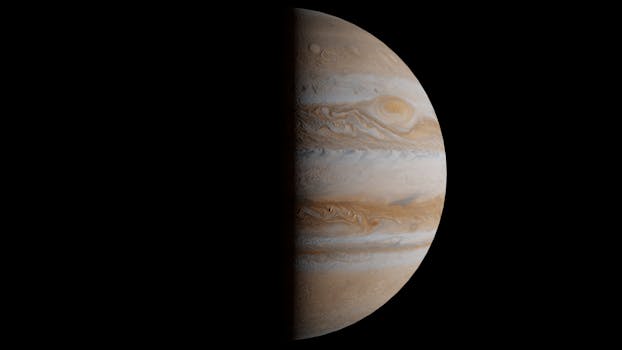
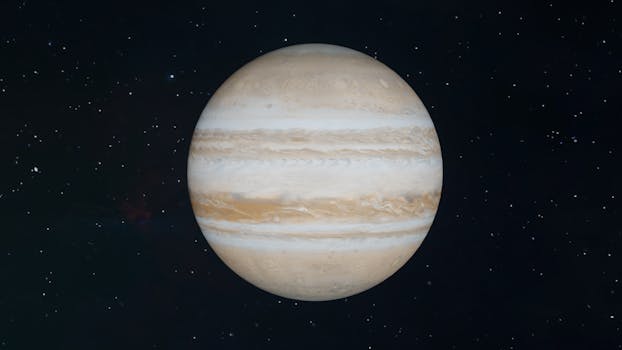
Jupiter is not only the giant of our solar system but also the lord of moons, boasting an impressive entourage of 79 known moons. Among these, the Galilean moons — Io, Europa, Ganymede, and Callisto — are particularly captivating due to their large sizes, distinctive physical features, and intriguing potential to harbor life. Discovered by Galileo Galilei over four centuries ago, these moons continue to be a hotbed of scientific research and exploration.
Discovery and General Characteristics
.png)
In 1610, Galileo Galilei revolutionized our understanding of the cosmos by discovering the four largest moons of Jupiter, now known as the Galilean moons. Observations made through his rudimentary telescope revealed distinct points of light around Jupiter, proving that not all celestial bodies orbited the Earth. This discovery provided key support for the Copernican model of the solar system, which posits that the Earth and other planets orbit the Sun.
- Io: Closest to Jupiter, Io is the most geologically active body in the solar system. Its surface is dotted with hundreds of volcanoes, some of which are capable of shooting plumes of sulfur and sulfur dioxide up to 500 kilometers into space.
- Europa: Covered by a shell of ice, Europa is famous for its subsurface ocean, which might contain more than twice the water of all Earth's oceans combined. This makes it a prime candidate in the search for extraterrestrial life.
- Ganymede: The largest moon in the solar system, Ganymede is larger than the planet Mercury. It has its own magnetic field and shows signs of possessing a subsurface ocean.
- Callisto: The outermost of the four, Callisto's surface is heavily cratered and ancient, a visible record of events from the early solar system.
Scientific Importance and Research
The varied landscapes and subsurface oceans of the Galilean moons make them key targets in the study of planetary geology and potential habitats for life. Europa, with its icy crust potentially covering a global ocean, is of particular interest for astrobiology. NASA and the European Space Agency (ESA) have missions planned to further explore these moons, particularly focusing on the ice-covered Europa and the giant Ganymede.
Advantages and Disadvantages of Missions to the Galilean Moons
Sending missions to these distant moons is fraught with challenges, including high radiation levels from Jupiter's magnetosphere and the significant distance from Earth. However, the scientific payoff promises to be worth the effort, potentially answering fundamental questions about the solar system's formation and the existence of life beyond Earth.
Practical Examples of Research and Exploration
Historical missions such as the Galileo orbiter have provided much of the current knowledge about the physical characteristics and environments of the Galilean moons. More recently, the Juno mission, which began in 2016, has been studying Jupiter in detail and offering further glimpses into the characteristics of its moons. Upcoming missions, such as NASA's Europa Clipper and ESA's JUICE, are expected to deliver even more detailed insights.
Conclusion and Future Prospects
The exploration of the Galilean moons is not just about understanding distant celestial bodies; it also enhances our understanding of Earth and its place in the universe. As these moons hold the clues to the conditions of early solar system formation, they might also hold the secrets to life's potential ubiquity in the cosmos. The coming decades promise to be exciting as new missions provide deeper insights into these mysterious worlds, continuing to expand the frontiers of our knowledge and imagination.