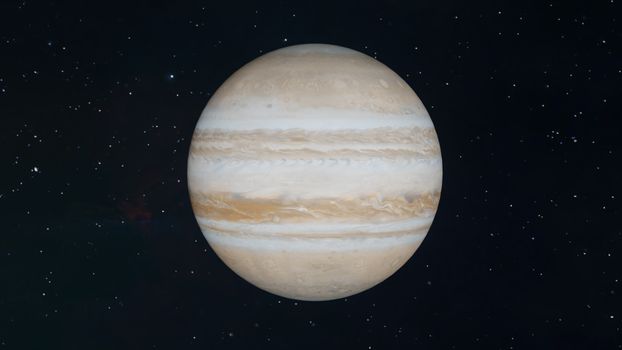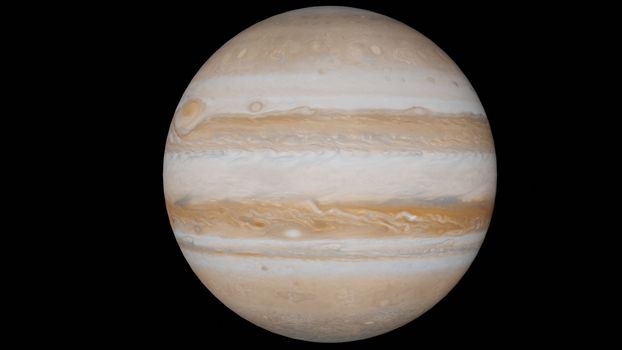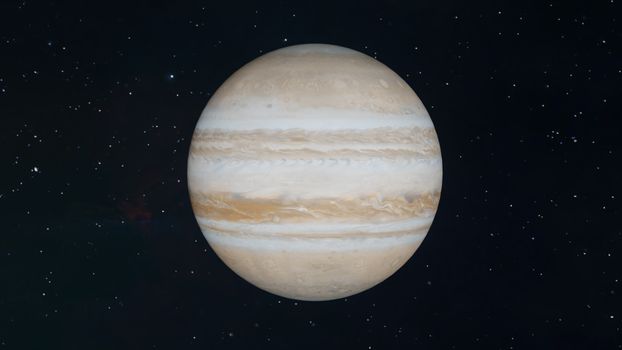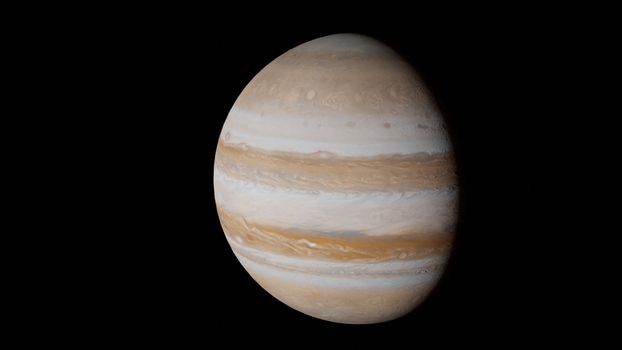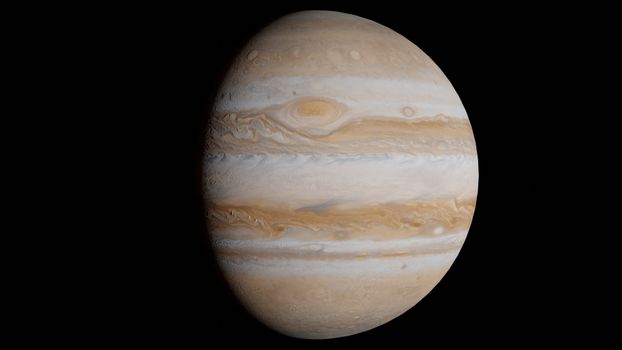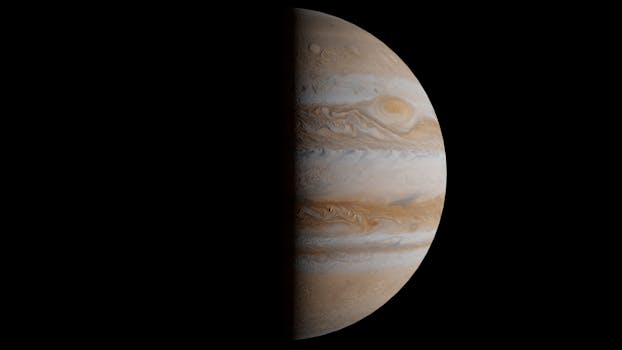
Jupiter is more than just the solar system’s largest planet—it is a cosmic king presiding over a retinue of more than 90 known moons. These moons, ranging from volcanic hellscapes to icy worlds concealing hidden oceans, have captivated astronomers for centuries. Yet, it’s only in recent decades that we’ve begun peeling back the layers of mystery shrouding these Jovian satellites. The secrets hidden by Jupiter’s moons—especially its four largest, known as the Galilean moons: Io, Europa, Ganymede, and Callisto—are transforming our understanding of planetary science and the potential for life beyond Earth. From volcanic eruptions to subsurface oceans, here’s what these enigmatic worlds have revealed—and what they’re still hiding.
The Galilean Moons: Four Worlds, Infinite Mysteries
In 1610, Galileo Galilei’s crude telescope revealed four specks of light orbiting Jupiter. Today, we know these as Io, Europa, Ganymede, and Callisto—the Galilean moons. Each is a world unto itself, with unique features and secrets that have made them prime targets for spacecraft and scientific study.
Io is the solar system’s most volcanically active body, its surface constantly reshaped by eruptions that spew sulfur and ash. Europa, slightly smaller than Earth’s moon, is sheathed in ice and likely harbors a vast, salty ocean beneath. Ganymede, the largest moon in the solar system, boasts its own magnetic field—a feature unique among moons. Callisto, heavily cratered and ancient, holds clues to the early solar system.
.png)
Together, these moons present a natural laboratory for studying geology, magnetism, and the possibilities of life. The diversity between them is startling—and the differences are more than skin-deep.
| Moon | Diameter (km) | Main Feature | Key Secret |
|---|---|---|---|
| Io | 3,643 | Volcanic Activity | Active volcanoes reshaping the surface |
| Europa | 3,121 | Ice Shell | Possible subsurface ocean |
| Ganymede | 5,268 | Largest Moon | Intrinsic magnetic field |
| Callisto | 4,821 | Heavily Cratered | Oldest surface in solar system |
Io: The Volcanic Powerhouse
Io is a world of extremes. Its surface is painted in shades of yellow, red, and white, the result of sulfur and sulfur dioxide from relentless volcanic eruptions. NASA’s Voyager and Galileo missions revealed more than 400 active volcanoes—some of which blast material hundreds of kilometers above the surface.
But what powers this volcanic fury? The answer lies in Jupiter’s immense gravity. As Io orbits the planet, it is continually stretched and squeezed by tidal forces—a process called tidal heating. This frictional energy melts the moon’s interior, fueling constant volcanic activity.
Io’s volcanoes are not just dramatic—they’re unique. For example, the volcano Loki Patera is the most powerful in the solar system, with eruptions releasing more heat than all of Earth’s volcanoes combined. In 1997, an eruption at Loki was so powerful it temporarily increased Io’s brightness as seen from Earth.
Another secret: Io’s thin atmosphere is made mostly of sulfur dioxide, and it constantly collapses and reforms as the moon moves through Jupiter’s shadow. This dynamic environment challenges our understanding of planetary atmospheres and the interaction between moons and their parent planets.
Europa: The Ocean World and the Search for Life
While Io dazzles with fire, Europa intrigues with the promise of water. Its surface is a fractured shell of ice, crisscrossed by dark streaks and dotted with relatively few craters—evidence of a young and active surface. But what lies beneath is even more compelling: Strong evidence suggests that Europa harbors a global ocean of liquid water, possibly up to 100 kilometers deep, kept warm by tidal heating.
The Hubble Space Telescope has detected signs of water vapor plumes erupting from Europa’s surface, hinting at exchanges between the ocean below and the icy crust above. These plumes could offer a direct window into the subsurface ocean, making Europa one of the solar system’s most promising places to search for extraterrestrial life.
Scientists believe Europa’s ocean may contain more than twice the water of all Earth’s oceans combined. And with a rocky seafloor and possible hydrothermal vents, conditions could be ripe for life—not unlike the ecosystems found around Earth’s deep-sea vents.
NASA’s upcoming Europa Clipper mission, set to launch in the mid-2020s, aims to investigate these mysteries. It will carry sophisticated instruments to analyze the surface, subsurface, and any plumes—potentially uncovering signs of habitability, or even life.
Ganymede: The Giant with a Magnetic Heart
Ganymede, larger than Mercury and all other moons in the solar system, is a true giant. It is the only moon known to generate its own magnetic field, a discovery made by NASA’s Galileo spacecraft in the 1990s. This field creates auroras near Ganymede’s poles—dancing lights akin to Earth’s northern and southern lights.
The source of Ganymede’s magnetic field is believed to be a partially liquid iron-nickel core. The presence of such a core suggests a complex internal structure, which might include layers of ice and possibly a subsurface ocean, similar to Europa’s.
Ganymede’s surface is a patchwork of dark, heavily cratered regions and lighter, younger grooved terrains. These grooves are likely the result of tectonic forces and cryovolcanism—volcanic activity involving water or other volatiles instead of molten rock.
In 2021, scientists using the Hubble Space Telescope confirmed the presence of water vapor in Ganymede’s atmosphere, created when ice on the surface sublimates under sunlight. This adds another layer of intrigue to an already mysterious world.
Callisto: An Ancient Relic Guarding Solar System History
Callisto, the outermost Galilean moon, appears at first glance to be the least remarkable. Its surface is ancient and heavily cratered, with no signs of tectonic activity or resurfacing in the last 4 billion years. Yet, this very stasis makes Callisto invaluable to scientists.
Because Callisto’s surface has remained largely unchanged, it preserves a record of impacts and conditions dating back to the early solar system. Studying its craters and composition provides a window into the era when planets and moons were still forming.
Beneath its battered exterior, Callisto may also hide a secret: magnetic readings suggest the presence of a subsurface ocean, though less certain than Europa’s or Ganymede’s. If confirmed, Callisto would become the third Galilean moon with a hidden ocean, raising fascinating questions about the prevalence of water—and potentially life—around Jupiter.
Beyond the Big Four: Hidden Secrets of Lesser-Known Jovian Moons
While the Galilean moons steal the spotlight, Jupiter’s family includes dozens of smaller moons—each with its own story. For example, Amalthea, the fifth-largest moon, is a reddish, irregular body that orbits close to Jupiter. Its surface appears to be a loose jumble of ice and rock, and it contributes dust to Jupiter’s faint ring system.
Other small moons, like Thebe and Metis, are believed to be captured asteroids, their irregular shapes and retrograde orbits hinting at tumultuous histories. Some of these moons may have originated in the outer solar system and been ensnared by Jupiter’s gravity.
In 2018, astronomers discovered 12 new moons around Jupiter, bringing the total count above 90. Among them is Valetudo, which orbits in the opposite direction to many others—raising the possibility of future collisions and ongoing dynamism in Jupiter’s moon system.
The Hidden Influence of Jupiter’s Moons on the Solar System
The secrets of Jupiter’s moons don’t just shed light on these worlds themselves—they also illuminate broader mysteries of planetary formation and evolution. For example, the tidal interactions that heat Io and Europa may have analogues in exoplanetary systems, shaping the habitability of distant worlds. The presence of multiple ocean worlds around Jupiter raises the tantalizing possibility that such environments are common in the galaxy.
Jupiter’s moons have also played a crucial role in developing our understanding of gravity, orbits, and resonance. For example, the orbital dance between Io, Europa, and Ganymede—called the Laplace resonance—keeps their orbits stable and their interiors warm.
Finally, studying Jupiter’s moons helps us prepare for future exploration. The technological and scientific challenges of probing Europa’s ocean or landing on Io’s volatile surface are immense—but overcoming them will open new frontiers in our quest to understand the solar system and our place within it.
Unlocking the Secrets: What the Future Holds for Jupiter’s Moons
The mysteries hidden by Jupiter’s moons are far from fully revealed. Upcoming missions, such as NASA’s Europa Clipper and the European Space Agency’s JUICE (Jupiter Icy Moons Explorer), are poised to transform our understanding in the coming decade. These spacecraft will orbit, fly by, and scrutinize the Galilean moons with advanced instruments, searching for signs of life, mapping their surfaces, and probing their interiors.
Meanwhile, ground-based telescopes and future missions may take aim at Jupiter’s lesser-known moons, unraveling their origins and relationships with the giant planet. As we continue to explore, each new discovery adds a piece to the puzzle of Jupiter’s complex, dynamic system.
The secrets hidden by Jupiter’s moons are not just scientific curiosities—they are keys to understanding the processes that shaped our solar system and, possibly, the emergence of life itself.