Jupiter’s Storms: An Analytical Overview of the Solar System’s Most Powerful Weather
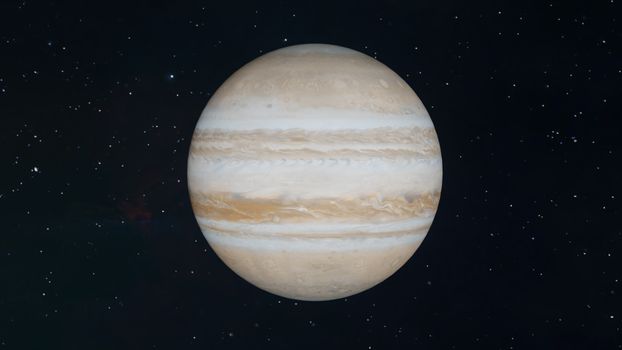
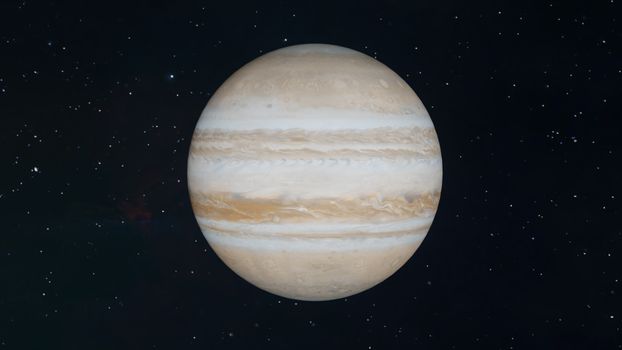
Jupiter, the largest planet in our solar system, is a world of extremes. Towering clouds, swirling belts, and some of the most powerful storms known to science make its atmosphere a dynamic laboratory for planetary weather. From the iconic Great Red Spot to countless smaller tempests, Jupiter’s storms have fascinated astronomers for centuries. But what makes Jupiter’s storms so unique, and what have recent missions revealed about their origins, structure, and evolution? This analytical overview dives deep into the planet’s turbulent atmosphere, examining the science behind its storms, their impact on planetary science, and what they teach us about weather across the solar system.
The Nature of Jupiter’s Storms: Scale and Structure
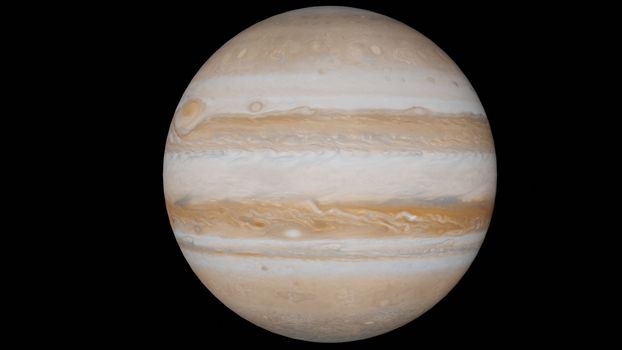
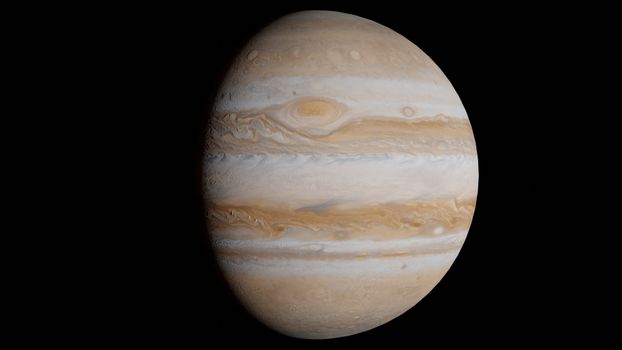
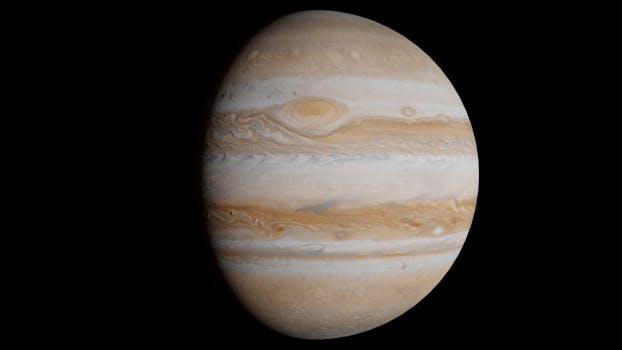
Jupiter’s storms are not simply scaled-up versions of Earth’s hurricanes; they are fundamentally different phenomena, both in formation and magnitude. The most famous of these is the Great Red Spot (GRS), a colossal anticyclonic storm that has raged for at least 350 years. The GRS spans roughly 16,350 kilometers in width as of 2023—large enough to engulf the entire Earth. Winds within this storm can reach speeds exceeding 430 km/h (267 mph), vastly surpassing the most powerful terrestrial hurricanes, which top out near 300 km/h (186 mph).
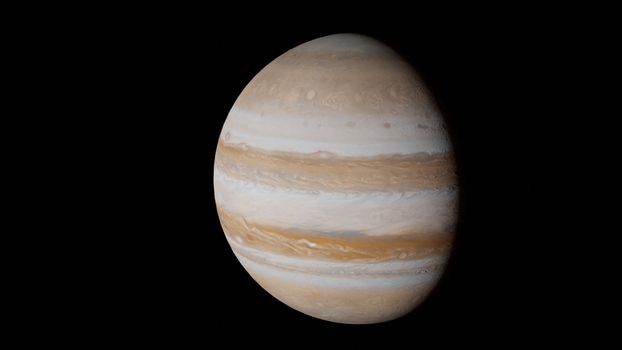
But the GRS is just the centerpiece. Jupiter’s atmosphere is home to hundreds of smaller storms, many of which are so large they would dwarf any weather system found on Earth. These storms take on various forms, from white ovals (anticyclonic in nature) to brown barges and turbulent cyclones. Unlike Earth’s single-layered weather, Jupiter’s storms are stacked in a multi-layered, hydrogen-rich atmosphere that extends thousands of kilometers deep. This depth gives storms immense vertical structure and longevity—some lasting for decades or even centuries.
.png)
Storm Formation: Energy Sources and Dynamics
What powers Jupiter’s storms? The answer lies in both internal and external energy sources. Unlike Earth, where sunlight is the primary driver of weather, Jupiter radiates about 1.6 times more heat than it receives from the Sun. This internal heat, leftover from the planet’s formation, rises through the atmosphere, fueling convection currents that spawn storms.
The rapid rotation of Jupiter—its day lasts just under 10 hours—also plays a key role. This creates powerful Coriolis effects, causing storms to spin rapidly and organize into bands of alternating eastward and westward winds (known as zonal jets). These jets can reach speeds of up to 650 km/h (400 mph), further shaping storm development and longevity.
Recent data from NASA’s Juno mission have revealed another surprising factor: ammonia and water clouds interact in ways that generate lightning up to three times more powerful than the strongest lightning on Earth. These energetic interactions help drive the formation of new storms and sustain existing ones.
Comparing Jupiter’s Storms: Great Red Spot vs. Oval BA vs. Earth Hurricanes
To grasp the sheer scale and power of Jupiter’s storms, it’s helpful to compare them directly with familiar Earth weather and with other notable Jovian phenomena. The table below highlights key differences:
| Storm Name | Location | Diameter | Windspeed | Duration | Distinctive Features |
|---|---|---|---|---|---|
| Great Red Spot | Jupiter | 16,350 km | ~430 km/h | > 350 years | Largest persistent storm in solar system |
| Oval BA ("Red Spot Jr.") | Jupiter | ~8,000 km | ~400 km/h | ~22 years (as of 2024) | Formed from merger of three smaller storms |
| Hurricane Patricia | Earth (Pacific) | 1,000 km | 345 km/h | ~6 days | Strongest recorded Earth hurricane (2015) |
As the table illustrates, even Jupiter’s “smaller” storms far exceed the size and longevity of Earth’s fiercest hurricanes. The Great Red Spot, for example, is over 16 times wider than Hurricane Patricia at its peak and has lasted more than 21,000 times longer.
Recent Discoveries: New Insights from Juno and Hubble
Recent missions have revolutionized our understanding of Jupiter’s storms. The Juno spacecraft, which entered Jupiter’s orbit in 2016, has provided high-resolution imagery and unprecedented data on the planet’s weather systems.
Key findings include:
- The Great Red Spot is shrinking at a rate of about 200 km per year, though it is also deepening, with roots that extend at least 320 km below the cloud tops. - Juno’s microwave radiometer detected that ammonia concentrations vary dramatically within and around storms, influencing their color and behavior. - New cyclonic storms have been observed at the poles, forming stable geometric patterns. For example, eight cyclones at the north pole and five at the south pole arrange themselves in striking polygonal shapes, a phenomenon not seen elsewhere in the solar system. - Lightning on Jupiter occurs at higher altitudes than previously thought, indicating that water clouds may exist higher in the atmosphere than models predicted.The Hubble Space Telescope has complemented Juno’s data with annual global “weather maps” of Jupiter, tracking storm evolution and revealing color changes in the Great Red Spot and other features. For instance, in 2020, Hubble observed a series of small storms merging into the GRS, a process that may contribute to its longevity or even signal eventual transformation.
The Role of Chemistry: Colors and Atmospheric Mysteries
Jupiter’s storms are renowned for their vivid colors—reds, oranges, browns, and whites swirl together in a mesmerizing display. These colors are not just for show; they reveal essential information about the planet’s atmospheric chemistry.
The red coloration of the Great Red Spot remains partly mysterious, but leading theories suggest it is caused by complex organic molecules, possibly tholins, or by interactions between ultraviolet sunlight and chemicals such as ammonia and acetylene. The presence of phosphine, detected by Juno, hints at unexpected chemical processes occurring deep within the storms.
Storms also act as vertical conveyors, dredging up material from the planet’s lower atmosphere. This process exposes fresh chemicals to sunlight, triggering reactions that alter their color and composition. The result is a constantly shifting palette that provides clues to the dynamic interplay between chemistry and meteorology on the largest scale.
Why Studying Jupiter’s Storms Matters for Planetary Science
Understanding Jupiter’s storms is not just an exercise in planetary trivia—it has profound implications for science. First, Jupiter serves as a natural laboratory for studying atmospheric dynamics under extreme conditions. The insights gained from its storms help refine models of fluid dynamics, convection, and weather applicable not only to Earth but also to other planets and exoplanets.
Jupiter’s storms also offer a glimpse into the early solar system. The planet’s vast reservoir of hydrogen and helium, largely unchanged since its formation, preserves conditions similar to those around young stars. By analyzing its storms and atmospheric composition, scientists can test theories of planetary formation, migration, and evolution.
Finally, the study of Jovian storms informs the search for life and habitability elsewhere. Understanding how giant planets influence their environments—including by shielding inner planets from comets and asteroids—helps us interpret the architecture of other star systems and the potential for life beyond Earth.
Looking Forward: The Future of Jupiter Storm Research
With Juno’s extended mission and the upcoming launch of the European Space Agency’s JUICE (JUpiter ICy moons Explorer) in 2023, the next decade promises even deeper insights into Jupiter’s turbulent weather. High-resolution imaging, spectrometry, and atmospheric probes will further unravel the mysteries of storm formation, longevity, and chemical processes.
Researchers are particularly eager to monitor how the Great Red Spot evolves—will it continue shrinking, stabilize, or eventually vanish? The fate of this iconic storm will shape our understanding of atmospheric stability and change on giant planets.
Continued observations of Jupiter’s polar cyclones and their geometric arrangements may also yield breakthroughs in understanding fluid dynamics under rapid rotation and strong internal heating—conditions relevant for many exoplanets discovered in recent years.