Jupiter’s Impact on Astrobiology: A Deep Dive
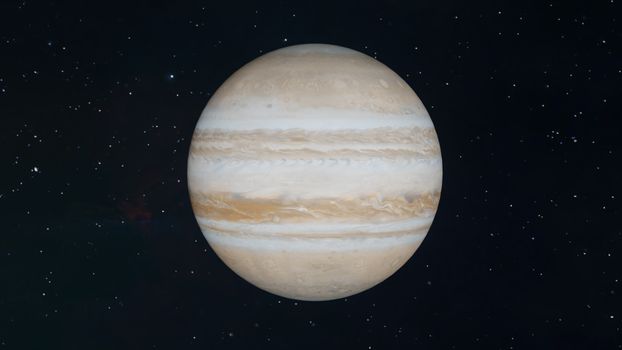
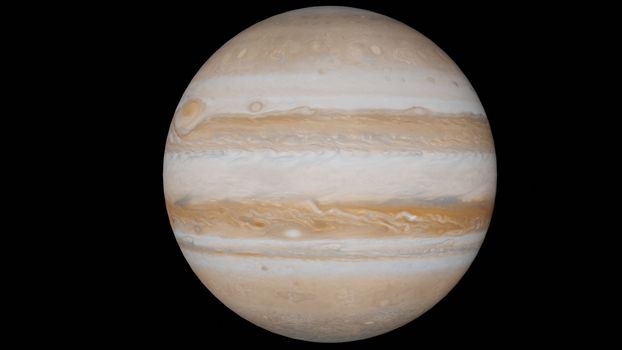
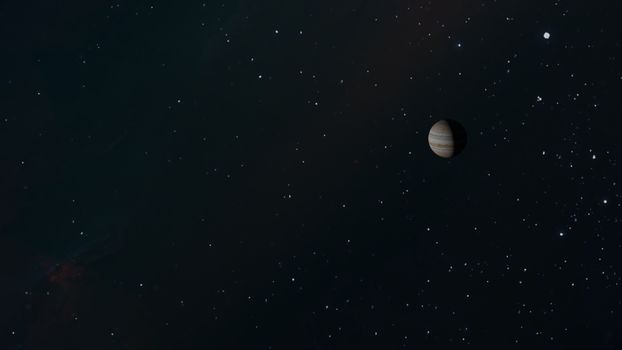
For centuries, Jupiter has inspired awe as the largest planet in our solar system, a dazzling beacon in the night sky. But beyond its sheer size and swirling storms, Jupiter plays an outsized role in shaping the potential for life—on Earth, in the outer solar system, and even in distant planetary systems. Astrobiology, the interdisciplinary science that studies the origin, evolution, and distribution of life in the universe, has increasingly turned its gaze toward Jupiter. From its gravitational influence on Earth’s habitability to the tantalizing prospects for life on its icy moons, Jupiter is a pivotal player in the cosmic story of life.
Jupiter: The Solar System's Gatekeeper
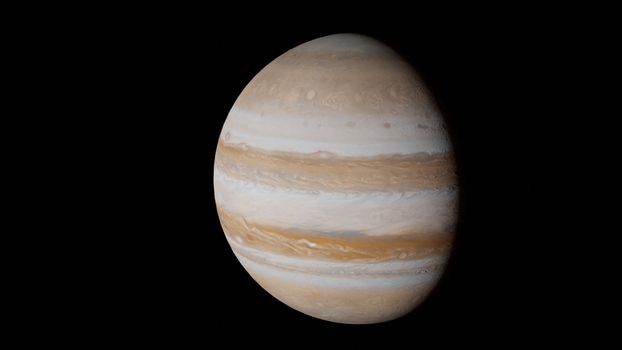
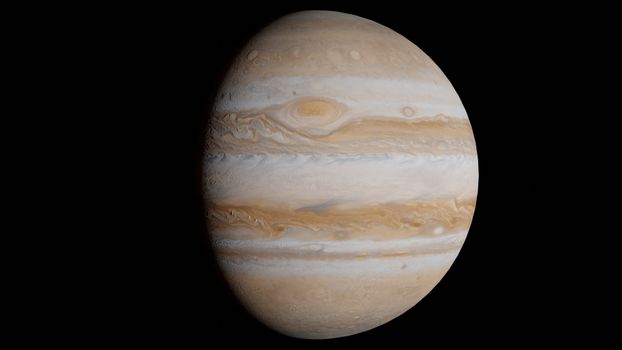
Jupiter’s gravitational might is nothing short of extraordinary. Weighing in at 318 times the mass of Earth and containing more than twice the material of all the other planets combined, Jupiter dominates the dynamics of our solar system. This immense gravity acts as both a shield and a sculptor.
One of the most significant ways Jupiter affects astrobiology is by shaping the impact environment in the inner solar system. Scientific models and historical evidence suggest Jupiter has altered the trajectory of countless asteroids and comets. Data from the NASA Near-Earth Object Program shows that Jupiter's influence has deflected or captured many would-be impactors, reducing the frequency of catastrophic collisions with Earth.
.png)
For instance, the Chicxulub impactor, which led to the extinction of the dinosaurs 66 million years ago, was likely an object perturbed by gravitational interactions in the outer solar system. While Jupiter’s presence doesn’t make Earth immune to impacts, statistical analyses estimate the giant planet has decreased the likelihood of mass extinction events by up to 99% compared to a Jupiter-less solar system. This protective effect may have been crucial for the emergence and persistence of complex life on Earth.
The Jovian Moons: Laboratories for Life
Astrobiologists are not only interested in Jupiter’s external effects—they’re also captivated by what orbits the planet. Jupiter’s retinue of moons, particularly the four Galilean satellites (Io, Europa, Ganymede, and Callisto), are among the most promising locations in the solar system to search for extraterrestrial life.
Europa, in particular, has attracted intense interest. Beneath its cracked, icy crust, evidence from missions like Galileo and Hubble suggests the presence of a global ocean containing twice as much water as all of Earth’s oceans combined—an estimated 2 to 3 × 10^23 kilograms. This ocean, kept liquid by tidal heating from Jupiter’s immense gravity, could provide the right conditions for life as we know it.
Ganymede and Callisto, too, likely harbor subsurface oceans, while Io is home to the most volcanically active landscape in the solar system—potentially another unique habitat for exotic life. Each moon presents a different set of environmental conditions and chemical possibilities, making the Jovian system a natural laboratory for understanding how life might arise in extreme environments.
Jupiter’s Role in the Delivery of Life’s Building Blocks
Jupiter’s gravitational influence does more than just protect Earth; it also helps deliver the ingredients for life. Throughout the early history of the solar system, Jupiter’s movements are believed to have stirred up the asteroid belt and scattered water-rich comets and asteroids toward the inner planets.
This period, known as the Late Heavy Bombardment (about 4 billion years ago), may have been a critical phase for delivering water, organic molecules, and other volatiles to the young Earth—components essential for the emergence of life. A 2018 study published in the journal Nature Geoscience estimated that up to 50% of Earth’s water may have come from such outer solar system sources.
Jupiter’s role as a cosmic delivery truck is also mirrored in exoplanetary systems. Observations have shown that Jupiter-like gas giants in other systems often shape the architecture of their planetary neighborhoods and may play similarly critical roles in fostering habitable conditions.
Comparing Jupiter’s Astrobiological Influence in Our Solar System and Beyond
Astrobiologists have long wondered whether the presence of a Jupiter-like planet is a prerequisite for complex life to develop elsewhere. To help illustrate Jupiter’s unique impact, consider the following comparative table:
| Feature | Solar System with Jupiter | Solar System without Jupiter |
|---|---|---|
| Impact Frequency on Earth-like Planets | Significantly reduced (up to 99% fewer major impacts) | Much higher; frequent extinction-level events |
| Delivery of Water & Organics | Enhanced by stirring up comets/asteroids | Limited; fewer water-rich bodies reach inner planets |
| Potential for Habitable Moons | Multiple (Europa, Ganymede, Callisto) | Few or none; less tidal heating |
| Stability of Planetary Orbits | High; Jupiter helps clear debris | Lower; more chaotic planetary migrations |
This table underscores why many exoplanet-hunting missions, such as NASA’s Transiting Exoplanet Survey Satellite (TESS), look for systems with gas giants in wide orbits as promising sites for habitable worlds.
Jupiter’s Magnetic Influence and Its Biological Implications
Jupiter’s impact on astrobiology isn’t limited to gravity and orbital mechanics—its magnetic field is also a key player. Jupiter boasts the largest and most powerful magnetosphere of any planet in the solar system, stretching up to 7 million kilometers toward the Sun and nearly reaching Saturn’s orbit in the opposite direction.
This magnetic shield creates intense radiation belts, particularly around the Galilean moons. For moons like Europa, this means surface conditions are bathed in radiation levels thousands of times greater than Earth’s. While this is a challenge for future robotic explorers, it may also drive chemical reactions in the ice that could provide energy for simple life forms below the surface.
Recent laboratory experiments have shown that Jupiter-like radiation can create hydrogen peroxide and other oxidants in ice, potentially fueling microbial life in subsurface oceans. In this way, Jupiter’s magnetic wrath might paradoxically help sustain life in hidden environments.
The Search for Life: Missions and Future Directions
The astrobiological promise of Jupiter and its moons has inspired a new era of exploration. NASA’s Europa Clipper, set to launch in 2024, will conduct detailed reconnaissance of Europa’s ice shell and subsurface ocean, searching for signs of habitability and even biosignatures. The European Space Agency’s JUICE (JUpiter ICy moons Explorer), launched in 2023, will study Ganymede, Callisto, and Europa in unparalleled detail.
Both missions will deploy sophisticated instruments to analyze surface composition, measure ocean depth, and detect possible plumes—jets of water vapor that could carry traces of life from the ocean below. These missions may answer some of the most profound questions in science: Are we alone? And if not, does life thrive in the shadow of gas giants like Jupiter?
Final Thoughts: Jupiter’s Enduring Importance in the Search for Life
Jupiter’s impact on astrobiology is profound and multifaceted. It has shaped Earth’s habitability by deflecting dangerous impactors, delivered the building blocks of life to our planet, and created environments on its moons that may harbor living organisms. Its influence extends beyond our solar system, providing a crucial blueprint for finding life elsewhere in the universe.
As our tools for planetary exploration and observation grow more powerful, Jupiter will remain at the heart of astrobiological inquiry—both as an object of fascination and as a cosmic partner in the search for life.